Drug pricing is playing an outsized role in the dynamics of the November U.S. election, creating turbulence for drug companies and for patients that will extend years after the votes are counted. During a Feb. 27 morning session on drug pricing trends during an election year at the BIO CEO & Investor Conference in New York, key opinion leaders spoke about their concerns, including the need to explain drug-pricing rationale to voters and patients in plain terms.
The list of 10 part D Medicare drugs listed by the Centers for Medicare & Medicaid Services (CMS) as eligible for negotiation raised some eyebrows on Wall Street, but proved mostly in accord with what the industry expected. Under the Inflation Reduction Act, Medicare can for the first time bargain with drug companies. The back-and-forth begins this year, carrying into next year, and the agreed-upon prices will take effect in 2026.
With the U.S. Centers for Medicare & Medicaid Services soon expected to publish the list of 10 drugs selected for the first round of the Inflation Reduction Act’s (IRA) price negotiations, Astrazeneca plc is the latest to file a challenge. It’s the first non-U.S.-headquartered company to do so and, unlike the other challenges, Astrazeneca’s complaint focuses on the impact to the Orphan Drug Act (ODA). In a statement, the Cambridge, U.K.-based firm said the “drug price negotiation provisions of the IRA run headlong into the goals” of the ODA.
The U.K. National Institute for Health and Care Excellence (NICE) is considering a coverage policy for stenting of the carotid arteries in asymptomatic patients, a change that could give these stents a significantly larger patient population in the U.K.
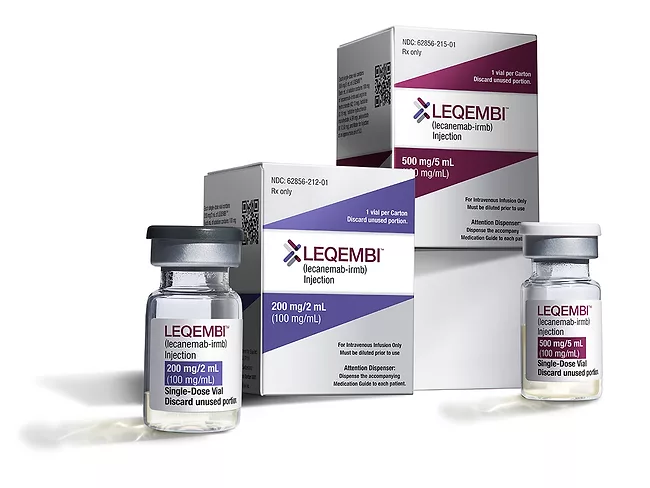
The black box warning appended to the label of Alzheimer’s disease (AD) drug Leqembi (lecanemab) took some on Wall Street mildly aback but failed to surprise others, as analysts mulled what the full approval, granted July 6 by the U.S. FDA, might mean for other developers in the space.
The black box warning appended to the label of Alzheimer’s disease (AD) drug Leqembi (lecanemab) took some on Wall Street mildly aback but failed to surprise others, as analysts mulled what the full approval, granted July 6 by the U.S. FDA, might mean for other developers in the space.
With the passage of the Inflation Reduction Act in the U.S. in August 2022, biopharma company leaders have re-evaluated pipelines, sought legal advice, and discussed ways to mitigate the potential impacts the legislation will have on pricing therapies and extending their reach to new indications.
The release by the U.S. CMS of the final national coverage determination (NCD) for Biogen Inc.’s Alzheimer disease (AD) drug, Aduhelm (aducanumab), lit speculation on the meaning for others in the space. CMS is “still being conservative,” said Howard Fillit, co-founder and chief science officer of the Alzheimer’s Drug Discovery Foundation (ADDF). “We’re in a new era. It’s unprecedented that Medicare doesn’t pay for a drug that received approval from the FDA,” even though it was not a full but an accelerated clearance.
The spike in U.S.-based telehealth visits during the COVID-19 pandemic was greeted with cheers among advocates of the technology, but the Government Accountability Office (GAO) has advised the Centers for Medicare & Medicaid Services (CMS) to take a closer look at the benefits of telehealth for Medicaid beneficiaries.
A new rule intended to give drug manufacturers the flexibility they need to enter into value-based purchasing agreements with state Medicaid programs and commercial payers could end up hurting patients at the pharmacy counter in the U.S.