As COVID-19 variants have emerged, so have questions about the effectiveness of tests for infection. While the risk of mutations significantly limiting their ability to detect the novel coronavirus is thought to be relatively low, companies that make COVID-19 tests are moving quickly to enhance and revalidate their products.
By mid-January 2021, the U.K., South Africa and Brazil had confirmed that “variants of concern” were driving massive surges in COVID-19 cases in their countries. Once alerted, other nations found these troubling strains rapidly multiplying within their populations as well. At the time, the world had reported 90 million cases, creating abundant opportunities for the coronavirus to mutate. Of those cases, the virus in just 360,000 had been sequenced – and nearly all of them from just a handful of countries.
As of the end of January, SARS-CoV-2 has demonstrably infected more than 100 million individuals globally. It has killed more than 2 million. And the long-term sequelae of COVID infections – to say nothing of the health consequences of grief, social isolation and widespread economic distress – are still unfolding and will be for years to come.
LONDON – South Africa has decided against using the 1 million doses of Astrazeneca plc’s COVID-19 vaccine already in the country to start the rollout of its national vaccination program, in favor of opening a phase IIIb study of Johnson & Johnson’s single shot product. “Over the next few days, we expect to announce a plan to expedite vaccination using [J&J’s] investigational vaccine in health care professionals in South Africa,” said Glenda Gray, CEO of the South African Medical Research Council and chair of the country’s research committee on COVID-19.
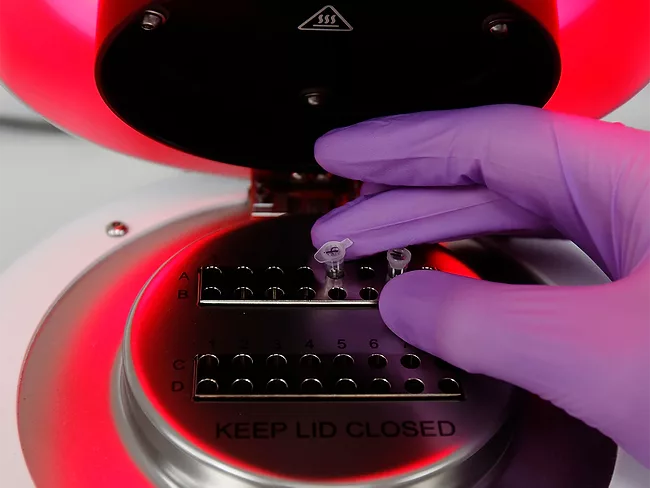
HONG KONG – Seegene Inc. has developed a COVID-19 test kit that is able to both detect and identify multiple mutant variations of the virus. “Getting test results from the Allplex SARS-CoV-2 Variants Ⅰ Assay takes two hours, which is normally how long getting results from a PCR test takes,” a Seegene spokesperson told BioWorld.
The latest global regulatory news, changes and updates affecting medical devices and technologies, including: CDC reports on cases, sequencing; NICE says savings seen with Cytosorb; IP at issue as WTO pushes for global pandemic effort; Researcher gets prison time for trade secret theft; USPTO responds to COVID-19 challenge.
Swift Biosciences Inc. released an S gene panel for SARS-CoV-2 that covers 100% of the gene even with minimal viral titers. The S gene controls the spike protein, which enables the virus to bind to cells and affects transmissibility, and has accumulated multiple mutations in the concerning variants recently discovered in the U.K., South Africa, Brazil, Denmark and the U.S. The panel is expected to enable rapid scaling of surveillance efforts of the new strains and can be run by any lab using the Illumina system.
The latest global regulatory news, changes and updates affecting medical devices and technologies, including: Krishnamoorthi eyes ventilator contract; TGA fines company for failure to provide masks; U.S. PPE hoarder indicted; CAP supports Defense Production Act; South African variant in U.S.; GAO: More needs to be done to respond to COVID-19; Biden orders review of scientific-integrity policies.
The SARS-CoV-2 virus has now had ample time to mutate, as reports of the proliferation of multiple variants make clear, and the U.S. FDA’s Tim Stenzel said the agency is now focused on three variants, including one recently reported from Israel. Stenzel said on the latest COVID-19 testing town hall that one of the key concerns regarding existing authorized tests is the potential for loss of sensitivity, a problem the agency hopes to overcome without the use of live virus.
Marking the first time monoclonal antibodies developed by separate companies will be tested in combination against COVID-19, Vir Biotechnology Inc.’s VIR-7831 will be added to Eli Lilly and Co.’s bamlanivimab in the ongoing phase II BLAZE-4 study in low-risk patients with mild to moderate disease. The collaboration comes as early research indicates some antibodies in development appear to lose activity when pitted against emerging SARS-CoV-2 variants. VIR-7831 (also known as GSK-4182136), partnered with Glaxosmithkline plc, is designed to bind to a different epitope of the SARS-CoV-2 spike protein than bamlanivimab. A dual-action antibody, VIR-7831 is designed to both block viral entry into healthy cells and clear infected cells.