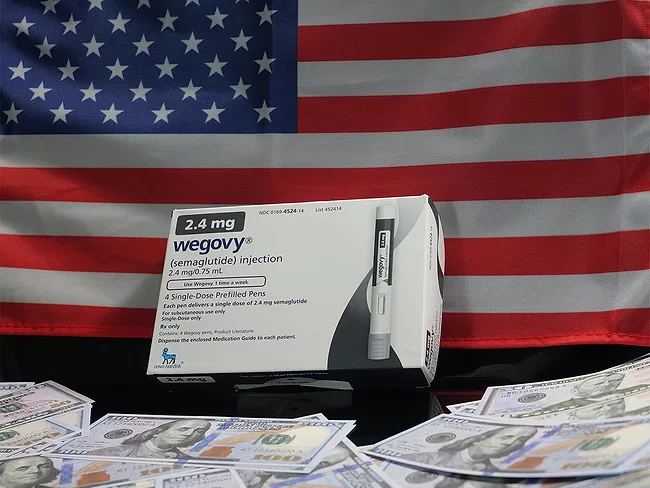
Years after approving three glucagon-like peptide-1 (GLP-1) receptor agonists to treat obesity, the U.S. FDA is acknowledging that the drugs don’t have the same risk seen with older weight-loss medicines. Citing its post-market evaluation that found no increased risk of suicidal ideation or behavior, the U.S. FDA is requesting that the risk be removed from the warnings and precautions section of labeling for the GLP-1 obesity drugs – Eli Lilly and Co.’s Zepbound (tirzepatide) and Novo Nordisk A/S’ Saxenda (liraglutide) and Wegovy (semaglutide).
There are two significant messages for companies developing and profiting from obesity drugs in a meta-analysis of clinical trials examining the extent of weight regain after treatment stops. First, people taking obesity medication regain weight four times faster on average than those who lose weight through behavioral diet and exercise programs; and second, poor tolerability leads to poor adherence.
The U.S. FDA has approved its first pharma treatment in more than 40 years for motion sickness. The green light for Nereus (tradipitant), from Vanda Pharmaceuticals Inc., was based on three clinical studies, all pivotal, including two phase III real-world trials with patients on boats and another supporting study.
In a threshold event in the U.S., Medicare is planning to break through its obesity coverage barrier with a voluntary test of a model designed to enable Medicare Part D plans and state Medicaid programs to cover GLP-1 drugs prescribed for weight management.
Needle-phobic obesity patients got their first workaround with the U.S. FDA clearance of Novo Nordisk A/S’ once-daily GLP-1 Wegovy (semaglutide) pill, the first of its kind.
Eli Lilly and Co. took another step toward adding a way for patients to hang onto their weight loss when the firm disclosed positive top-line data from the phase III Attain-Maintain trial with orforglipron, a once-daily oral small molecule GLP-1 receptor agonist. Indianapolis-based Lilly said that at one year orforglipron met the primary and all key secondary endpoints vs. placebo, delivering superior weight maintenance as an adjunct to a healthy diet and physical activity, using the efficacy estimand and modified treatment-regimen estimand.
The U.S. Centers for Medicare & Medicaid Services (CMS) rolled out negotiated costs of the second batch of drugs subject to such bargaining under the Inflation Reduction Act. Wall Street was not surprised to learn that the numbers amount to much greater cuts than the Biden administration managed for 2026. CMS said the adjusted maximum fair prices would have achieved 44% lower net spending had they been implemented in 2024 – 36% if forgiven discounts from the part D redesign of the Medicare prescription drug benefit are figured in. Fifteen drugs are listed.
Top-line results from a midstage study of Vanda Pharmaceuticals Inc.’s tradipitant hit its primary endpoint by preventing the nausea and vomiting that can be caused by the GLP-1 receptor agonist Wegovy (tirzepatide, Eli Lilly and Co.) in overweight and obese adults. The positive phase II study data prompted Vanda to look at a phase III study of the oral neurokinin-1 receptor antagonist next year.
Industry watchers were surprised when Eli Lilly and Co.’s oral GLP-1 candidate, orforglipron, did not appear among the first nine recipients of the U.S. FDA’s commissioner’s national priority voucher (CNPV) program aimed at shortening regulatory review times, boosting domestic manufacturing and improving affordability. But orforglipron, which recently nailed endpoints in a second phase III trial and has been hailed a potentially best-in-class compound, was among the second batch of six drugs added to the CNPV list.
Hailing it as a win-win and a historic step forward in fighting chronic disease, the Trump administration announced pricing agreements Nov. 6 with Eli Lilly and Co. and Novo Nordisk A/S that will expand the availability of the companies’ weight loss drugs by cutting prices and, for the first time, providing coverage for the drugs in obesity through Medicare and Medicaid.