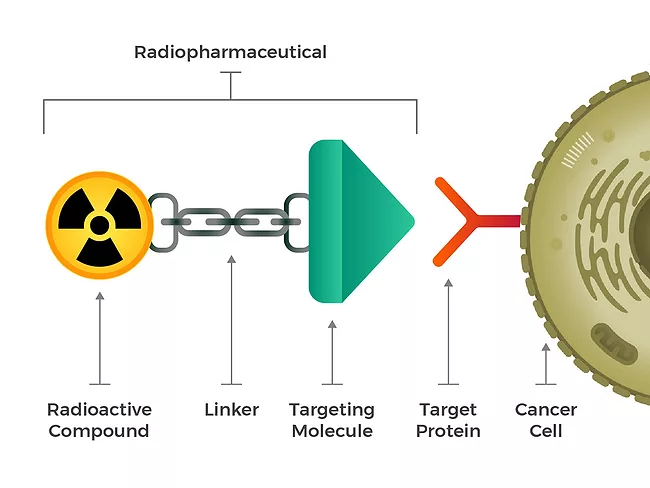
A year out from Leqembi’s approval for Alzheimer’s disease (AD), ongoing research coupled with artificial intelligence is advancing both radiopharmaceuticals and small-molecule drugs for AD diagnostics and treatment, speakers at the 2024 KoNECT-MOHW-MFDS conference said.
A year out from Leqembi’s approval for Alzheimer’s disease (AD), ongoing research coupled with artificial intelligence is advancing both radiopharmaceuticals and small-molecule drugs for AD diagnostics and treatment, speakers at the 2024 KoNECT-MOHW-MFDS conference said.
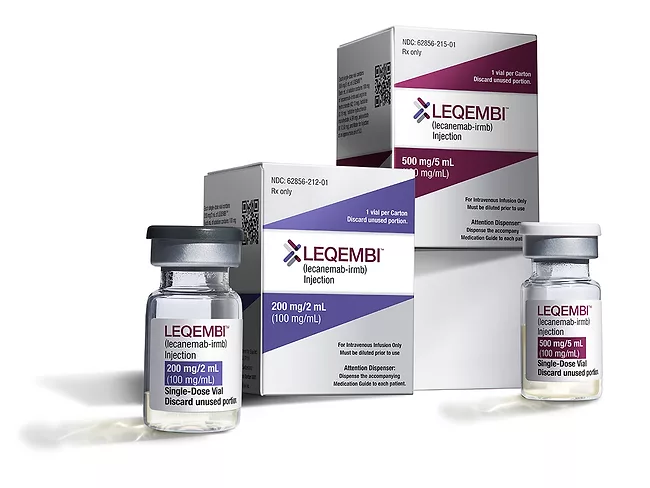
The U.K. has become the first country in Europe to approve Leqembi (lecanemab), but as the breakthrough decision was announced, the health technology assessment body NICE said the benefits are too small to justify the cost of providing the Alzheimer’s disease therapy on the National Health Service (NHS).
The EMA’s Committee for Medicinal Products for Human Use (CHMP) recommended approval of 14 drugs and the extension of the label of 11 others at its July meeting, but, inevitably, it was the decision to turn down the Alzheimer’s disease therapy Leqembi (lecanemab) that stirred the greatest reaction.
Biogen Inc. and partner Eisai Co. Ltd. said the EMA’s Committee for Medicinal Products for Human Use has adopted a negative opinion on the marketing bid for lecanemab in early Alzheimer’s disease (AD) and mild AD. The humanized anti-soluble aggregated amyloid-beta monoclonal antibody is approved in the U.S., Japan, China, South Korea, Hong Kong and Israel, and is being sold in the U.S., where it’s branded Leqembi, as well as Japan and China. Eisai, of Tokyo, will ask the CHMP to re-examine the matter.
Less than a month after the U.S. FDA’s Peripheral and Central Nervous System Drugs Advisory Committee handed down a unanimous vote in favor of Eli Lilly and Co.’s Alzheimer’s disease candidate (AD), donanemab, the agency approved the drug as a once-monthly injection for adults with early symptomatic disease. Branded Kisunla, the beta-amyloid antagonist marks the second approved AD drug that has demonstrated in clinical trials an ability to slow cognitive decline, going up against Leqembi (lecanemab) from Biogen Inc. and Eisai Co. Ltd., which won full approval in July 2023, only six months after nabbing an accelerated nod.
Europe may still await its first disease-modifying Alzheimer’s drug after the EMA postponed its decision on Leqembi (lecanemab, Biogen Inc./Eisai Co. Ltd) on March 22, but leading members of the World Dementia Council were in an optimistic mood when they convened in London four days later. “We are working to make the inevitable happen earlier,” said Lenny Shallcross, executive director of WDC. “The inevitable will be rollout of medicines, rollout of better diagnostics and the improvement of care. All of those things over the next 10 years are inevitably going to happen.”
Europe may still await its first disease-modifying Alzheimer’s drug after the EMA postponed its decision on Leqembi (lecanemab, Biogen Inc./Eisai Co. Ltd) on March 22, but leading members of the World Dementia Council were in an optimistic mood when they convened in London four days later.
Europe may still await its first disease-modifying Alzheimer’s drug after the EMA postponed its decision on Leqembi (lecanemab, Biogen Inc./Eisai Co. Ltd) on March 22, but leading members of the World Dementia Council were in an optimistic mood when they convened in London four days later.
The EMA’s Committee for Medicinal Products for Human Use (CHMP) adopted a positive opinion recommending approval of Pfizer Inc.’s Emblaveo (aztreonam-avibactam), an antibiotic combination that would offer a new option to patients with serious bacterial infections caused by multidrug-resistant gram-negative bacteria.