With the approval of Aduhelm (aducanumab, Eli Lilly & Co.) and Leqembi (lecanemab, Eisai Co. Ltd.), there are finally amyloid-targeting drugs available for Alzheimer’s disease (AD). What’s not available, though, are rose-colored glasses of the prescription strength that would make these approvals look like AD’s happy ending. The biopharma industry is already well aware of the need for broader horizons. Roughly three-quarters of drugs now in clinical development for AD target neither amyloid-β (Aβ) nor tau. Still, the genetic evidence from familial AD strongly implicates Aβ processing in AD’s origins. In his opening plenary talk at the European Academy of Neurology 2023 annual conference, Thomas Südhof suggested new ways to look at the clinical data.
Eisai Co. Ltd. and Biogen Inc.’s Leqembi (lecanemab) gained the support of the U.S. FDA’s Peripheral and Central Nervous System Drugs Advisory Committee (adcom) in a 6-0 vote on June 9, as panel members unanimously agreed that the results of the phase III Clarity trial verified the clinical benefit in the treatment of Alzheimer’s disease. The FDA does not have to follow the adcom’s recommendation, but it often does. The PDUFA date for the supplemental NDA is July 6.
Six months after getting accelerated approval from the U.S. FDA without any input from an advisory committee, Eisai Co. Inc. and Biogen Inc.’s Alzheimer’s disease (AD) therapy, Leqembi (lecanemab) will make an appearance June 9 before the Peripheral and Central Nervous System Drugs Advisory Committee (PCNSDAC), set to discuss the supplemental BLA seeking to convert use of the amyloid beta-targeting antibody to traditional approval.
As the clock ticks toward the “full,” or traditional, approval date for Biogen Inc./Eisai Co. Inc.’s Alzheimer’s drug, Leqembi (lecanemab), the U.S. Centers for Medicare & Medicaid Services (CMS) is facing increasing pressure to get the structures in place to ensure Medicare beneficiaries have access to the drug when the approval comes.
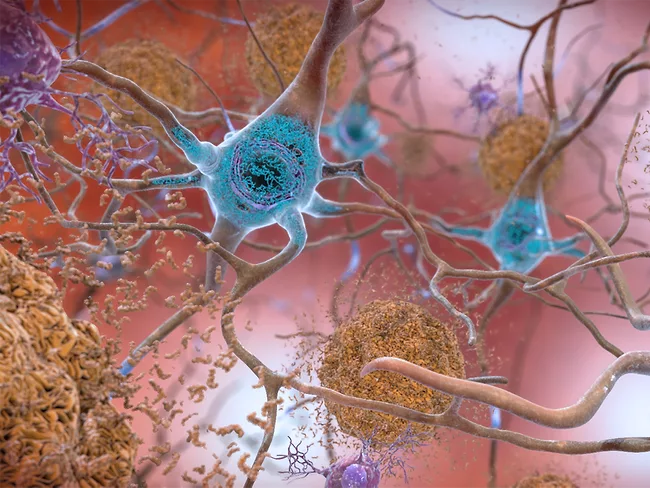
The aqueous supernatants resulting from ultracentrifugation of brain samples from patients with Alzheimer’s disease (AD) contain aggregates so far described as soluble oligomers of amyloid-β protein (Aβ), which are responsible for the neurotoxicity underlying AD and thus considered targets to watch in this devastating condition. Now, a group of scientists from Harvard Medical School have determined that these aggregates are in fact insoluble diffusible fibrils with the same atomic structure as plaque fibrils.
U.S. Centers for Medicare & Medicaid Services (CMS) Administrator Chiquita Brooks-LaSure made her first appearance April 26 before the House Energy and Commerce’s Subcommittee on Health, ostensibly to discuss legislative solutions to increase transparency and competition in health care. But member after member, regardless of political party, demanded answers about why CMS continues to severely restrict access to Eisai Co. Ltd.’s Alzheimer’s drug, Leqembi (lecanemab), especially since another government agency is covering it for all veterans that meet the labeling requirements.
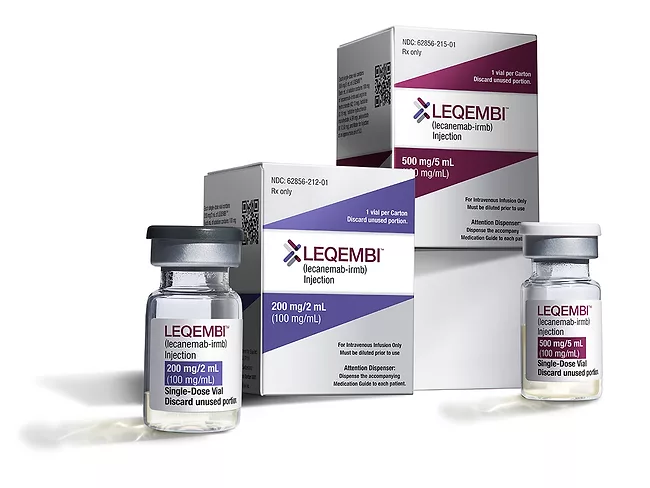
As expected, the U.S. FDA gave its go-ahead to lecanemab, an amyloid-beta binder for mild cognitive impairment caused by Alzheimer’s disease (AD) and mild AD from Biogen Inc. and Eisai Co. Ltd, which have assigned to the compound the brand name Leqembi.
As expected, the U.S. FDA gave its go-ahead to lecanemab, an amyloid-beta binder for mild cognitive impairment caused by Alzheimer’s disease (AD) and mild AD – together known as early AD – from Biogen Inc. and Eisai Co. Ltd, which have assigned to the compound the brand name Leqembi.
Eisai Co. Ltd. and Biogen Inc. presented the full data set for the Clarity Alzheimer’s disease trial of lecanemab at the 2022 Clinical Trials on Alzheimer’s Disease, which was simultaneously published in the New England Journal of Medicine. The data supported the top-line results released in September 2022.
Eisai Co. Ltd. and Biogen Inc. presented the full data set for the Clarity Alzheimer’s disease trial of lecanemab at the 2022 Clinical Trials on Alzheimer’s Disease, which was simultaneously published in the New England Journal of Medicine. The data supported the top-line results released in September 2022.