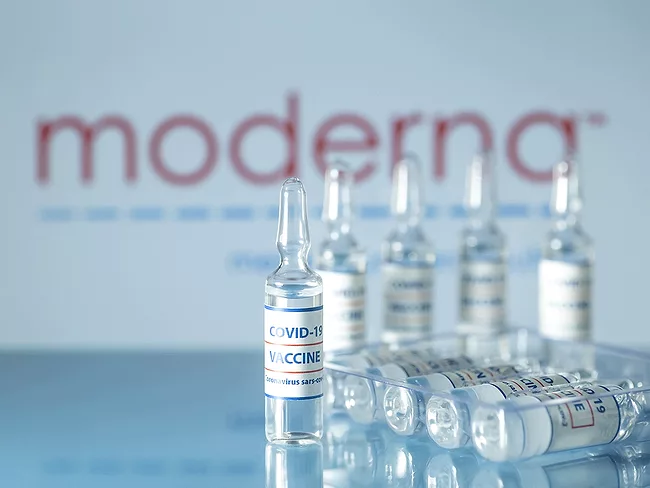
Given the FDA’s Vaccines and Related Biological Products Advisory Committee’s unanimous vote last month to recommend use of a booster dose of the Pfizer Inc.-Biontech SE COVID-19 vaccine in certain high-risk groups, it came as no surprise when the committee again voted unanimously Oct. 14 for a mirror use of Moderna Inc.’s proposed booster.
Should Johnson & Johnson’s (J&J) COVID-19 vaccine be a two-dose series? While not directly asked, that question almost lurks between the lines of the FDA’s briefing document for the Oct. 15 meeting of its Vaccines and Related Biological Products Advisory Committee. The document referred to J&J’s proposed second dose as a “booster,” but the FDA isn’t asking the committee the questions it posed for the Moderna Inc. and Pfizer Inc.-Biontech SE boosters. Instead, it is inviting VRBPAC to advise on whether the second J&J dose should be administered two months or six months following the first shot.
Although the need for COVID-19 boosters remains a tense debate among policymakers and scientific experts worldwide, the U.S. FDA is basing its Oct. 14-15 Vaccines and Related Biologics Products Advisory Committee meeting on the premise that vaccine boosters are needed.
LONDON – The EMA set out the reasons for why it is diverging from the FDA on booster doses of Pfizer Inc.’s/Biontech SE’s COVID-19 vaccine, despite having reviewed the same data.
LONDON – The EMA has changed its stance on booster doses of the Pfizer Inc./Biontech SE COVID-19 vaccine and said they “may now be considered” at least six months after the second dose for people ages 18 and over.
CDC director Rochelle Walensky’s early morning announcement on Sept. 24 recommending boosters for certain frontline workers was considered wise by some but as undermining her advisers and the process by others. She endorsed the Advisory Committee on Immunization Practices’ recommendation for booster doses of the Pfizer Inc.-Biontech SE COVID-19 vaccine but overruled one of the panel’s Sept. 23 decisions by adding boosters for people ages 18 to 64 who are at increased risk of COVID-19 exposure and transmission due to occupational or institutional setting, based on their individual benefits and risks.
Constrained by the U.S. FDA’s authorized conditions of use for a booster dose of Pfizer Inc. and Biontech SE’s COVID-19 vaccine, the CDC’s Advisory Committee on Immunization Practices (ACIP) struggled with making recommendations Sept. 23 for the use of the booster, with several members questioning the need for a third dose in some of the populations the FDA identified.
Five days after an FDA advisory committee recommended a booster dose of Pfizer Inc.-Biontech SE’s COVID-19 vaccine, Comirnaty, for people 65 and older or those who are at high risk of a serious infection, the CDC’s Advisory Committee on Immunization Practices (ACIP) struggled Sept. 22 with what a U.S. booster program would look like if only one booster is available when three different COVID-19 vaccines are being used in the country.
Fresh data from Johnson & Johnson show COVID-19 protection dramatically increased with a booster shot of its single-dose vaccine, adding momentum to the U.S. drive for boosters.
The FDA’s Vaccines and Related Biological Products Advisory Committee rejected an sBLA for a third, booster dose of the COVID-19 vaccine Comirnaty from Pfizer Inc.-Biontech SE for ages 16 and over, then unanimously approved a recommendation for those ages 65 and older along with individuals at high risk of severe COVID-19 to get the booster.