Additive manufacturing at the point-of-care (POC) might seem to open the world of medical device litigation to new theories of liability, but that isn’t likely in part because hospitals are wary of assuming the elevated legal risk associated with taking ownership of POC manufacturing activities.
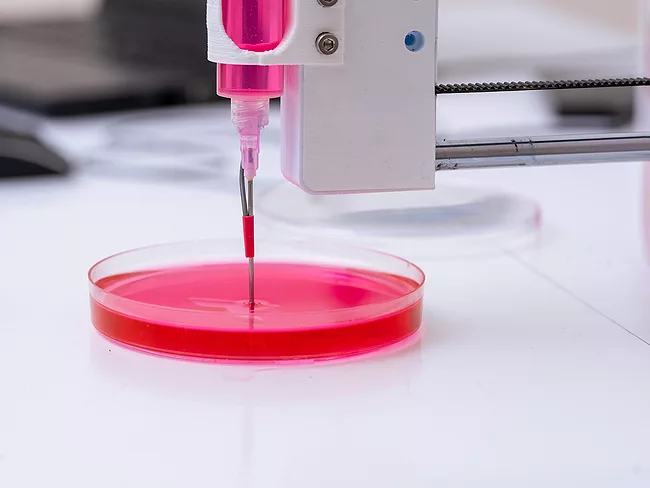
Triastek Inc., of Nanjing, China, scored a potential $1.2 billion collaboration and platform technology license deal with Biontech SE to manufacture oral RNA therapeutics with 3D printing technology.
Triastek Inc., of Nanjing, China, scored a potential $1.2 billion collaboration and platform technology license deal with Biontech SE to manufacture oral RNA therapeutics with 3D printing technology.
Triastek Inc., of Nanjing, China, scored a potential $1.2 billion collaboration and platform technology license deal with Biontech SE to manufacture oral RNA therapeutics with 3D printing technology.
Triastek Inc. and Biontech SE have entered into a research collaboration and platform technology license agreement for the development of RNA therapeutics for oral delivery based on Triastek’s Melt Extrusion Deposition (MED) 3D printing technology.
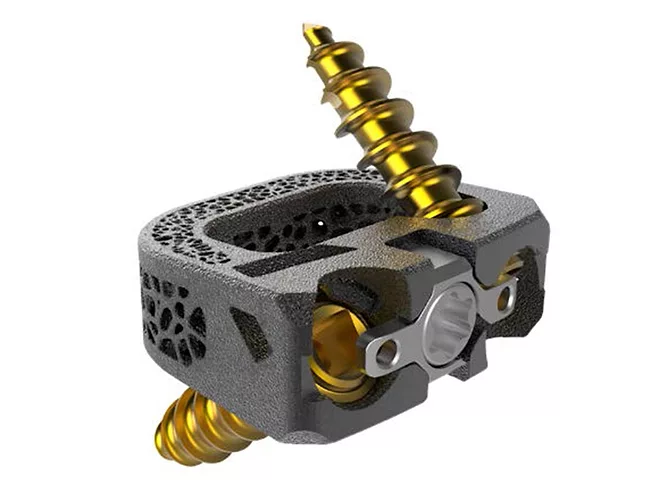
Inosys Korea Co. Ltd. gained U.S. FDA 510(k) clearance for Unispace, a cervical spine cage manufactured with 3D printing technology. Unispace can be used during spinal fusion surgery, Busan-based Inosys said, wherein operators can remove a patient’s diseased or damaged disc and replace it with the cervical cage to maintain the original length of the spine.
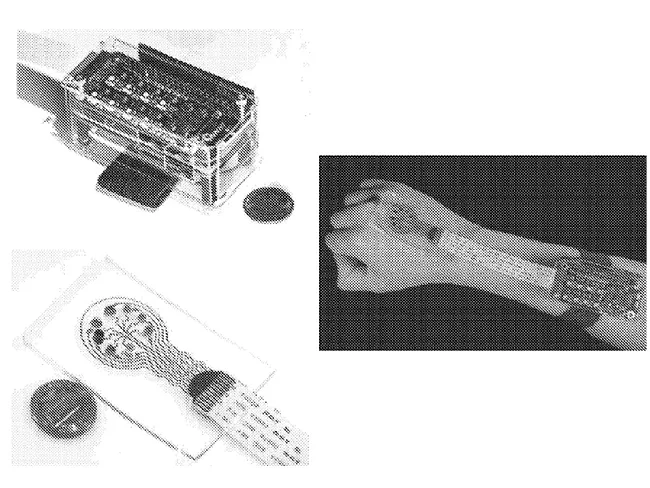
Researchers from the University of Minnesota are seeking patent protection and possible collaborators for their development of three-dimensional (3D) printed skin-wearable photodetector devices.
With the use of 3D printing and microfluidics, Fertilis Pty Ltd. hopes to triple the success rates of in vitro fertilization (IVF) by improving embryo quality and quantity.
Researchers have for the first time used human neural stem cells to print 3D brain tissues that mimic the architecture of the brain’s outer layer, the cerebral cortex. This breakthrough technique, developed by a team from the U.K.’s University of Oxford, could one day be used to provide tailored repairs to the millions of people who suffer from severe brain injuries, for which there is no effective treatment.
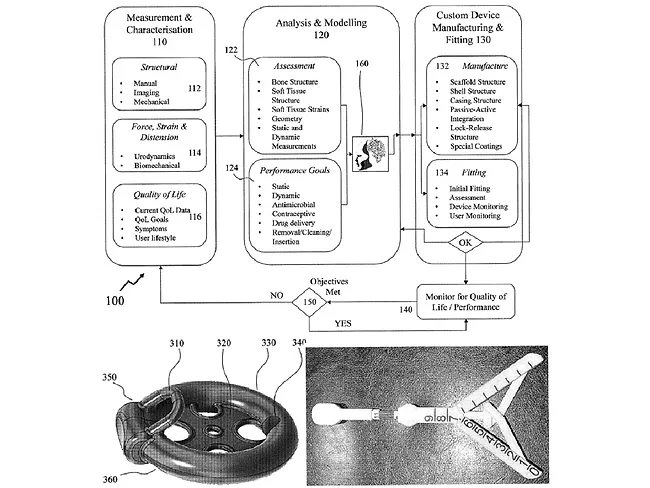
Derek Sham, founder and CEO, of Toronto, Ontario-based Cosm Medical Corp. reported filing for patent protection for devices, systems and methods for vaginal therapeutics. He reported on a range of surgical treatment options for pelvic organ prolapse (POP) and urinary incontinence (UI) as well as non-surgical treatments exist for POP and UI.