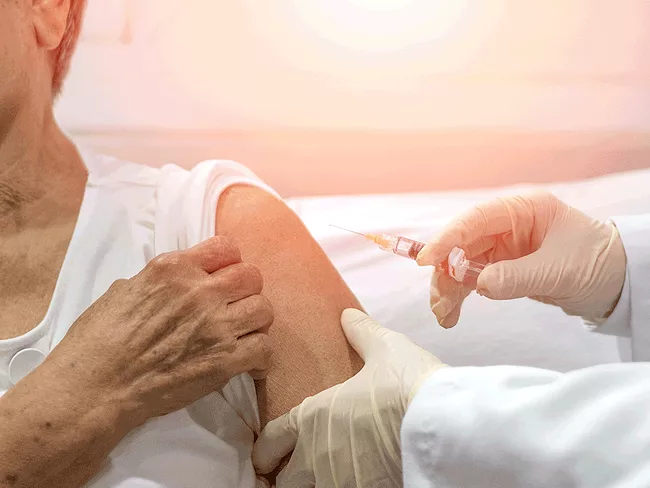
Pfizer Inc.’s bivalent prefusion vaccine for protecting newborns from severe respiratory syncytial virus (RSV) hit one of its two primary endpoints in its phase III study, which was good enough for the company to stop enrollment and plan to submit a BLA to the U.S. FDA by year-end. PF-06928316 is one of six RSV vaccines in active phase III development globally, which includes an Astrazeneca plc-Sanofi SA collaboration plus one from GSK plc. Pfizer’s is the only one developed for infants by way of maternal immunization and for older adults.
The changes continue at GSK plc as the pharma giant stepped away from its NY-ESO cell therapy program in moves that touch two collaborators. The company is terminating its three-year partnership with Lyell Immunopharma Inc. to develop candidates targeting NY-ESO-1, including the second‑generation product candidates, Lyell’s genetic and epigenetic reprogramming technologies (LYL-132 and LYL-331), and some other second-generation approaches GSK was considering.
GSK plc may have pushed the door open Oct. 26 for the use of a new class of oral drugs to treat anemia in U.S. patients with chronic kidney disease who are dialysis dependent. The U.S. FDA’s Cardiovascular and Renal Drugs Advisory Committee voted 13-3 that the benefits of GSK’s daprodustat outweighed the risks in that population. However, the committee didn’t push the door wide enough for patients not on dialysis, voting 5-11 on the question of whether the drug’s benefits outweighed its risk in the nondialysis population, even though that group conceivably could see a greater benefit. The test now is whether the FDA will follow the committee’s lead.
Hoping its drug, daprodustat, can succeed in the U.S. where two other hypoxia-inducible factor prolyl hydroxylase inhibitors (HIF-PHIs) have failed so far, GSK plc will present its case Oct. 26 to the FDA’s Cardiovascular and Renal Drugs Advisory Committee for the drug's potential use as a treatment for anemia in patients with chronic kidney disease regardless of dialysis dependency.
GSK plc has announced results from its respiratory syncytial virus (RSV) vaccine in older people that look stronger than those from its rival, Pfizer Inc., as the race to develop a first ever vaccine against the common respiratory disease heats up.
Teva Pharmaceuticals USA Inc.’s quest to get the U.S. Supreme Court to overturn the Federal Circuit and preserve label carveouts, or so-called skinny labels, continued Oct. 3 with the high court asking the solicitor general to weigh in.
Spero Therapeutics Inc. has come out swinging after a U.S. FDA rejection for its oral antibiotic, tebipenem Hbr, picking up a potential $600 million licensing deal with pharma giant GSK plc after agreeing on a plan with the regulator to revive the drug.
Researchers from GSK plc presented the discovery and preclinical characterization of novel potent and selective inhaled phosphatidylinositol 4-kinase β (PI4Kβ) inhibitor being developed for the treatment of human rhinovirus (HRV)-induced chronic obstructive pulmonary disease (COPD) exacerbations.
What was once effective is now a non-starter. Newly updated guidelines from the World Health Organization (WHO) caution against using the COVID-19 treatments sotrovimab, from GSK plc and Vir Biotechnology Inc., and Regen-Cov (casirivimab + imdevimab), from Regeneron Pharmaceuticals Inc. Omicron, the group said, has rendered the monoclonal antibodies ineffective.