Scientists at Harvard Medical School have shown that in mice lacking amyloid beta (Aβ), the fundamental hallmark of Alzheimer's disease (AD), neurons died from the effect of the most harmful mutation of this neurodegenerative disease. They showed that presenilin (PS) could be behind the origin of the disease without the need for Aβ. They maintain that it is time to update theories and redirect efforts.
Researchers from the University of Miami and Harvard Medical School have published data from a study that assessed the role of recessive variants in the HBS1L gene, which encodes for HBS1-like translational GTPase crucial for ribosomal rescue, in inherited retinal disease.
Patients with congenital hearing loss could benefit from a gene therapy currently in development. Although there are approaches that could reverse the process in children and young people before it becomes severe, so far, adults do not have any treatment that prevents the progressive deterioration of auditory sensory cells caused by this disease.
Patients with congenital hearing loss could benefit from a gene therapy currently in development. Although there are approaches that could reverse the process in children and young people before it becomes severe, so far, adults do not have any treatment that prevents the progressive deterioration of auditory sensory cells caused by this disease.
Advances in understanding the processes underlying brain neurodegeneration have allowed lots of new treatment and prevention strategies to begin to flourish. Several presentations at the 2024 Alzheimer’s & Parkinson’s Diseases Conference recently held in Lisbon reflect that eyes are now on some individuals who, despite showing pathological signs in their brains, stay cognitively healthy across several endogenous mechanisms of resilience.
In a new study, researchers from Harvard Medical School and Regulus Therapeutics Inc. further investigated the role of miR-155 in Alzheimer's disease (AD).
Researchers have identified a new class of antibiotics that works by blocking the transportation of lipopolysaccharide (LPS) to the outer membrane of the gram-negative bacterium Acinetobacter baumannii. The most advanced member of the class, zosurabalpin (RG-6006, Roche AG), was effective against multiple A. baumannii strains, including carbapenem-resistant and multidrug-resistant strains.
Researchers at Boston Children's Hospital and Harvard Medical School have explored the possibility of using anaplastic lymphoma kinase (ALK) as a target for the application of ALK.CAR T cells to treat neuroblastoma, the most common and deadliest tumor of infancy.
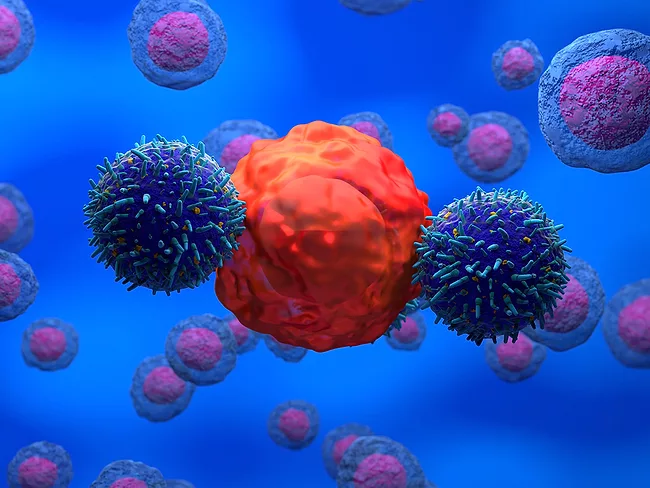
Researchers have developed a new approach for the development of improved CAR T cells with bifunctional degraders, which linked ubiquitin to an endogenous target protein. The key to the design was the use of multispecific protein degraders and E3 ligases, which increased the proliferation of CAR T cells and their antitumor potency. This combination can be adapted to different uses of cell therapies.
In a study published in Nature on Oct. 11, coinciding with the beginning of IDWeek 2023 in Boston, researchers from Harvard Medical School described EVEscape, a method for anticipating the movements of SARS‑CoV‑2 by predicting potential mutations likely to escape current vaccines and treatments.