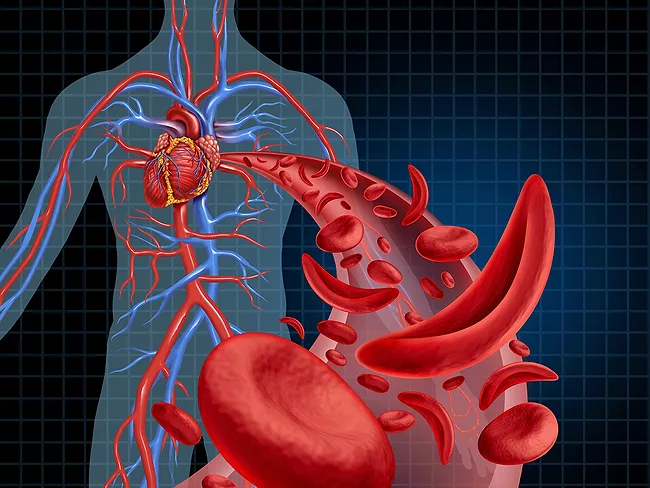
Barring truly major surprises, exagamglogene autotemcel (Exa-cel, Vertex Pharmaceuticals Inc.) is on track to become the first approved CRISPR-based gene editing therapy. It is partly in expectation of Exa-cel’s approval that the European Hematology Association (EHA) and the European Society for Bone Marrow Transplantation hosted a session on “transplantation versus gene therapy in sickle cell disease.”
The discovery of DNA was a milestone in the history of science that led to a breakthrough in biomedical research. By associating disease and genetics, genome correction techniques were ultimately developed that are supposed to work in the same way that antibiotics and antivirals block pathogenic microorganisms: by directly attacking the causes of disease.
The most ambitious objective of any treatment is to eradicate the disease, acting on its origin to cure it instead of treating its symptoms. This is the purpose of the gene therapy against type 2 diabetes (T2D) and obesity that Fractyl Health Inc. is developing. Scientists from the Lexington, Mass.-based company have designed a strategy based on glucagon-like peptide-1 (GLP-1) to transform pancreatic cells and reverse the disease.
Investigators have identified a second individual who remained cognitively normal into his late 60s despite having the PSEN1 E280A mutation, which causes a familial version of early-onset Alzheimer’s disease (AD). The likely source of protection, a mutation in a gene called Reelin, is distinct from the protective mechanism identified in the first case of an individual who was protected from the effects of PSEN1 E280A. That case was reported in 2019.
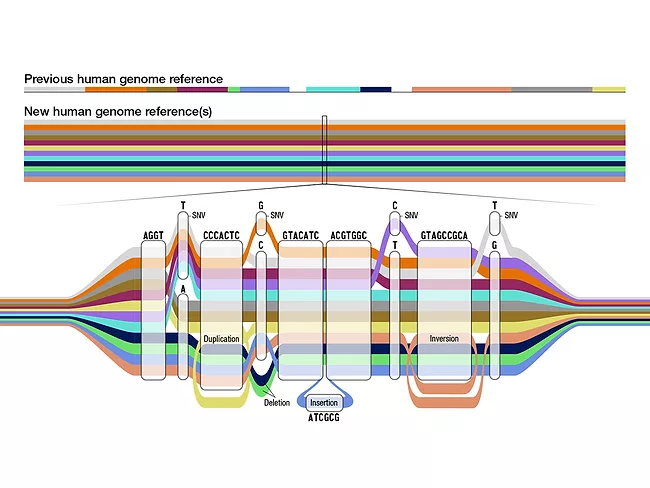
The human genome, the sequence that represents the DNA of our species, was built with a single individual as a model. This all-in-one standard didn’t include the gene variations that make us different or explain why some people develop certain diseases. Four simultaneous studies from the Human Pangenome Reference Consortium have published a sequence based on 47 individuals, beginning to capture the genetic diversity that defines humans.
By analyzing a cohort of adolescents that developed myocarditis or pericarditis after vaccination against SARS-CoV-2 vaccination, researchers from Yale University School of Medicine were able to pinpoint the underlying mechanism as an overly active innate immune response to the vaccine that led to broad activation of T cells and natural killer (NK) cells. Myocarditis “has been seen in other vaccine contexts, though is most common after viral infection,” Carrie Lucas told reporters at a press conference announcing the findings.
A base-by-base comparison of the genome sequences of 240 species of mammals has pinpointed sites in the human genome where mutations are likely to cause disease. The sites are all perfectly conserved across the mammalian family tree over 100 million years of evolution, indicating they underlie fundamental biological processes that do not tolerate diversity or change very well.
Synonymous or silent mutations do not change the sequence of the protein that they encode. With some exceptions, they do not trigger any effect. Last year, however, a study by researchers from the University of Michigan tried to refute this concept after finding that they altered the protein function. But breaking dogmas can have answers. A group of scientists from various institutions has found that this work could have a method error.
Antitumor immunotherapy has notched big wins, but in a small proportion of patients. And one possible explanation for why is that approved immunotherapies are not yet planting their flag on most of the battlefields where tumors and the immune system engage in combat. At the opening AACR 2023 plenary session, Ralph DeNardo celebrated the successes of the current, mostly T-cell-based approaches, but also encouraged his colleagues to think more broadly about the antitumor immunity.
Heterogeneity, in both tumors and their microenvironment, limits the success of current cancer treatments. But it also provides opportunities. Heterogeneities “are not barriers to therapy, they are vulnerabilities to be exploited,” was how David DeNardo described his take at the 2023 annual meeting of the American Association for Cancer Research (AACR) on Sunday.
 RSS
RSS