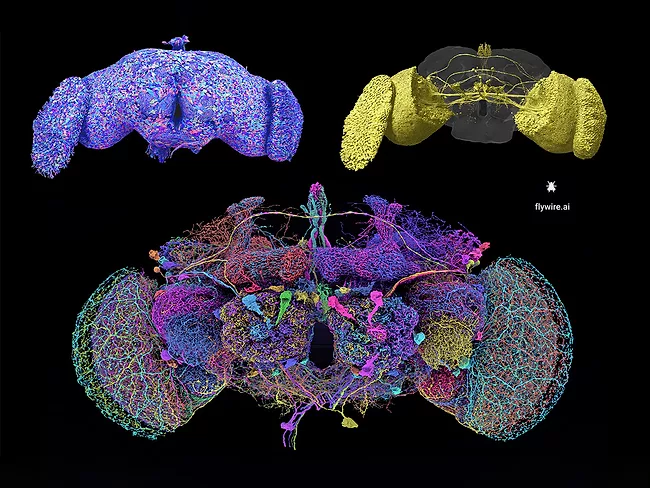
A collaboration led by the Flywire Consortium and comprising hundreds of scientists has completed a whole map of the adult fruit fly brain after several decades of collaborative work. By using electron microscopy and three-dimensional reconstruction supported by AI tools, the researchers have revealed the neural wiring of the Drosophila melanogaster brain, a connectome of 140,000 neurons with 50 million synaptic connections. In the future, researchers could possibly use this map as an artificial in silico model to study the brain as a simulator through its connections, though a lot of work remains to be done for this.
An innovation that has kickstarted a revolution in the study and practice of health care is getting even more attention. Three scientists who pioneered the discovery and development of glucagon-like peptide-1 (GLP-1)-based obesity treatments have been named 2024 Lasker Award winners.
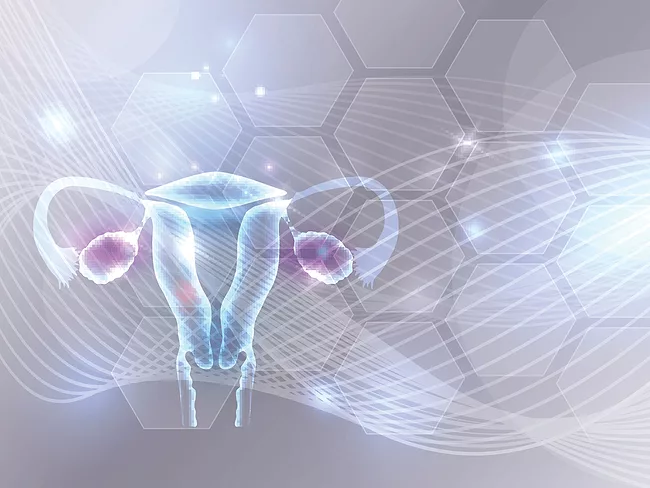
By treating mice with antifibrotic drugs, researchers were able to stave off functional decline of the ovaries. Six weeks of systemic treatment with the antifibrotic pirfenidone, which is approved for the treatment of idiopathic pulmonary fibrosis, in early middle age improved both the morphology and the endocrine function of the animals’ ovaries at 1 year of age.
The Annual Congress of the European Committee for Treatment and Research in Multiple Sclerosis (ECTRIMS) meeting in Copenhagen this week is celebrating its 40th edition. In recognition of this landmark, the plenary session and opening lecture were attended by Queen Margrethe of Denmark. Afterward, the hot topic session on neuroprotective therapies set the stage for the subsequent discussions on the latest trends in the management and treatment of multiple sclerosis (MS).
How do exercise and insulin collaborate in metabolism? The European Association for the Study of Diabetes (EASD) and the Novo Nordisk Foundation recognized the work of Juleen Zierath in this topic with the Diabetes Prize for Excellence at their recent annual meeting.
Metastatic solid tumors may be curable now. Among the most profound results presented over the weekend at the European Society for Medical Oncology (ESMO) 2024 Congress were the 10-year data from the Checkmate-067 and Keynote-006 trials, the phase III trials that tested Opdivo (nivolumab, Bristol Myers Squibb Co.) and Keytruda (pembrolizumab, Merck & Co. Inc.) as first-line agents in advanced or metastatic melanoma.
By looking at the electrical activity of tumor cells, rather than the neurons that innervate them, investigators at Baylor College of Medicine have added both basic and translational insights to the emerging field of cancer neuroscience. In their studies, which were published in Cancer Cell on Sept. 5, 2024, the researchers identified the cell of origin for IDH-mutated gliomas.
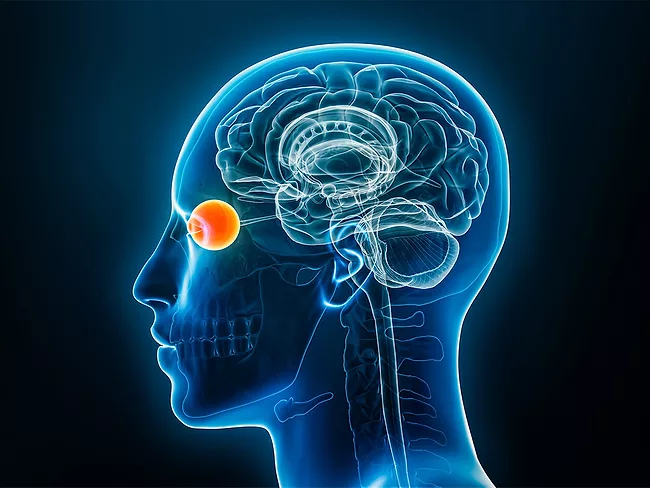
A novel gene therapy that leads to cellular rejuvenation could restore vision after non-arteritic anterior ischemic optic neuropathy (NAION) and glaucoma. The technique is based on a reprogramming process that reverses the epigenetic DNA alterations caused by aging. Preclinical studies in glaucoma mice and nonhuman primates (NHP) models for this stroke-like disorder that affects the eye, showed an improvement of vision and restoration of the damaged axons of the optic nerve.
By looking at the electrical activity of tumor cells, rather than the neurons that innervate them, investigators at Baylor College of Medicine have added both basic and translational insights to the emerging field of cancer neuroscience. In their studies, which were published in Cancer Cell on Sept. 5, 2024, the researchers identified the cell of origin for IDH-mutated gliomas.
Immortality and eternal youth have been the stuff of myths and legends from ancient times on. Now, in the 21st century, real studies of current medicine could be applied to repair tissues and organs damaged by age. During the 11th Aging Research & Drug Discovery (ARDD) Meeting held at the University of Copenhagen at the end of August, scientists explained the molecular keys of rejuvenation, as many artists imagined in the past.
 RSS
RSS