Although antiretroviral therapy (ART) can suppress HIV to undetectable levels, a growing body of evidence suggests that the virus leaves a lasting biological imprint. At the 26th International AIDS Conference (AIDS 2026), researchers reported persistent abnormalities affecting the gut, cardiovascular system, metabolism and immune function despite effective viral control.
The search for better schizophrenia therapies is moving beyond dopamine toward a growing number of experimental targets. According to researchers, the repeated failures of some late-stage programs may reflect not only the complexity of the disease, but also the need to better identify the patients most likely to benefit from each approach.
The HIV vaccine field is increasingly focusing on inducing broadly neutralizing antibodies (bNAbs) that can recognize the virus’s genetic diversity. Recent experimental approaches include germline-targeting vaccines, sequential immunization strategies, mRNA-based immunogens, and nanoparticle platforms displaying engineered HIV envelope (Env) trimers. Several studies published in 2025 and 2026 how these designs guide antibody maturation in humans and generate broad neutralizing responses in nonhuman primates, although no HIV vaccine has yet demonstrated protective efficacy in large clinical trials.
Researchers at Washington University in St. Louis have used click chemistry to link a second antibody to a pre-existing antibody-drug conjugate (ADC) in vivo. In preclinical models of HER2 and EGFR co-expressing pancreatic, breast and gastric tumors, sequential administration of the ADC and the second antibody was better at shrinking tumors than either ADC monotherapy or a combination of antibody and ADC treatment.
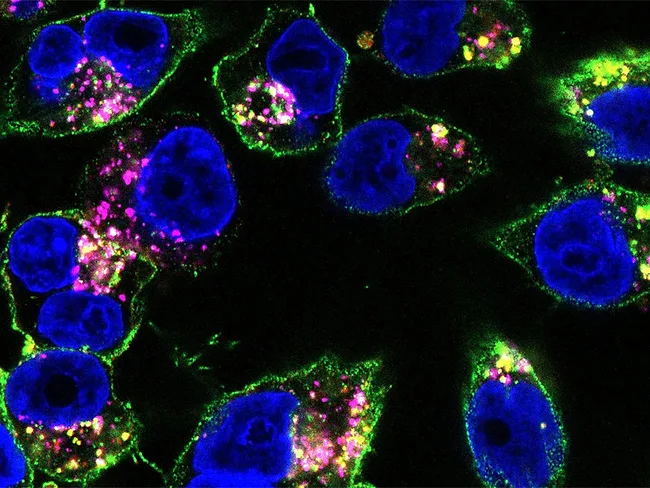
Respiratory syncytial virus (RSV) infection is responsible for 3.2 million hospital admissions and about 118,000 deaths in children under 5 years of age. The increased risk of RSV infection (and other infectious diseases) in young children is broadly attributed to their immature immune system. But researchers from University College London have published work suggesting that this is not the only reason.
New research has teased out specific aspects of how Epstein-Barr virus (EBV) sparks the immune response that leads on to the development of multiple sclerosis (MS), opening the way to the rational design of vaccines and antivirals that address the root cause of the disease.
Certain cancers that contain organized clusters of immune cells known as tertiary lymphoid structures (TLS) do not respond to treatment as well as expected. Even though they have TLS that support the elimination of cancer cells, they remain resistant to immunotherapy. γ-Aminobutyric acid (GABA), better known as the brain’s major inhibitory neurotransmitter, may play a role in this lack of response by acting as an immunoregulatory metabolite, according to a study led by scientists at Sorbonne Université.
The Alzheimer’s Association International Conference (AAIC) is the world’s biggest dementia conference. And at the AAIC 2026 meeting, there is big buzz around tau. Sunday’s plenary speaker Ryan Watts, CEO of Denali Therapeutics Inc., highlighted tau-lowering agents as being among the most exciting themes of the conference. “At this conference, we’re going to see additional clinical data that may validate [tau as] a second target in Alzheimer’s disease, amyloid being the first,” he told the audience.
Whether by fine-tuning neurotransmitter signaling or silencing disease-associated genes, emerging biologic therapies are reshaping neuroscience drug development, according to presentations at the FENS Forum 2026.
At the recently opened FENS Forum 2026 in Barcelona – the Federation of European Neuroscience Societies’ flagship congress and Europe’s largest neuroscience meeting – a symposium on ectodomain shedding showcased how soluble synaptic proteins are emerging as both biomarkers and therapeutic candidates for disorders ranging from autism to schizophrenia.
 RSS
RSS