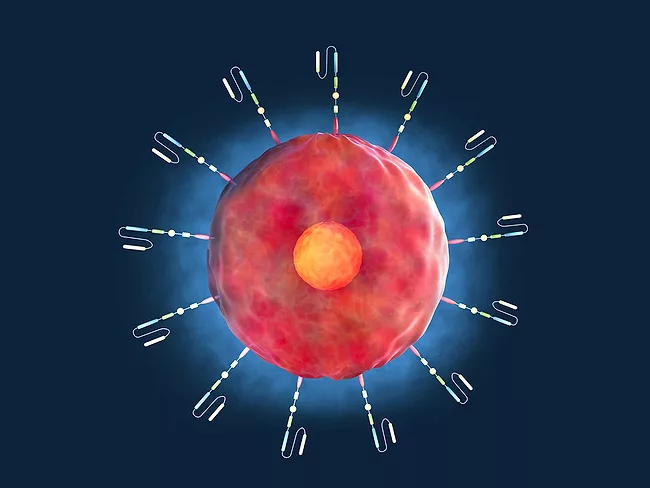
Enara Bio Ltd. is staking a claim to having validated the first in a new class of tumor antigens derived from unannotated regions of the dark genome, describing its findings in talks and posters being presented at the Society of Immunotherapy in Cancer (SITC) meeting in National Harbor, Md., Nov. 5-9, 2025.
At the AACR-NCI-ORTC conference, researchers from Dewpoint Therapeutics Inc. presented advances in targeting MYC condensates, revealing a potential breakthrough strategy for treating cancers driven by MYC – a well-established oncogenic driver that is frequently overexpressed or amplified across a range of human cancers.
Bowhead whales (Balaena mysticetus) live year-round in the icy or near-icy waters of the Arctic and sub-Arctic. Although they migrate with the seasonal cycles of ice formation and melting, they never reach the warmer waters visited by other large marine mammals. Their adaptation to low temperatures may have also enabled them to live longer and avoid cancer, a disease closely linked to aging.
At this year’s AACR-NCI-EORTC conference, several presentations brought to light new ways to tackle the treatment of genomically unstable cancers. Genomically unstable cancers can be treated by exploiting their repair dependencies, inducing catastrophic DNA damage, or harnessing immune responses to instability.
A technology that combines transcriptomic data and AI enables a novel approach to drug discovery based on the state of cells, how they behave and which genes they express. The Drugreflector model, developed by scientists at Cellarity Inc., learns from gene expression profiles and predicts which compounds could induce beneficial changes in that cellular state to develop a treatment.
Durable reprogramming of human T cells may now be possible thanks to a new technique based on the CRISPRoff and CRISPRon methodology. Researchers from the Arc Institute, Gladstone Institutes, and the University of California San Francisco (UCSF) have stably silenced or activated genes in this type of immune cell without cutting or altering its DNA, making T cells more resistant, active, and effective against tumors.
While recent advances in gene therapy have offered unprecedented options for patients with hemophilia, new data presented at the 32nd Annual Congress of the European Society of Gene and Cell Therapy (ESGCT), held in Seville Oct. 7-10, revealed persistent concerns regarding the durability of these treatments and their potential liver toxicity.
The transition from complex and costly ex vivo strategies to platforms that enable direct cellular intervention within the body, known as in vivo therapies, is marking a paradigm change in the field of gene and cell therapies by simplifying manufacturing, improving tissue targeting and expanding clinical access to treatments.
As the many challenges facing cell therapies are being addressed, the CAR T field continues to evolve beyond its original design of T cells engineered to target hematological malignancies. During the 32nd Annual Congress of the European Society of Gene and Cell Therapy (ESGCT), held in Seville Oct. 7-10, several studies showed how this technology is being redefined as programmable and adaptable immune cells with expanded functional versatility.
The 2025 Nobel Prize in Chemistry “is a story full of holes, but with enormous capacity to absorb all your attention,” Heiner Linke told reporters. “And other things.” Linke is Chair of the Nobel Committee for Chemistry. On Oct. 8, 2025, the committee announced that it has awarded the 2025 Nobel Prize in Chemistry to Susumu Kitagawa, Richard Robson and Omar Yaghi “for the development of metal-organic frameworks” (MOFs).
 RSS
RSS