BioWorld. Link to homepage.

Clarivate
  • BioWorld
  • BioWorld Science
  • BioWorld Asia
  • Data Snapshots
    • Biopharma
    • Medical technology
    • Infographics: Dynamic digital data analysis
    • Index insights
    • NME Digest
  • Special reports
    • Infographics: Dynamic digital data analysis
    • Ebola outbreak
    • Hantavirus
    • Trump administration impacts
    • Med-tech outlook 2026
    • Under threat: mRNA vaccine research
    • BioWorld at 35
    • Biopharma M&A scorecard
    • Bioworld 2025 review
    • BioWorld MedTech 2025 review
    • BioWorld Science 2025 review
    • Women's health
    • China's GLP-1 landscape
    • PFA re-energizes afib market
    • China CAR T
    • Alzheimer's disease
    • Coronavirus
    • More reports can be found here

BioWorld. Link to homepage.

  • Sign In
  • Sign Out
  • My Account
Subscribe
BioWorld - Thursday, June 11, 2026
Home » Topics » Science, BioWorld Science

Science, BioWorld Science
Science, BioWorld Science RSS Feed RSS

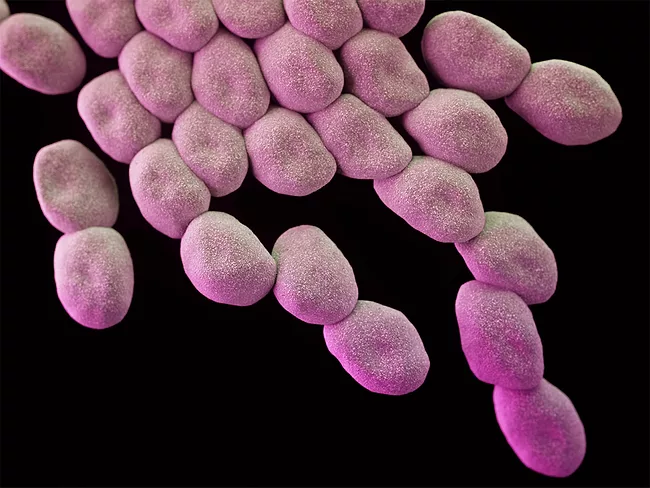
Acinetobacter spp.
Infection

Old-fashioned screening approach yields new antibiotic class

Jan. 4, 2024
By Anette Breindl
Researchers have identified a new class of antibiotics that works by blocking the transportation of lipopolysaccharide (LPS) to the outer membrane of the gram-negative bacterium Acinetobacter baumannii. The most advanced member of the class, zosurabalpin (RG-6006, Roche AG), was effective against multiple A. baumannii strains, including carbapenem-resistant and multidrug-resistant strains.
Read More
Bacteria targeted by technology concept art
Infection

Explainable AI finds new class of antibiotics

Dec. 20, 2023
By Anette Breindl
Researchers have used explainable artificial intelligence (explainable AI) to find structurally new antibiotics with minimal toxicity. They reported their findings online in Nature on Dec. 20, 2023. In animal testing, compounds identified via the method showed that they had activity against drug-resistant gram-positive bacteria including methicillin-resistant Staphylococcus aureus (MRSA), one of the most serious bacterial public health threats.
Read More
Human NK cell
Hematologic

ASH 2023: NK cells championed as way to trifecta of fast, cheap, good – with engineering help

Dec. 12, 2023
By Anette Breindl
Katy Rezvani received this year’s E. Donnall Thomas Prize for her work on natural killer (NK) cells at the annual meeting of the American Society of Hematology (ASH). It was not love at first sight, though.
Read More
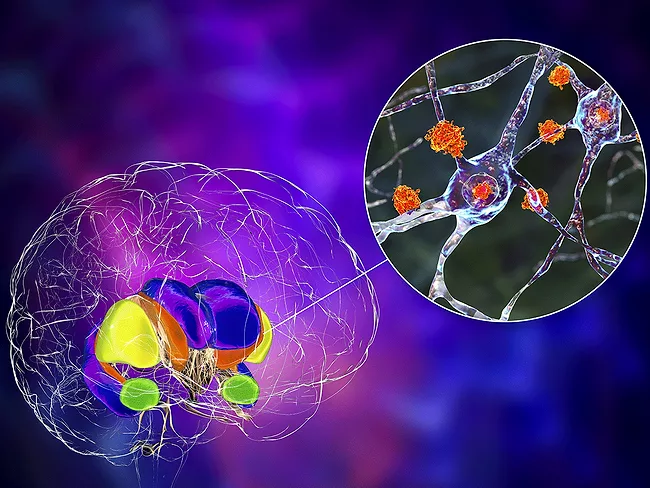
Dorsal striatum and its neurons in Huntington's disease
Neurology/Psychiatric

SfN 2023: Lessons from Huntington’s successes, and failures

Nov. 13, 2023
By Anette Breindl
The gene for Huntington’s disease “was cloned in 1993, and everyone thought there was going to be a treatment right around the corner,” Sarah Tabrizi told the audience at the 2023 Annual Meeting of the Society for Neuroscience. Then, “it took 25 years for the first trial targeting the Huntington gene.”
Read More
Images showing the green fluorescence signals in different body parts of the live-birth chimeric monkey.
Drug Design, Drug Delivery & Technologies

1st chimeric monkey born with large embryonic stem cell contribution

Nov. 9, 2023
By Anette Breindl
Investigators at the Chinese Academy of Sciences have generated a chimeric monkey by injecting an embryonic stem cell into the morula, which is an extremely early embryo consisting of 16 to 32 cells. The animal survived for only 10 days, and it is not the first live birth of a chimeric primate. But it is the first such chimera with contributions from an embryonic stem cell, and that stem cell contributed a far higher proportion of cells in the newborn than have been achieved in previous attempts at creating chimeras.
Read More
Illustration of abdominal aortic aneurysm
Cardiovascular

Study identifies nearly 100 abdominal aortic aneurysm risk genes

Nov. 3, 2023
By Mar de Miguel
The largest genetic analysis of abdominal aortic aneurysm (AAA) carried out to date has identified almost 100 new risk variants linked to the disorder. The study also highlighted a possible therapeutic target for this pathology that, at the moment, has no treatment. AAA affects 4% of people over 65 years of age in the U.S. and causes 41,000 deaths per year. The incidence is three to four times higher in men than in women.
Read More
AI generated illustration of lungs in the human body
Cancer

ESMO 2023: New approaches to old targets, including HER2 and p53

Oct. 23, 2023
By Mar de Miguel
Some cancers with a poor prognosis have had no new treatments in decades. Advances in the genetic characterization of these tumors now offer a range of possibilities for the development of new therapies that could completely change the quality of life and survival of these patients.
Read More
DNA and cancer cells
Cancer

AACR-NCI-EORTC 2023: Understanding ecDNA to stop running in circles in cancer

Oct. 16, 2023
By Coia Dulsat
Cancer treatments for targeting tumor amplifications lag behind those targeting point mutations – and part of the reason may be that amplifications often reside on extrachromosomal DNA (ecDNA). Since ecDNA was first described back in 1965 as minute chromatin bodies in brain cancer cells, the use of large-scale DNA sequencing techniques has revealed the presence of ecDNA across a wide range of cancer types. “The circular structure of ecDNA is associated with increased proto-oncogenic capacity in comparison to linear amplifications. Another key feature is that ecDNA does not contain centromeres,” Roel Verhaak, from Yale School of Medicine, told the audience in a session at the 2023 AACR-NCI-EORTC Conference on Molecular Targets and Cancer Therapeutics in Boston.
Read More
CRISPR-edited kidney under microscope
Immune

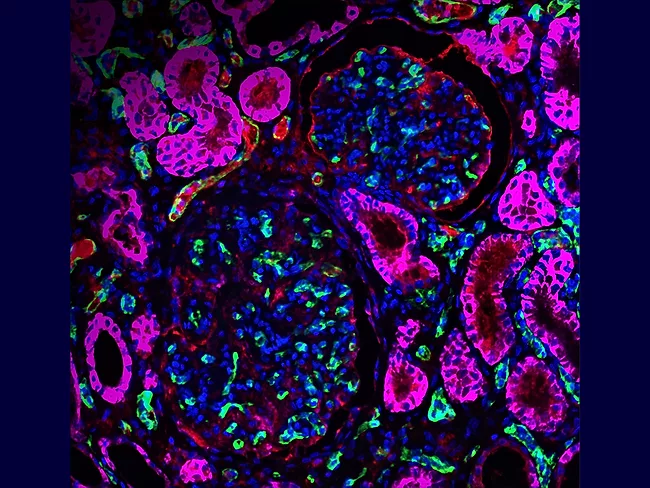
Most-edited-ever donor genomes lead to 2-year survival in porcine-to-primate kidney transplants

Oct. 11, 2023
By Anette Breindl and Mar de Miguel
Scientists at Egenesis Inc. have transplanted kidneys from genome-edited pigs into cynomolgus monkeys that remained functional for long periods after transplantation. The monkeys, whose own kidneys were removed during the surgery, survived for a median of 176 days after receiving one pig kidney. Maximal survival was just over 2 years. The data were published today in Nature. Egenesis CEO Mike Curtis told reporters that the study has achieved the longest survival to date “using clinically translatable immunosuppression … longer survival has been achieved using really aggressive immunosuppression that really isn’t clinically translatable.”
Read More
Woman  in military clothing talking with psychologist
Neurology/Psychiatric

ECNP 2023: Boosting fear unlearning is one avenue toward treating PTSD

Oct. 9, 2023
By Anette Breindl
For most psychiatric illnesses, the precipitating event is mysterious. Many conditions are thought to result from a mix of genetic risk and environmental factors, but the specific trigger remains unknown. In post-traumatic stress disorder (PTSD), the environmental trigger is usually clear. In many cases, it is all the affected individuals can think about. “Intrusive reliving” of the triggering situation is one of the core features of PTSD.
Read More
Previous 1 2 … 20 21 22 23 24 25 26 27 28 29 30 Next

Popular Stories

  • Today's news in brief

    BioWorld
    BioWorld briefs for June 10, 2026.
  • News in brief

    BioWorld Asia
    BioWorld Asia briefs for June 9, 2026
  • 3D rendering of β2-Adrenergic receptor GPCR protein molecule embedded in lipid bilayer membrane.

    Skape Bio unlocks GPCR targets with de novo-designed miniproteins

    BioWorld
    Modulating G protein-coupled receptors (GPCRs) is one of the major challenges in biomedicine. These are flexible proteins with small, deep binding pockets. The...
  • Antares Therapeutics divulges new CDK2/cyclin E1 inhibitors

    BioWorld Science
    Antares Therapeutics Inc. has reported new CDK2/cyclin E1 inhibitors potentially useful for the treatment of cancer.
  • Empire Discovery Institute, Univ. of Rochester identify IRAK inhibitors

    BioWorld Science
    Empire Discovery Institute and the University of Rochester have discovered new interleukin-1 receptor-associated kinase 1 (IRAK-1) and/or IRAK-4 inhibitors...
  • BioWorld
    • Today's news
    • Analysis and data insight
    • Clinical
    • Data Snapshots
    • Deals and M&A
    • Financings
    • Medical technology
    • Newco news
    • Opinion
    • Regulatory
  • BioWorld Science
    • Today's news
    • Biomarkers
    • Cancer
    • Conferences
    • Endocrine/metabolic
    • Immune
    • Infection
    • Neurology/psychiatric
    • NME Digest
    • Patents
  • BioWorld Asia
    • Today's news
    • Analysis and data insight
    • Australia
    • China
    • Clinical
    • Deals and M&A
    • Financings
    • Newco news
    • Regulatory
    • Science
  • More
    • About
    • Advertise with BioWorld
    • Archives
    • Article reprints and permissions
    • Contact us
    • Cookie policy
    • Copyright notice
    • Data methodology
    • Infographics: Dynamic digital data analysis
    • Index insights
    • Podcasts
    • Privacy policy
    • Share your news with BioWorld
    • Staff
    • Terms of use
    • Topic alerts
Follow Us

Copyright ©2026. All Rights Reserved. Design, CMS, Hosting & Web Development :: ePublishing