On Thursday, the Supreme Court handed the Trump administration another significant victory in its attempts to defund NIH-sponsored research. In a 5-4 decision, the justices paused the June 16 order of U.S. District Judge William Young to restore funding for hundreds of canceled NIH research grants focusing on gender and diversity, equity and inclusion (DEI). The funding had first been cut through a series of executive orders shortly after President Donald Trump resumed power in January.
An investigation of the epidemiology and clinical characteristics of neuropathic pain in the UK Biobank has led to the discovery of a new pain gene and potential analgesic drug target in the peripheral nervous system. The gene, SLC45A4 (solute carrier 45A4), codes for a transporter that is involved in trafficking polyamines known to be involved in pain, across the cell membrane.
A new method for accelerating the maturation of neuronal cell models and brain organoids is poised to make it possible to track the etiology of neurodegenerative diseases that develop over decades. The non-invasive technique uses graphene to convert light into electrical cues that prompt neurons to connect and communicate in vitro.
German researchers have cracked the decades-long mystery of why males are more susceptible to acute kidney injury than females, demonstrating that estrogen has a protective effect in females.
The U.K. Medicines and Healthcare products Agency (MHRA) is calling for more research into the vaginal microbiome as a way to redress the historic under-representation of women in clinical studies, which it said has contributed to “critical shortcomings” in understanding of female-specific conditions.
The largest genome-wide association study to date of myalgic encephalomyelitis/chronic fatigue syndrome has identified eight genetic loci that are significantly associated with the chronic debilitating condition. Onset of ME/CFS often is traced back to an infection and four of the loci involve genes that are expressed in response to viral or bacterial infections.
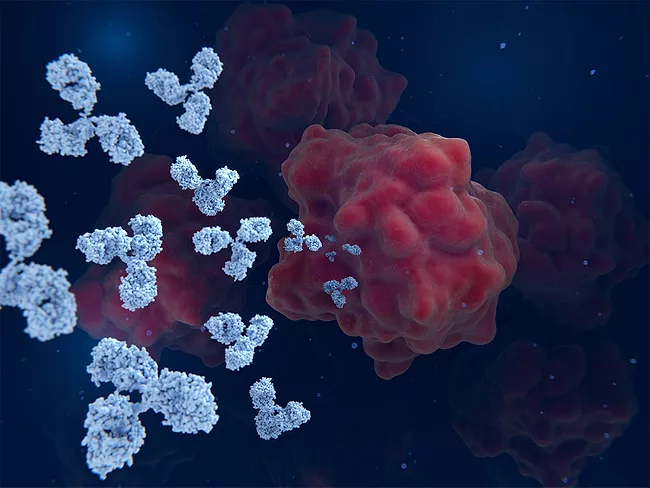
Researchers at the Fred Hutchinson Cancer Research Center found that autoantibodies targeting the exoproteome reshaped checkpoint inhibitor responses and opened new avenues to enhance immunotherapy. In the study published in the July 23, 2025, issue of Nature, the authors set out to address a long-standing question in cancer immunotherapy: why patients with the same type of cancer, treated with the same immunotherapy, can experience such drastically different outcomes.
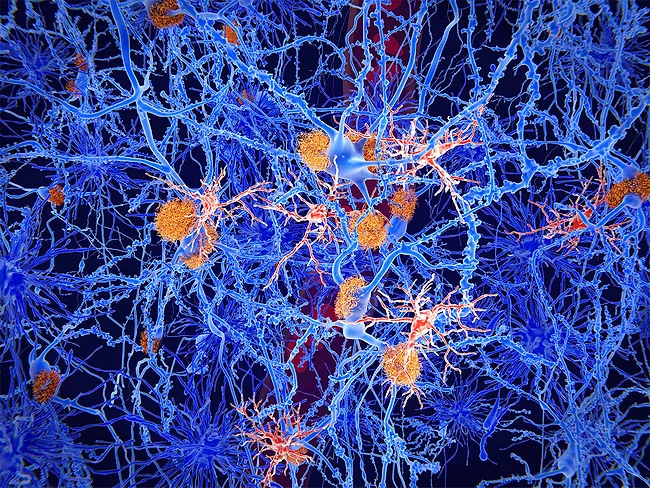
Current treatments for Alzheimer’s disease have limited effects. While they can slow cognitive decline or alleviate symptoms, they do not reverse this complex neurodegenerative condition caused by multiple factors. Researchers from the Gladstone Institutes and the University of California, San Francisco (UCSF) have screened FDA-approved drugs in search of agents that could potentially modify the disease.
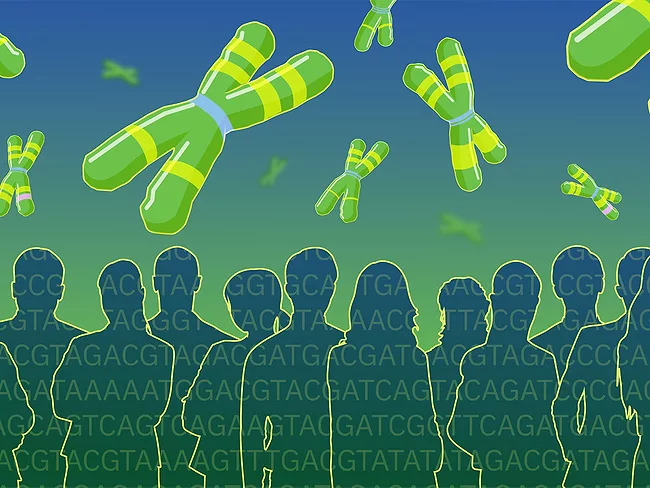
The human genome has yielded another round of secrets with the publication of two back-to-back papers in Nature on July 23, 2025. Both studies re-sequenced probands from the open-access 1000 Genomes Project, which was one of the first projects to sequence individuals from diverse populations.
The human genome has yielded another round of secrets with the publication of two back-to-back papers in Nature on July 23, 2025. Both studies re-sequenced probands from the open-access 1000 Genomes Project, which was one of the first projects to sequence individuals from diverse populations. While one paper “goes very deep and tries to reconstruct a few genomes to basically near completion,” the other specifically looked at structural variants in a larger number of genomes. Together, they give new insights into genome variation.
 RSS
RSS