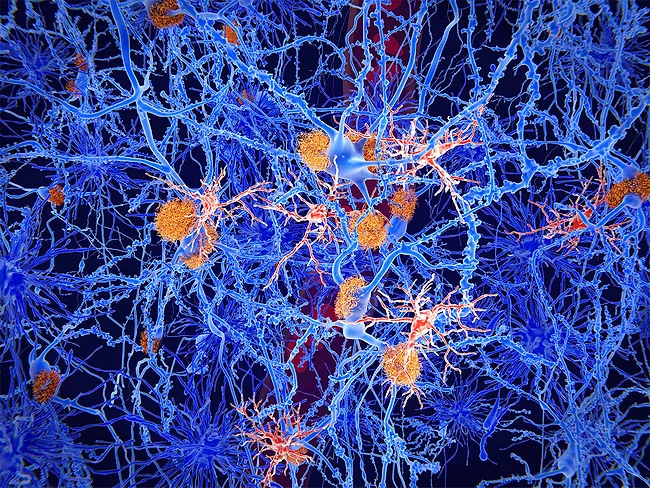
Reducing microglial activity in the presence of apolipoprotein E4 (APOE4) has uncovered a mechanism associated with the deposition of misfolded amyloid and tau in a novel mouse model of Alzheimer’s disease. By transplanting human neurons into the mouse brain and eliminating the mouse microglia, scientists at the Gladstone Institutes in San Francisco observed that amyloid and tau deposition was reduced. These results support therapeutic strategies that target APOE4 and microglia.
Researchers at Harvard Medical School have found that blocking the neuron-released peptide CGRP decreases pain sensitivity and reduces lesion size in endometriosis. Endometriosis is a painful, steroid-dependent inflammatory condition in which tissue similar to that of the endometrial lining grows and establishes outside the uterine mucosa.
Gene editing strategies, from epigenetic engineering to cell reprogramming and genetic vaccines, are accelerating the development of new therapies that awaken the immune system to treat cancer, as presented last month in Rome at the 31st Annual Congress of the European Society of Gene and Cell Therapy (ESGCT). Some of these advances are taking advantage of the conditions of the tumor microenvironment, where cancer cells coexist with immune cells, microorganisms and blood vessels.
Artificial intelligence (AI) is enabling a foundational understanding of drug discovery that is changing the typical pathway used in modern development. The powerful new computer technology will lead developers from conducting hypothesis-driven research to more and deeper data-driven research, Manolis Kellis, professor at the Computer Science and Artificial Intelligence Laboratory at the Massachusetts Institute of Technology (MIT) and an associate member at the Broad Institute of MIT and Harvard University, told those attending the BioFuture 2024 conference in New York on Oct. 28.
Currently, cancer therapy trial-and-error methodology is inefficient and unsustainable. Oncology is the worst therapeutic area for drug trial success; only 3.4% of drugs that enter phase I end up being FDA approved, and 57% fail due to poor drug efficacy in trials. Building tools that may aid in predicting an individual’s response to a specific therapy may help in reducing costs, guesswork, and importantly improve the outcome of patients and accelerate new drug development.
Scientists from different laboratories around the world have presented the latest advances in research into malignant brain tumors at the 31st Annual Congress of the European Society of Gene and Cell Therapy (ESGCT), which is being held Oct. 22 to 25 in Rome.
According to World Health Organization data, endometriosis affects about 10% of reproductive-age females globally. That already makes endometriosis a wildly underresearched and underfunded disease in relation to its prevalence. Plus, Rama Kommagani thinks even 10% is an underestimation. “Diagnosis is very underreported, particularly in low- and middle-income countries,” Kommagani, who is an associate professor of pathology at Baylor College of Medicine, told BioWorld.
When Andrew Wilks invented the JAK inhibitor momelotinib in the late 1980s for myelofibrosis, he never would have imagined it would take more than 20 years to develop and eventually be acquired for $1.9 billion. Today he’s on a mission to ensure Australian inventors have more options than he did, telling BioWorld that he had to sell the molecule for around $10 million because he couldn’t get funding.
A new study helps explain the role of genetic variation in shaping gene regulation in the Indonesian archipelago, one of the most diverse regions in the world. “This study is the only study of splicing from Southeast Asian populations. There is basically no data from this part of the world,” study author Irene Gallego Romero told BioWorld. For drug discovery, most of the people that have historically participated in clinical trials are of European ancestry, and scientists are just beginning to study African populations to better understand genetic differences in these populations, said Romero, a population geneticist and biological anthropologist at the University of Melbourne.
Breast cancer cells, when disseminated to other secondary organs such as the lungs, may stay in a dormant state for years, even decades. But the mechanisms that limit their expansion are not well understood. This is what researchers call a dormant mesenchymal-like phenotype before metastasis to the lungs. Now, scientists have shown in a study published Oct. 7, 2024, in Cell, that the limiting of disseminated breast cancer cells (DCCs) to metastasize in the lungs is due to alveolar macrophages, which activate signals that make DCCs stay dormant.
 RSS
RSS