BioWorld. Link to homepage.

Clarivate
  • BioWorld
  • BioWorld Science
  • BioWorld Asia
  • Data Snapshots
    • Biopharma
    • Medical technology
    • Infographics: Dynamic digital data analysis
    • Index insights
    • NME Digest
  • Special reports
    • Infographics: Dynamic digital data analysis
    • Trump administration impacts
    • Med-tech outlook 2026
    • Under threat: mRNA vaccine research
    • BioWorld at 35
    • Biopharma M&A scorecard
    • Bioworld 2025 review
    • BioWorld MedTech 2025 review
    • BioWorld Science 2025 review
    • Women's health
    • China's GLP-1 landscape
    • PFA re-energizes afib market
    • China CAR T
    • Alzheimer's disease
    • Coronavirus
    • More reports can be found here

BioWorld. Link to homepage.

  • Sign In
  • Sign Out
  • My Account
Subscribe
BioWorld - Wednesday, April 8, 2026
Home » Topics » Science, BioWorld

Science, BioWorld
Science, BioWorld RSS Feed RSS

Depression concept with human, broken brain and heavy rain
HIV/AIDS

CROI 2026 highlights depression and cognitive vulnerability in HIV

Feb. 26, 2026
By Mar de Miguel
No Comments
The effects of aging pose an additional challenge for people with HIV due to the neurological and psychological consequences that persist despite antiretroviral therapy. At the Conference on Retroviruses and Opportunistic Infections (CROI) held Feb. 22-25, 2026, in Denver, the scientific community examined how the virus affects the brain, how the reservoir is established in the CNS, and which genetic, immunological or treatment-related factors influence cognitive health.
Read More
Brain and virus with chromosome
HIV/AIDS

CROI 2026: Neurodegeneration, the challenge of aging with HIV

Feb. 25, 2026
By Mar de Miguel
No Comments
Antiretroviral therapies against HIV have been in use for more than 30 years and have enabled people living with HIV to maintain undetectable viral levels. Many of them are aging in good health. However, others present symptoms of cognitive decline. HIV can reach the brain and establish a reservoir there. Yet, it is still unknown what this reservoir is like, which cells are affected, and which comorbidities are typical of aging or are associated with the virus.
Read More
Colorized scanning electron micrograph of a T lymphocyte.

SLAMF6 is suppressor of T-cell cancer immunity

Feb. 19, 2026
By Mar de Miguel
No Comments
SLAMF6 is an immune cell receptor whose function was not clear. Does it activate or inhibit cells? The results so far have been contradictory. Now, scientists at the Institut de Recherches Cliniques de Montréal have unveiled evidence that SLAMF6, a protein of the SLAM family that binds to copies of itself, is regulated by interactions between molecules of the same receptor within the same cell.
Read More
Illustration of SCAN in Parkinson’s vs healthy subcortex

SCAN is core circuit affected in Parkinson’s disease

Feb. 18, 2026
By Mar de Miguel
No Comments
Parkinson’s disease is a neurodegenerative disorder that affects movement, and tremor is one of its signatures. But it is a much more wide-ranging disorder, and patients experience problems with cognitive and emotional processes as well. SCAN, the somato-cognitive action network identified in 2023, could reshape the definition of PD. Treating this circuit can improve outcomes.
Read More
3D illustration of organoid models in a petri dish
Drug design, drug delivery & technologies

Human organoid mimics cancer-induced cachexia

Feb. 17, 2026
By Mar de Miguel
No Comments
The variety of organoids that can be developed in vitro is enabling major advances. Depending on the type of tissues and the research goals, these small 3D cell-based structures that mimic real tissue offer certain advantages over animal models. Scientists at the University of Padova in Italy have created human neuromuscular organoids to reproduce cancer-induced muscle cachexia, a condition that murine models do not accurately replicate.
Read More
Illustration of normal muscle compared to muscle atrophy in cancer cachexia or anorexia

Tumor, immune and neural cells are involved in cancer cachexia

Feb. 13, 2026
By Mar de Miguel
No Comments
A circuit formed by tumor, immune and nervous systems triggers cancer cachexia and anorexia, the excessive loss of weight, muscle and fat experienced in some cancer types. A new study is the first showing these three actors of a triangle interaction that initiates and feeds the process.
Read More
Illustration of human anatomy showing lymphatic system
Endocrine/metabolic

Targeting cholesterol deposition could treat lymphedema

Feb. 11, 2026
By Mar de Miguel
No Comments
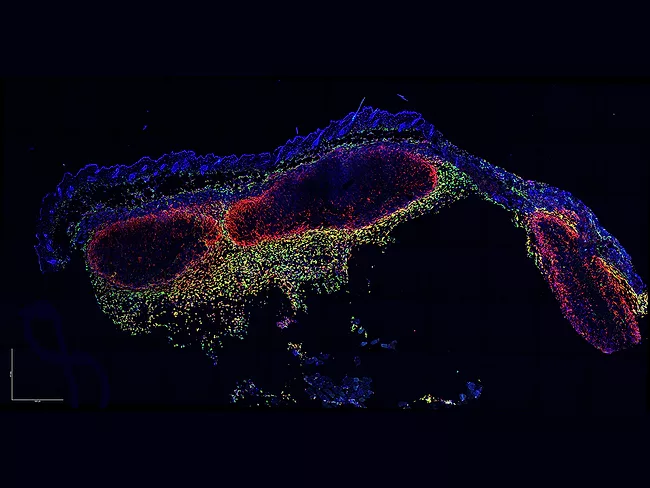
The malfunction of lymphatic drainage that occurs in lymphedema leads to excessive cholesterol accumulation in the affected skin and lymphatic vessels, causing inflammation and fibrosis. However, surgery and the chemical reduction of accumulated cholesterol with cyclodextrin reduce inflammation and regenerate lymphatic vessels. Cholesterol is a potential therapeutic target for treating lymphedema, according to this study published on Feb. 11, 2026, in Nature by Veronique Angeli and her colleagues.
Read More
Photomicrograph of hepatocellular carcinoma
Cancer

ATF6 shapes liver cancer: from ER stress to inflammation

Feb. 10, 2026
By Coia Dulsat
No Comments
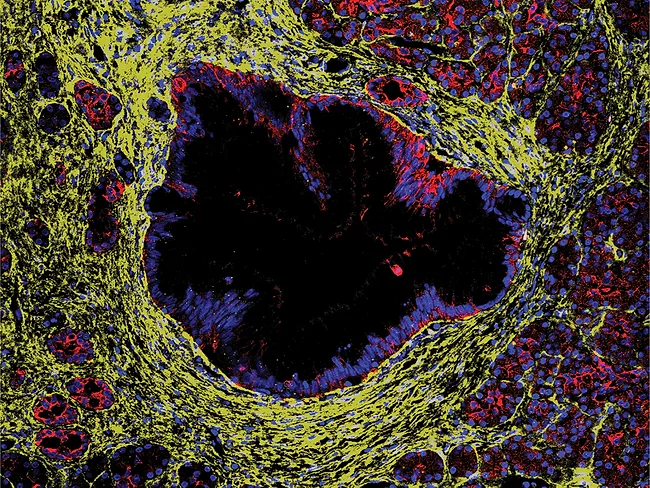
Hepatocellular carcinoma (HCC) is the most common form of primary liver cancer, representing approximately 75-85% of all cases. Often considered preventable, primary liver cancer ranks as the sixth most frequently diagnosed cancer and the third leading cause of cancer deaths worldwide. Through a multi-institutional effort, researchers have identified activated ATF6α as a driver of HCC that suppresses immune defenses, predicts response to immune checkpoint therapy, and represents a potential target for intervention.
Read More
Illustration of heart and brain communicating
Cardiovascular

Three-stop loop is behind post-myocardial infarction responses

Feb. 9, 2026
By Xavier Bofill Bruna
No Comments
The neural and neuroimmune mechanisms behind myocardial infarction-triggered cardiac events, immune responses and activation of the nervous system remain largely unexplored. The heart and the brain talk to each other in what is known as cardioception. This communication between the two organs is orchestrated through neurons of the vagus nerve or the dorsal root ganglia, among others. Researchers from the University of California, San Diego have now shown that the dynamics of these interactions may play a crucial role in modulating inflammation, repair and cardiac functioning.
Read More
Art concept for liver damage, such as fatty liver, fibrosis or cirrhosis

In vivo CAR T cells reduce liver fibrosis

Feb. 2, 2026
By Mar de Miguel
No Comments
Liver fibrosis in the course of metabolic dysfunction-associated steatohepatitis could be significantly reduced using CAR T-cells generated in vivo. Scientists at the Icahn School of Medicine at Mount Sinai have developed an experimental cell therapy that eliminates only one type of liver cell, the stellate cells that express fibroblast activation protein alpha. This strategy not only reduced fibrosis but also reversed liver damage.
Read More
Previous 1 2 3 4 5 6 7 8 9 … 86 87 Next

Popular Stories

  • Today's news in brief

    BioWorld
    BioWorld briefs for April 7, 2026.
  • Hengrui discovers new Nav1.8 blockers

    BioWorld Science
    Researchers from Jiangsu Hengrui Pharmaceuticals Co. Ltd. and Shanghai Hengrui Pharmaceutical Co. Ltd. have patented new sodium channel protein type 10 subunit α...
  • Cancer and blood cells

    Hematopoietic stem cell research points to leukemia’s early roots

    BioWorld Science
    Hematopoietic stem cell (HSC) research over the past century has shown that leukemia may be driven by an invisible hand of inflammation. The bone marrow and...
  • News in brief

    BioWorld Asia
    BioWorld Asia briefs for April 7, 2026
  • 3D illustration of antibodies

    Infinimmune presents preclinical data on anti-IL-22 antibody for atopic dermatitis

    BioWorld Science
    Infinimmune Inc. has recently presented results at the annual American Academy of Dermatology conference regarding their anti-IL-22 antibody IFX-101 for the...
  • BioWorld
    • Today's news
    • Analysis and data insight
    • Clinical
    • Data Snapshots
    • Deals and M&A
    • Financings
    • Medical technology
    • Newco news
    • Opinion
    • Regulatory
  • BioWorld Science
    • Today's news
    • Biomarkers
    • Cancer
    • Conferences
    • Endocrine/metabolic
    • Immune
    • Infection
    • Neurology/psychiatric
    • NME Digest
    • Patents
  • BioWorld Asia
    • Today's news
    • Analysis and data insight
    • Australia
    • China
    • Clinical
    • Deals and M&A
    • Financings
    • Newco news
    • Regulatory
    • Science
  • More
    • About
    • Advertise with BioWorld
    • Archives
    • Article reprints and permissions
    • Contact us
    • Cookie policy
    • Copyright notice
    • Data methodology
    • Infographics: Dynamic digital data analysis
    • Index insights
    • Podcasts
    • Privacy policy
    • Share your news with BioWorld
    • Staff
    • Terms of use
    • Topic alerts
Follow Us

Copyright ©2026. All Rights Reserved. Design, CMS, Hosting & Web Development :: ePublishing