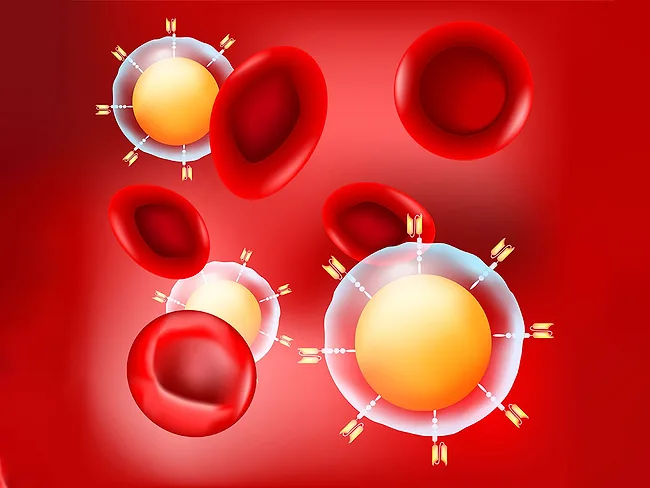
Clonal hematopoiesis (CH), where few blood stem cells produce a significant fraction of mature blood cells that are genetically identical, is partly an inevitable feature of aging. Certainly, it is near universal in those older than 60. CH is not itself a disease, but 1%-2% of CH cases progress to acute myeloid leukemia, and it raises the risk of some other types of cancer as well. A total of eight genes are responsible for 95% of CH cases, George Vassiliou told the audience in Saturday’s plenary session at the 2026 Annual Congress of the European Hematology Association (EHA 2026).
Liraglutide, a glucagon-like peptide 1 (GLP-1) receptor agonist used in diabetes and obesity, could alleviate depression through a pathway that does not depend on the GLP-1 receptor but instead on the gut microbiota, since the treatment increases the presence of the bacterium Lactobacillus delbrueckii.
Treatment with first-generation CAR T cells regularly sent patients to the intensive care unit. Now, investigators are envisioning a future where CAR T treatment could occur on an outpatient basis. At Sunday’s late-breaking oral session of the 2026 Annual Congress of the European Hematology Association (EHA2026), Lei Fan told his audience that the first-in-human data “support further development of LB-2501 as a potential first-in-class, off-the-shelf, single infusion, no lymphodepletion, outpatient use CAR T therapy.” Fan is a professor of hematology at the First Affiliated Hospital of Nanjing Medical University.
In the most simplistic view, adult cancers occur because “immature cells are exposed to mutagens, accumulate mutations, and across life ultimately transform into cancer cells,” Franck Bourdeaut told his audience at the 2026 Annual Congress of the European Hematology Association (EHA 2026). “On the contrary, in pediatric cancers, it is assumed that very few mutations are responsible for a maturation block, make these cells derail from their normal differentiation trajectory and ultimately result in an early onset typical pediatric cancer.”
Former principal officers of the American Diabetes Association (ADA) have hit back at the association’s board and CEO after it prohibited the distribution of an editorial published in its flagship journal Diabetes Care at the ADA’s meeting in New Orleans last Friday.
Scientists at Columbia University have used base editing to make precise changes in the genomes of human embryos, avoiding the damage to chromosomes that occurs following two-stranded DNA cuts with conventional Crispr-Cas9 editing.
Researchers have identified a 14-protein blood signature that can predict lung cancer risk as much as five years before diagnosis, and the findings could help identify people who could benefit from preventive drugs. Published in Cell, the study was a collaboration between the Francis Crick Institute and University College London. It was co-led by Walter and Eliza Hall Institute laboratory head Clare Weeden, who conducted the research while at the Crick.
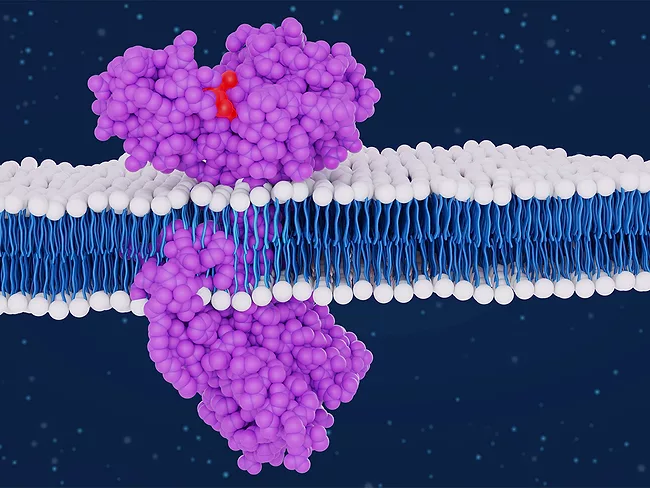
Modulating G protein-coupled receptors (GPCRs) is one of the major challenges in biomedicine. These are flexible proteins with small, deep binding pockets. The scientific community has explored small molecules, antibodies and nanobodies to develop ligands. Skape Bio Inc. is betting on creating miniproteins, a strategy that brings precise solutions for different functions.
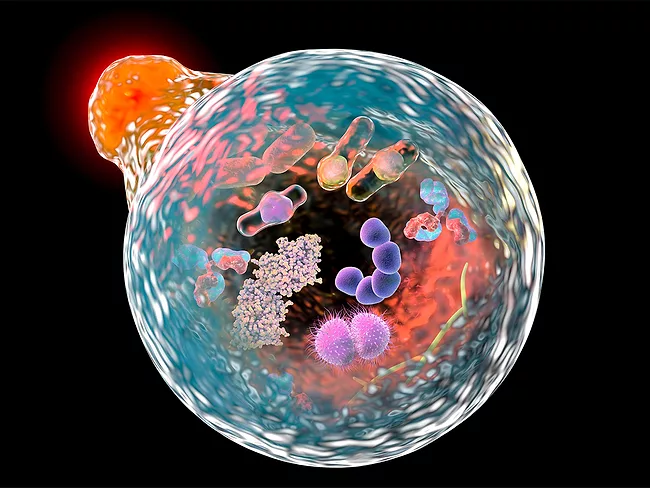
TRIM21, an enzyme involved in intracellular substrate degradation, can recognize viruses and bacteria that enter the cytosol when they are coated with antibodies. Just as it tags complex molecules for elimination, it can direct these infectious microorganisms to lysosomes through a mechanism its discoverers have termed antibody-directed xenophagy (ADX). Scientists at the Medical Research Council (MRC) Laboratory of Molecular Biology (LMB) in Cambridge, U.K., have identified the genes involved in this antibody-dependent degradation pathway, which acts as an antimicrobial process, and reported their findings in Molecular Cell on June 4, 2026.
The microbiome and a frontline innate antimicrobial sensor, Toll-like receptor 5 (TLR5), play an essential role in the development of idiopathic pulmonary fibrosis (IPF). A scientific collaboration led by researchers at the National Institute of Environmental Health Sciences has revealed how TLR5 protects against fibrosis through its ability to modulate the lung microbiome. Their study also shows that activating TLR5 protects against fibrosis and corrects pulmonary dysbiosis.
 RSS
RSS