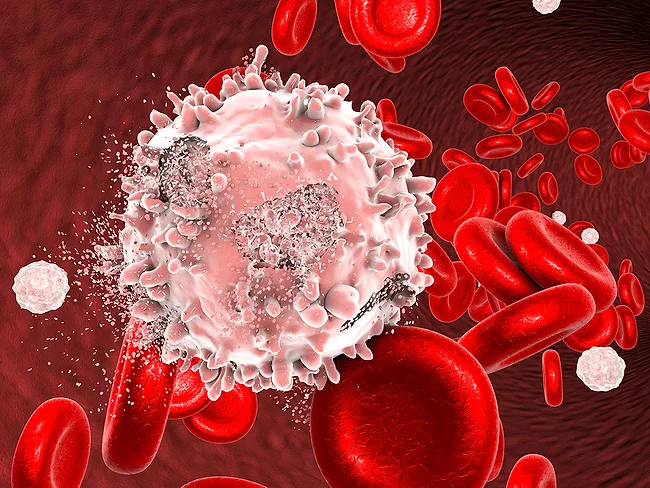
Six main cell types form glioblastomas (GBM), the most aggressive brain cancer due to its high rate of recurrence. Of these six, quiescent cancer stem cells are responsible for resistance to therapy and the reappearance of the tumor, according to a study that identified the six groups and highlighted the importance of these stem cells for the design of more effective therapies.
Phagocytosis – eliminating millions of dead cells every day – requires specialized cells such as macrophages, the true professionals, which migrate to engulf waste and dying cells.
Phagocytosis – eliminating millions of dead cells every day – requires specialized cells such as macrophages, the true professionals, which migrate to engulf waste and dying cells. But they are not the only ones that can perform this task, as scientists at Howard Hughes Medical Institute (HHMI) discovered when they investigated hair follicle stem cells (HFSCs), a tissue in constant regeneration, to clarify how dying cells are detected and cleared in the epithelium and the mesenchyme.
Researchers in Japan were able to transfer genes from jellyfish into common fruit flies and discovered that the transferred gene suppressed an age-related intestinal issue in the flies. The findings suggest that studying genes specific to animals with high regenerative capability like jellyfish may uncover new mechanisms for rejuvenating stem cell function and extending the healthy lifespan of unrelated organisms.
Researchers in Japan were able to transfer genes from jellyfish into common fruit flies and discovered that the transferred gene suppressed an age-related intestinal issue in the flies. The findings suggest that studying genes specific to animals with high regenerative capability like jellyfish may uncover new mechanisms for rejuvenating stem cell function and extending the healthy lifespan of unrelated organisms.
The word “niche” implies a specialized environment. But to Fiona Doetsch, the stem cell niche is anything but. For brain stem cells, “the whole organism is the niche,” Doetsch told the audience at the third plenary session of the International Society for Stem Cell Research (ISSCR) annual meeting in Hamburg this week.
The word “niche” implies a specialized environment. But to Fiona Doetsch, the stem cell niche is anything but. For brain stem cells, “the whole organism is the niche,” Doetsch told the audience at the third plenary session of the International Society for Stem Cell Research (ISSCR) annual meeting in Hamburg this week. It’s a surprising idea at first, given the brain’s protection from many circulating substances via a series of barriers, including the blood-brain barrier and the blood-cerebrospinal fluid barrier.
The big advantage of cell culture to model diseases is its throughput. “You can play the disease over and over again in the dish,” Clive Svendsen told the audience at the International Society of Stem Cell Research (ISSCR) Annual Meeting held in Hamburg last week. That high throughput, however, is not particularly useful if the cell lines themselves do not accurately model the disease. Cancer cell lines are used in many cell culture experiments far beyond cancer for their ability to grow. But they are “highly abnormal,” Bill Skarnes told the audience at an innovation showcase, as well as quite unstable. “I don’t think the [HEK-293] cell line is the same in your lab as it is in the lab next door,” Skarnes said.
The word “niche” implies a specialized environment. But to Fiona Doetsch, the stem cell niche is anything but. For brain stem cells, “the whole organism is the niche,” Doetsch told the audience at the third plenary session of the International Society for Stem Cell Research (ISSCR) annual meeting in Hamburg this week. It’s a surprising idea at first, given the brain’s protection from many circulating substances via a series of barriers, including the blood-brain barrier and the blood-cerebrospinal fluid barrier.
A group of scientists from Basel University Hospital have designed an antibody-drug conjugate (ADC) that eliminated blood cancer cells without attacking healthy hematopoietic stem cells (HSCs), which they modified by base editing and transplanted to renew an altered blood system. They achieved this by focusing on the panhematopoietic marker CD45.
 RSS
RSS