Over the next two weeks, the team at NGM Biopharmaceuticals Inc. will be digging through the data from its phase II trial of complement 3 inhibitor NGM-621 in patients with geographic atrophy (GA) secondary to age-related macular degeneration, following reports of a top-line miss Oct. 17 and a severe reaction from investors, who sent shares (NASDAQ:NGM) plummeting 70.5% to close at $3.41.
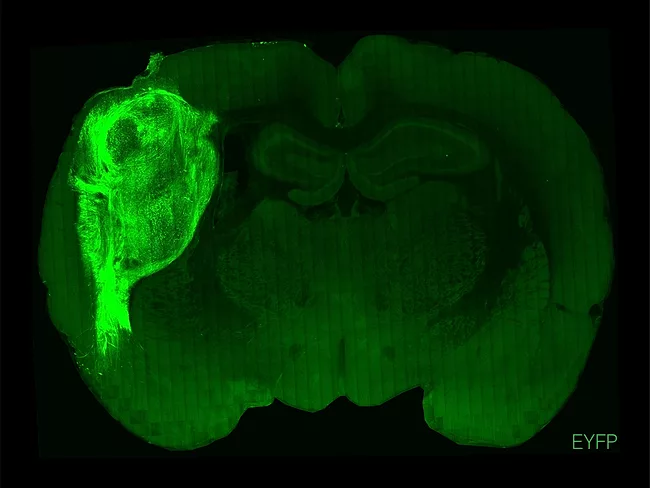
Human brain organoids transplanted into rats could be used as an in vivo model for the study of neuropsychiatric diseases. Researchers at Stanford University managed to mature human organoid neurons in the somatosensory cortex of the animal's brain and incorporate them into its neural circuitry.The integration improved the morphological and physiological properties of the transplanted neurons. Compared to those of organoids in a Petri dish, human cells preserved their own identity, and they modified the rat's learned behavior through stimulation and reward experiments.
Genetic testing has the potential to identify infants and children with autism potentially years earlier than clinical assessments, improving response to therapies and long-term outcomes. Sema4 Holdings Corp. presented results of a study Oct. 13 at the Child Neurology Society Annual Meeting that showed exome sequencing improved the diagnosis of autism spectrum disorders by up to 21% compared to current methods. At the same time, the research suggested that exome sequencing can identify children at risk of common comorbidities such as epilepsy, enabling more timely interventions.
GSK plc has announced results from its respiratory syncytial virus (RSV) vaccine in older people that look stronger than those from its rival, Pfizer Inc., as the race to develop a first ever vaccine against the common respiratory disease heats up.
A phase IIb trial of nangibotide in septic shock has demonstrated preliminary signs of efficacy in a subset of biomarker-defined patients and provided its developer, Inotrem SA, with a dataset that will inform the design of a registration program for the drug. Subject to agreement from regulatory agencies, the company aims to move the triggering receptor on myeloid cells 1 inhibitor into a first phase III trial in early 2024. “We should have a clearer picture by the beginning of the second next year,” CEO Sven Zimmermann told BioWorld.
Relmada Therapeutics Inc. is scratching its collective chin as it sifts through data from the failed phase III Reliance III study of REL-1017 (esmethadone) in treating major depressive disorder (MDD). A higher-than-expected placebo response, however, prompted the company to label the study’s results as “paradoxical.”
Positive phase I data from Dice Therapeutics Inc. with DC-806 in psoriasis sent shares (NASDAQ:DICE) on a wild ride, closing at $40, up $15.35, or 62%, on Oct. 11, 2022, and bolstered the case for oral drugs in psoriasis – an increasingly busy indication where discouraged patients often find themselves switching between therapies.
NMD Pharma A/S has announced top-line results showing its orally available ion channel inhibitor, NMD-670, has a positive clinical impact in myasthenia gravis (MG), with patients having stronger hand grip and improvements in quantitative MG scores.
The next stop for Albireo Pharma Inc. is chats with the U.S. FDA and the EMA following positive phase III data for Bylvay (odevixibat) in treating the rare disease Alagille syndrome. Should Bylvay, a nonsystemic ileal bile acid transport inhibitor, be approved for the indication, it would be the second approval. It was greenlighted by the FDA in 2021 for treating pruritus in progressive familial intrahepatic cholestasis.
A new analysis of Actinogen Medical Ltd.’s phase II Xanadu trial showed that in biomarker-positive patients with mild Alzheimer’s disease there was a clear clinical effect with lead compound Xanamem not seen in the earlier trial.

 RSS
RSS