For most psychiatric illnesses, the precipitating event is mysterious. Many conditions are thought to result from a mix of genetic risk and environmental factors, but the specific trigger remains unknown. In post-traumatic stress disorder (PTSD), the environmental trigger is usually clear. In many cases, it is all the affected individuals can think about. “Intrusive reliving” of the triggering situation is one of the core features of PTSD.
To get ahead in a tough market like the industry now finds itself, companies are advised to know themselves and their business well, better than they probably think they know themselves. A panel of investors at the BioFuture 2023 conference cautioned that CEOs must have a deep understanding of how their companies are differentiated from their competition in order to thrive.
Epigenetic editing approach used the endogenous cellular mechanisms for regulating gene expression, leading to durable modulation of transcription without affecting the DNA sequence. Chroma Medicine Inc. scientists recently presented a novel epigenetic editing strategy for the treatment of chronic hepatitis B virus (HBV) infection.
Unlocking the future of drug development often means removing obstacles that currently stand in the way. Reimbursement is one of those obstacles, as is keeping humans deeply involved as innovators and patients even as artificial intelligence (AI) increases its role. A panel of developers spoke about what they anticipate will be the biggest changes in the coming 10 to 20 years at the BioFuture 2023 conference in New York on Oct. 5. A common theme was reforming the structure of reimbursements, which has traditionally been a problem in the digital therapeutic realm, according to Eric Elenko, chief innovation and strategy officer at Puretech Health plc.
Unlocking the future of drug development often means removing obstacles that currently stand in the way. Reimbursement is one of those obstacles, as is keeping humans deeply involved as innovators and patients even as artificial intelligence (AI) increases its role. A panel of developers spoke about what they anticipate will be the biggest changes in the coming 10 to 20 years at the BioFuture 2023 conference in New York on Oct. 5. A common theme was reforming the structure of reimbursements, which has traditionally been a problem in the digital therapeutic realm, according to Eric Elenko, chief innovation and strategy officer at Puretech Health plc.
A presentation given recently by Medicenna Therapeutics Corp. highlighted preclinical data for the company’s new anti-PD1-IL-2 BiSKIT (Bifunctional SuperKine for ImmunoTherapy) candidate, MDNA-223, being developed as a anticancer therapeutic candidate.
Researchers from MD Anderson Cancer Center recently presented the discovery and preclinical evaluation of LLO-CD47, a novel protein-antibody conjugate linking anti-CD47 to Listeriolysin O (LLO), a pore-forming protein secreted by Listeria monocytogenes to escape lysosomes.
Researchers from Assembly Biosciences Inc. recently presented details on the discovery and preclinical evaluation of a novel small-molecule hepatitis B virus (HBV) and hepatitis D virus (HDV) entry inhibitor, AB-1659.
Researchers from Longhorn Vaccines & Diagnostics LLC recently presented preclinical data for the novel unconjugated peptide vaccine LHNVD-201, which is being developed as a universal vaccine candidate for protection against different strains of influenza and COVID-19.
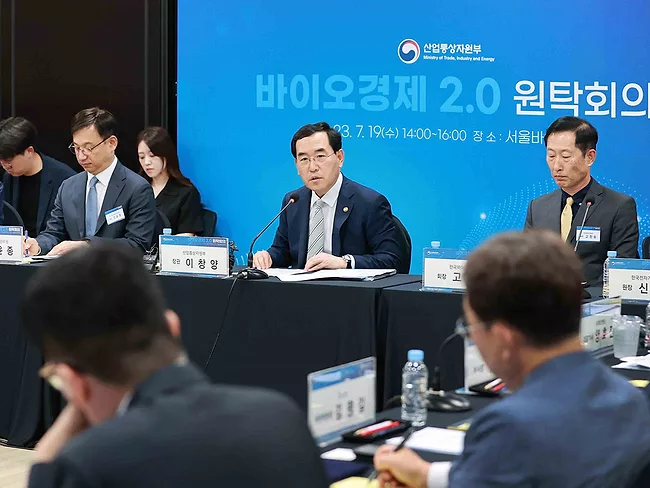
In July 2023, South Korea’s Ministry of Trade, Industry and Energy ramped up efforts to kickstart the so-called “Bio Economy 2.0,” the newfound initiative that banks on the biopharmaceutical industry to potentially revitalize the country’s slowing economic and social growth. Highlighting four major areas – biopharmaceuticals, biomaterials, bioenergy and digital technologies – as the four “wheels” to carry the biopharma industry, the new plan underscored the government’s unwavering support for the sector while highlighting its vision to become the “number one bioeconomy” worldwide.

 RSS
RSS