Copper overload within the body may lead to cancer, neurodegenerative diseases, inflammation or fibrosis, among others. Copper chelation is an effective strategy to counteract this potential overload; mitochondria play an important role, as they are the main copper-using organelles in the cells. Copper chelators have been developed, but they have shown some undesired off-target effects and low specificity, which suggests the need for new therapies in the field.
CBL-B is a RING-type E3 ubiquitin ligase that acts as a negative regulator of T-cell activation, contributing to immune homeostasis by limiting excessive immune responses. In cancer, however, this inhibitory role can impair the immune system’s capacity to detect and eradicate tumor cells. Researchers from Genentech Inc. presented the design and optimization of a series of CBL-B-targeting molecular glues.
Chinese researchers from Zhejiang Yangli Pharmaceutical Technology Co. Ltd. have presented data on an aldosterone synthase inhibitor, VB-19055. Inhibiting aldosterone synthase (CYP11B2) could lead to a potential treatment for cardiovascular-renal-metabolic disorders.
Hematopoietic stem cell research over the past century has shown that leukemia may be driven by an invisible hand of inflammation. The bone marrow and inflammation, then, may hold the keys to preventing blood cancers, according to John E. Dick’s plenary session at the 2026 Korean Society of Hematology International Conference, held March 26, 2026.
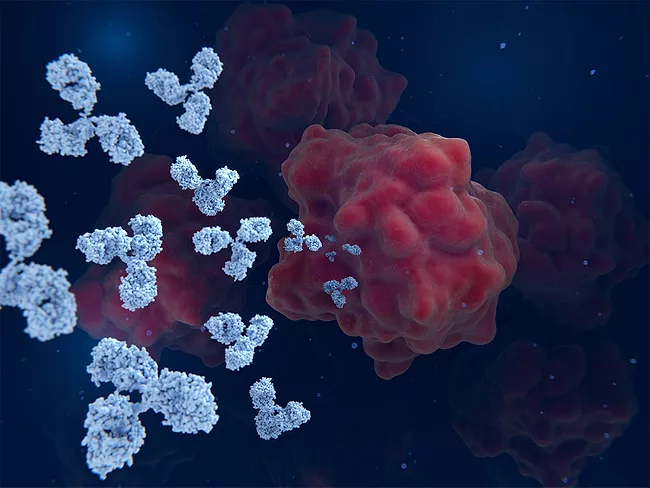
Researchers from Mabqi SAS presented the preclinical profile of MQI-181, an antibody-drug conjugate (ADC) composed of a human anti-CD30 antibody (18D03) linked to the cytotoxic payload monomethyl auristatin E (MMAE) via a cleavable MC-VC-PAB linker, with a drug-antibody ratio of 4.
Hematopoietic stem cell research over the past century has shown that leukemia may be driven by an invisible hand of inflammation. The bone marrow and inflammation, then, may hold the keys to preventing blood cancers, according to John E. Dick’s plenary session at the 2026 Korean Society of Hematology International Conference, held March 26, 2026.
At the World Vaccine Congress this week, Longhorn Vaccines & Diagnostics LLC presented the preclinical characterization of LHNVD-501, a half-life-extended, humanized IgG monoclonal antibody (mAb) targeting peptidoglycan (PGN). PGN is a conserved structural component shared across bacterial species and an upstream driver of sepsis, as well as metabolic disease, autoimmune disorders and neurodegeneration.
Hematopoietic stem cell (HSC) research over the past century has shown that leukemia may be driven by an invisible hand of inflammation. The bone marrow and inflammation, then, may hold the keys to preventing blood cancers, according to John E. Dick’s plenary session at the 2026 Korean Society of Hematology International Conference (ICKSH 2026), held March 26, 2026. Work in Dick’s lab has found acute myeloid leukemia (AML) HSCs that harbor preleukemic mutations long before any disease diagnosis. These insights have enabled predictive models that could identify individuals at elevated AML risk years before the onset of outright disease, opening the door to new prevention strategies.
Infinimmune Inc. has recently presented results at the annual American Academy of Dermatology conference regarding their anti-IL-22 antibody IFX-101 for the treatment of atopic dermatitis.
Dysregulated type 2 immune responses are central in atopic dermatitis (AD) pathophysiology. Key cytokine IL-13 drives epidermal barrier dysfunction and inflammation, while IL-31 mediates pruritus via activation of sensory neurons. Both represent clinically validated, complementary targets addressing both inflammation and itch in AD.
 RSS
RSS