Four Chinese biopharmaceuticals unveiled early data on respective cancer therapies at the American Society of Hematology (ASH) 2024 meet in San Diego, including Cstone Pharmaceuticals Co. Ltd.’s receptor tyrosine kinase-like orphan receptor 1 (ROR1)-inhibiting antibody-drug conjugate (ADC) in phase I study for lymphomas.
At the 66th American Society of Hematology Annual Meeting, a plethora of companies presented clinical trial data highlighting their drugs targeting Bruton tyrosine kinase (BTK) in patients with blood cancers.
With the aim of developing an effective and more tolerable conditioning for hematopoietic stem cell transplantation (HSCT), researchers from Molecular Partners AG applied the proprietary ankyrin repeat protein (DARPin) platform to generate a novel multi-specific Switch-DARPin candidate, MP-0621.
Agios Pharmaceuticals Inc. is learning the hard way the downside of having a pipeline in a product. When a side effect crops up, investors are likely to worry that it may affect the potential of the drug in the numerous diseases the drug could potentially treat.
Researchers from Janssen Research & Development LLC presented preclinical data for JNJ-87801493, a first-in-class CD20 targeted CD28 costimulatory bispecific antibody (Ab), currently in early clinical development for the treatment of B-cell malignancies.
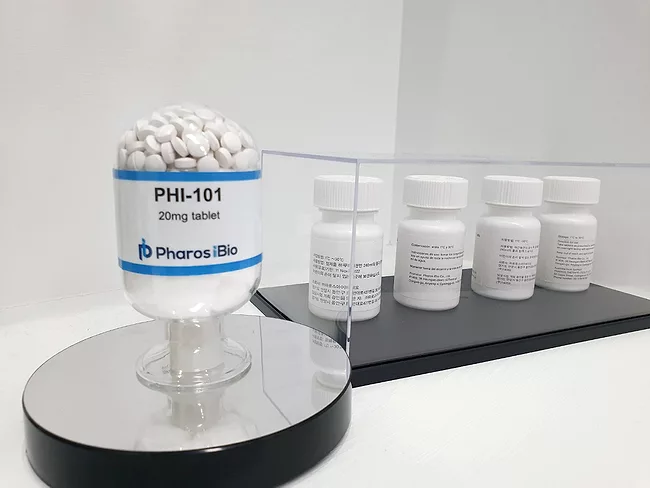
South Korean artificial intelligence-based drug developer Pharos Ibio Co. Ltd. said that the Ministry of Food and Drug Safety (MFDS) granted an orphan drug designation for PHI-101, a second-line therapy for acute myeloid leukemia (AML).
South Korean artificial intelligence-based drug developer Pharos Ibio Co. Ltd. said that the Ministry of Food and Drug Safety (MFDS) granted an orphan drug designation for PHI-101, a second-line therapy for acute myeloid leukemia (AML).
About 30% of patients with acute myeloid leukemia (AML) harbor mutations in the gene encoding receptor-type tyrosine-protein kinase FLT3 in the form of internal tandem duplication (ITD) or mutations in the tyrosine kinase domain.
Researchers from Epics Therapeutics SA presented preclinical data for EP-102, a novel small-molecule inhibitor of N6-adenosine-methyltransferase catalytic subunit (METTL3), being developed for the treatment of cancer.
Chimeric antigen receptor (CAR) therapies targeted against CD19 have been widely used for the treatment of B-cell malignancies. However, the down-regulation of CD19 can lead to relapse, and autologous CAR T therapies have limitations that need to be addressed.

 RSS
RSS