As Seagen Inc. preps for a merger, the U.S. FDA awarded accelerated approval to the company’s big-selling Padcev (enfortumab vedotin). The approval is for a combination therapy with Merck & Co. Inc.’s Keytruda (pembrolizumab) as a first-line treatment for adults with locally advanced or metastatic urothelial cancer who are not eligible for cisplatin-containing chemotherapy.
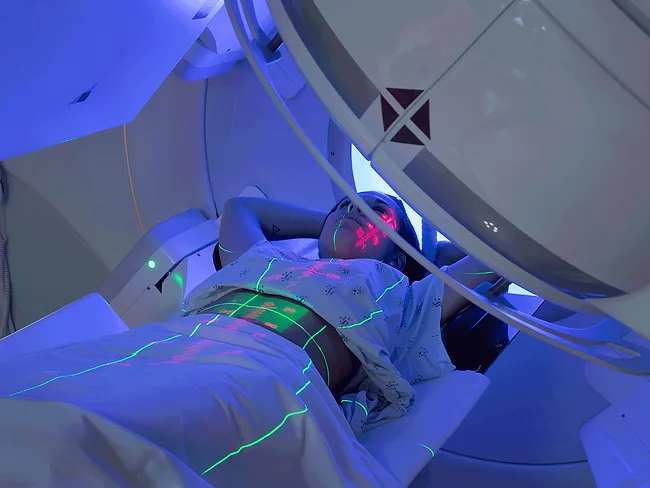
If its challenges can be overcome, radioligand therapy is poised to change the way many cancers are treated. It is also likely to become an example of how scientific advances, once they are translated successfully, can enable further insights in a bench-to-bedside-to-bench loop. David Piwnica-Worms, professor and chair of cancer systems imaging at The University of Texas MD Anderson Cancer Center, predicted that as radioligand therapy expands, many questions will be answered about both radiation biology and the interaction of radiation with the immune system more specifically.
After spending decades developing targeted chemotherapy and bringing a dozen or so compounds into the clinic, Fusion Pharmaceuticals Inc. Chief Scientific Officer Christopher Leamon switched careers to focus on radio-oncology because he saw the need for “a really strong bomb to target cancer to get it to respond.” That was radiotherapy, said Leamon, who was one of the scientific founders of Endocyte Inc., which Novartis AG acquired.
Scorpion Therapeutics Inc. has out-licensed two of its small-molecule EGFR inhibitors to Pierre Fabre SA in exchange for a $65 million up-front fee and could also earn up to $553 million in potential milestone payments, plus royalties on net sales.
Global interest in radiopharmaceuticals is growing, and some big deals in the space have sparked interest in the last few years. Novartis AG has spent about $6 billion in acquisitions and is seen as the global leader.
The role of G protein-coupled receptor 35 (GPR35) in gastrointestinal (GI) diseases has been genetically validated for some time, with several pharmaceutical companies advancing programs designed to tackle the target; however, most of these efforts to date have focused on increasing GPR35 activity. ThirtyFiveBio’s approach is different: The newly founded virtual biotech company believes that antagonizing the target and thereby blocking unwanted GPR35 signaling may be a more appropriate way to address GI conditions, including digestive tract cancers.
More than a decade ago, three scientists were part of a team at G1 Therapeutics Inc. that led to the now-approved CDK4/6 inhibitor Cosela (trilaciclib). The same work also led to findings showing CDK2 as a promising target for cancers that developed resistance to CDK4/6 inhibition.
Junshi Biosciences Co. Ltd. and Rxilient Biotech Pte Ltd. are forming a joint venture (JV) to develop and commercialize Junshi’s PD-1 inhibitor, toripalimab, in nine Southeast Asian nations, including Thailand, Brunei, Cambodia, Indonesia, Laos, Malaysia, Myanmar, the Philippines and Vietnam.
Boehringer Ingelheim GmbH has agreed to pay Covant Therapeutics Inc. $10 million for exclusive rights to the latter’s ADAR1-targeting immuno-oncology program. Under the terms of the exclusive research collaboration and worldwide licensing agreement, newly unveiled drug discovery company Covant will carry out the preclinical work in creating an ADAR1 small-molecule inhibitor, with Boehringer offering its scientific expertise to help advance the program into the clinic.
Phase II data that rolled out from Merck KGaA with its Bruton's tyrosine kinase (BTK) inhibitor evobrutinib in relapsed multiple sclerosis (MS) put more eyeballs on the mechanism. It’s already well validated in oncology, but resistance has arisen there, and at least two firms – Beigene Ltd. and Nurix Therapeutics Inc. – are striving for solutions with degrader candidates.

 RSS
RSS