In the string of successes and frustrations generated by their five-year collaboration, Merck & Co. Inc. and Eisai Inc. can now add a few more frustrations. The companies are discontinuing the phase III LEAP-003 study of Keytruda (pembrolizumab) plus Lenvima (lenvatinib) for first-line treatment of unresectable or metastatic melanoma because it did not improve overall survival (OS) vs. Keytruda as a monotherapy. Also, the phase III LEAP-017 trial evaluating the combination in unresectable and metastatic colorectal cancer did not meet its primary endpoint of OS.
Two years after its formation, Mosaic Therapeutics Ltd. has raised $28 million in a series A to begin commercialization of research carried out by the Translational Cancer Genomics Lab at the Sanger Institute in Cambridge, U.K., into the genetic vulnerabilities of multiple tumor types and how that impacts response to therapy.
Noxopharm Pty Ltd.’s stock plummeted nearly 40% on the morning of April 6 after the company announced it was quitting development of its lead program, Veyonda (idronoxil/formerly OX-66), shuttering its DARRT-2 and CEP-2 oncology clinical trials and disbanding its clinical trial team to contain costs.
Supply issues are a “major concern for the whole industry and for the medical community as well, because they see targeted radiotherapy as a very promising field with very interesting results in the clinic, but they are concerned that drugs may not be available for a large number of patients, and it is a legitimate concern,” Orano Med SAS CEO Julien Dodet said. Companies such as Orano, Fusion Pharmaceuticals Inc. and Telix Pharmaceuticals Ltd. are working to meet those supply challenges.
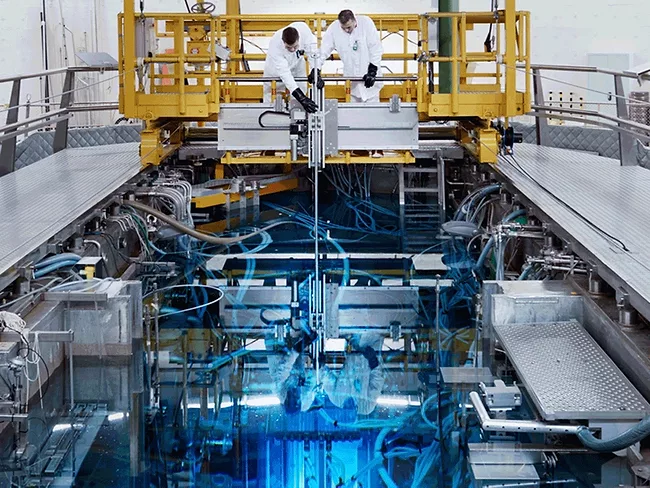
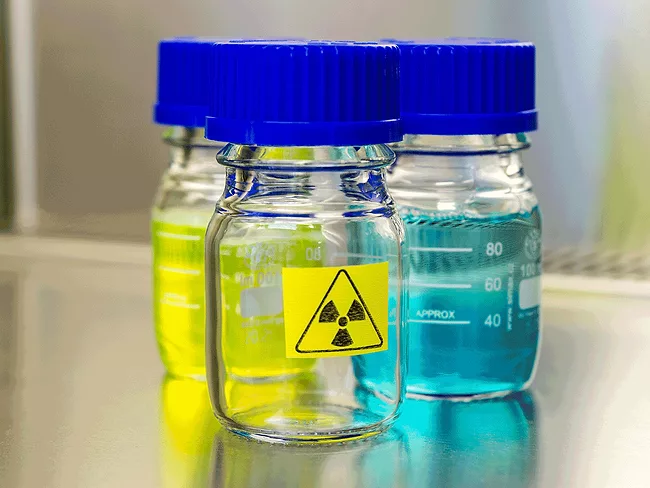
Radiopharmaceuticals require sophisticated infrastructure, with just-in-time radioactives delivered to patients who must isolate while receiving the therapy. Quality control and numerous layers of regulation makes for a daunting space to enter. Although the demand for medical isotopes is growing, the facilities that can make these products are aging, and one of the major facilities globally has already come offline. Next steps for the industry will be to solve supply and regulatory challenges as clinical trial data start to differentiate therapies in the pipeline.
Merck & Co. Inc. has seen promise in Proxygen GmbH’s molecular glue degrader technology, agreeing to pay the drug discovery company up to $2.55 billion if specified research, development and commercial milestones are met.
The possibilities of cures for cancer and other tough-to-treat diseases and the ability to further personalize medicine are creating a lot of excitement about the future of radiopharmaceuticals as both therapy and diagnostics. To reach that future, industry and researchers will have to overcome a lot of challenges, not the least of which stem from the multiple government agencies involved in regulating the source material, development, distribution and use of radioactive drugs and devices.
The radiopharma field has garnered increasing attention in recent years due to big-ticket deals like Bayer AG's $2.9 billion acquisition of Algeta ASA and Novartis AG's nearly $6 billion spent on buying Advanced Accelerator Applications SA and Endocyte Inc. As a result, competition is ratcheting up and pipelines are exploding with new combinations of different drugs. The global radiopharmaceuticals market was estimated to be valued at $6.7 billion in 2020, a number expected to reach $11.5 billion by 2027, according to a 2022 William Blair report.
Adcendo ApS has added a further €31 million (US$33.6 million) to its series A round, providing the means to take its lead antibody-drug conjugate (ADC) through to clinical proof of concept in the treatment of sarcoma.
A few weeks after Gossamer Bio Inc. said it was pausing enrollment in a phase Ib/II study of CNS-penetrant BTK inhibitor GB-5121 in relapsed/refractory CNS lymphoma, citing the drug’s risk/benefit profile observed to date and a prioritization of resources, the company is dropping the drug’s development entirely.

 RSS
RSS