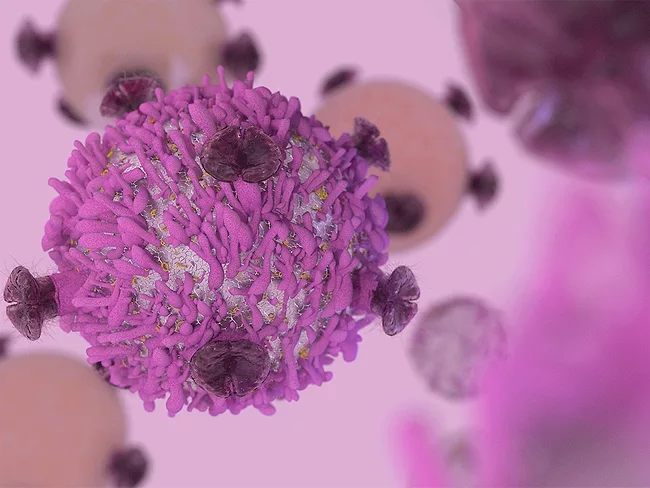
Chimera Bioengineering Inc. has been selected as the winner of the Asian Fund for Cancer Research's (AFCR) 2021 BRACE Award Venture Competition, contributing $500,000 as part of a recent $7.5 million capital infusion and bringing to $26 million the company’s total amount raised to date.
Among the attention-getters at the American Association for Cancer Research meeting April 8-13 was protein-degradation specialist Kymera Therapeutics Inc., which made the preclinical case for its approach in murine double minute 2 (MDM2) research vs. an inhibitor. The MDM2 space has grown increasingly busy in recent years, with large and small biopharma concerns moving ahead with research in all phases of development.
Shares in Zentalis Pharmaceuticals Inc. rose sharply after Pfizer Inc. invested $25 million and struck a deal to catalyze development of the company’s WEE1 inhibitor ZN-c3, an oral drug designed to make cancer cells self-destruct.
Amira Barkal’s grandmother’s long fight against chronic leukemia was the germ of the idea that’s become Pheast Therapeutics Inc., which just closed a series A financing. Her treatment in a clinical trial that gave the world Gleevec (imatinib, Novartis AG) changed both of their lives.
Within just a few hours, Molecular Partners AG reported both a potential snag in securing emergency use authorization (EUA) for its Darpin antiviral, ensovibep, and the loss of a half-billion-dollar partnership with Amgen Inc. for the phase I-stage 4-1BB-targeting compound MP-0310. While neither update is likely to dampen prospects for the company’s overall Darpin pipeline, the near-term investor disappointment was enough to send shares (NASDAQ:MOLN) closing 37% lower April 27, after dropping to their lowest point since the Zurich, Switzerland-based firm priced its $63.8 million IPO on Nasdaq in June 2021.
More than a quarter of all clinical data reported this year are targeting cancer indications, as pandemic news dips and overall activity drops by 12.5%.
Epitopea Ltd. raised $13.6 million in seed financing to take forward a new cancer immunotherapy platform based on the identification of a new class of tumor-specific antigens encoded by non-canonical genomic sequences.
After rolling out positive, preliminary phase I CAR natural killer cell data, Nkarta Inc. saw its stock (NASDAQ:NKTX) soar to $18.72, up $10.95, or 140.9%, as Wall Street made known its pleasure in results from the small, independent dose-finding studies with Nkarta’s two off-the-shelf lead candidates, NKX-101 and NKX-019, in two groups of blood cancer patients: those with relapsed/refractory (r/r) acute myeloid leukemia (AML) and with r/r non-Hodgkin lymphoma (NHL), respectively.
Isofol Medical AB’s slow reveal of data from its phase III registration trial of arfolitixorin in first-line metastatic colorectal cancer (mCRC) will not reach a conclusion until the fourth quarter of this year. The news follows a December 2021 warning to investors that an unexplained level of therapy switches occurring in the absence of disease progression would impair its analysis of a key secondary endpoint, the rate of progression-free survival.
South Korean companies Ubix Therapeutics Inc. and SK Biopharmaceuticals Co. Ltd. are partnering to develop targeted protein degradation cancer therapies.
 RSS
RSS