China has proved to be a fertile ground for innovation as evidenced by some big deals in the antibody-drug conjugate (ADC) space, and the number of candidates entering clinical trials in China or being advanced in the U.S. by Chinese companies.
Actithera A/S is poised to bring small-molecule pharmacokinetics to radiopharmaceuticals after closing a $75.5 million series A that will fund initial clinical development of a candidate targeting the elusive fibroblast activation protein (FAP).
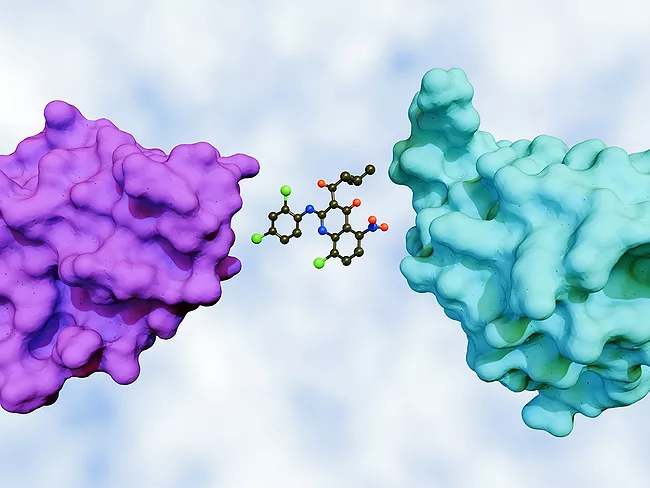
Degradation is a therapeutic strategy that could offer possibilities to get at currently undruggable target proteins. In targeted degradation, compounds induce interactions between a target protein and a protein that can tag the target for degradation. In principle, there are several pathways that could be used for such tagging; the most attention has gone to ubiquitin ligases, in particular cereblon, a protein that is part of a ubiquitin ligase complex and the target of several approved drugs.
Cogent Biosciences Inc. is eyeing an NDA submission to the U.S. FDA by the end of this year in the wake of positive top-line results from the registration-directed second part of the Summit phase II trial testing bezuclastinib in non-advanced systemic mastocytosis (SM). The data show clinically meaningful and highly statistically significant improvements in SM across the primary and all key secondary endpoints, including patient-reported symptoms and objective measures of mast cell burden.
China’s National Medical Products Administration gave the green light to Simcere Pharmaceutical Group Ltd.’s Enzeshu (suvemcitug) for treating recurrent ovarian cancer, fallopian tube cancer, or primary peritoneal cancer in combination with paclitaxel, liposomal doxorubicin, or topotecan in adults who have received at least one systemic therapy after platinum resistance.
After falling 4.74% in the first quarter (Q1), the BioWorld Cancer Index (BCI) staged a strong recovery in Q2, ending the period up 12.78%. The broader markets followed a similar trajectory, with the Dow Jones Industrial Average rebounding from a 4.41% loss at the end of April to close Q2 with a 3.64% gain. The Nasdaq Biotechnology Index also improved, trimming its earlier 5.37% decline to finish June down just 1.92%.
The first systematic whole genome sequencing study of how chemotherapy damages healthy tissues has shown that many, but not all, of these agents cause mutations and premature aging of normal blood cells.
Exelixis Inc.’s positive phase III top-line data June 22 with zanzalintinib (zanza) in colorectal cancer had Wall Street speculating anew about the odds with the tyrosine kinase inhibitor in an important indication.
Four days ahead of its July 7 PDUFA date, the U.S. FDA granted accelerated approval to Dizal (Jiangsu) Pharmaceutical Co. Ltd.’s sunvozertinib (DZD-9008), branded as Zegfrovy, for treating adults with locally advanced or metastatic non-small-cell lung cancer with epidermal growth factor receptor exon 20 insertion mutations following platinum-based chemotherapy.
Aussie researchers have used CRISPR gene editing tools to “armor” chimeric antigen receptor (CAR) T cells to activate additional cancer-fighting proteins at the tumor site, enabling them to target cancer cells in solid tumors.

 RSS
RSS