Despite government efforts to prop up biopharma and med-tech research toward creating women’s health products, companies must eventually reach out to the private markets to bring their inventions to the next stage of development. Anna Zornosa-Heymann, a women’s health investor, serves as a part-time contractor with the U.S. NIH’s SEED (Small business Education & Entrepreneurial Development) office, where she helps companies move from government to external funding. Government funds are “excellent to pay for research … but those funds don’t allow you to build a first-class team and to develop a sales apparatus,” she told BioWorld.
Biontech SE is extending its relationship with Biotheus Inc. from a licensing deal to a full-scale acquisition, agreeing to pay $800 million cash and up to $150 million in milestone payments for the Chinese oncology specialist.
On the heels of U.S. FDA approval of its first T-cell therapy, Adaptimmune Therapeutics plc reported positive results from a pivotal study for its second candidate, letetresgene autoleucel, expected to support a rolling BLA submission in 2025 that could bolster the firm’s offerings as it narrows its focus on the rare sarcoma space.
Syros Pharmaceuticals Inc.’s phase III failure with oral retinoic acid receptor alpha agonist tamibarotene in myelodysplastic syndrome (MDS) meant not only severe stock damage but also defaulting on the loan facility with Oxford Finance LLC, which means an obligation may be accelerated for the company of about $43.6 million, including principal, interest, and other amounts, according to an SEC filing.
Daiichi Sankyo Co. Ltd. and Astrazeneca plc have submitted a new BLA to the U.S. FDA for accelerated approval for datopotamab deruxtecan for treating locally advanced or metastatic epidermal growth factor receptor-mutated non-small-cell lung cancer patients who have received prior systemic therapies.
Six main cell types form glioblastomas, the most aggressive brain cancer due to its high rate of recurrence. Of these six, quiescent cancer stem cells are responsible for resistance to therapy and the reappearance of the tumor, according to a study that identified the six groups and highlighted the importance of these stem cells for the design of more effective therapies.
Alentis Therapeutics SA is poised to expand its reach in Claudin-1 biology, after closing a $181.4 million series D that will fund phase I/II trials of two antibody-drug conjugates (ADCs) targeting the transmembrane protein, which is overexpressed on a number of squamous cell tumors.
The competitive menin-inhibitor space chalked further data from Syndax Pharmaceuticals Inc., which disclosed positive top-line results from the pivotal phase II portion of the Augment-101 study, designed to test oral small-molecule revumenib for safety and efficacy. But shares of the firm (NASDAQ:SNDX) closed Nov. 12 at $16.21, down $5.57, or 26%, after the Augment-101 numbers were disclosed.
Flare Therapeutics Inc. will receive $70 million in cash up front from Roche Holding AG, and the deal could ultimately bring the company about $1.8 billion plus royalties. Flare will search for small molecules that can be used to treat undruggable transcription factors to treat cancer. Also, Novartis AG will pay computational-chemistry expert Schrödinger Inc. $150 million up front and as much as $2.3 billion in milestones to develop several candidates along with up to $892 million in R&D and milestone payments.
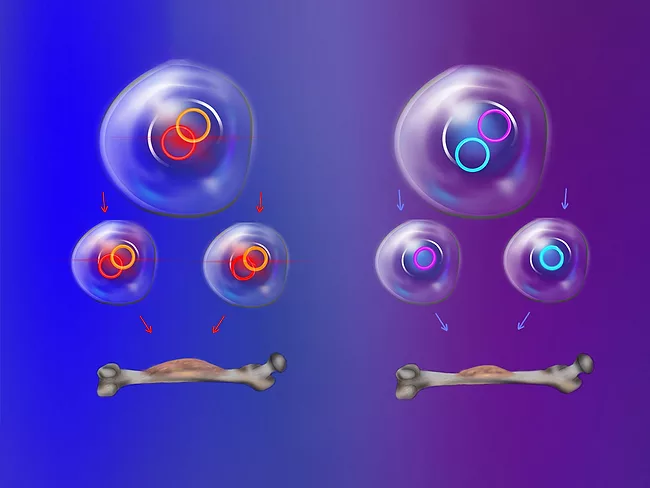
Cancer therapies can eliminate specific tumors based on their genetic content. However, some cancer cells survive. How do they do it? Part of the answer lies in extrachromosomal DNA (ecDNA), an ace up the tumors’ sleeve to adapt and evade attack. Three simultaneous studies in the journal Nature lay all the cards on the table, revealing ecDNAs’ content, their origin, their inheritance, their influence in cancer, and a way to combat them.
 RSS
RSS