Rigel Pharmaceuticals Inc. CEO Raul Rodriguez said breast cancer therapy Veppanu (vepdegestrant) could become his firm’s “largest product with the current label,” and other opportunities with the drug are lined up behind, albeit “still a bit early.”
Hopes piqued last November for detalimogene voraplasmid in bladder cancer took a hit from the latest word from the study, as did shares of Engene Therapeutics Inc. (NASDAQ:ENGN), which closed May 7 at $1.72, down 80.6%, or $7.13.
Roche Holding AG has agreed to acquire Pathai Inc. for up to $1.05 billion in a bid to strengthen its position in digital pathology and enhance its biopharma services. The move builds on a partnership established between the two companies in 2021, and expanded in 2024, to include the development of AI-enabled companion diagnostic algorithms.
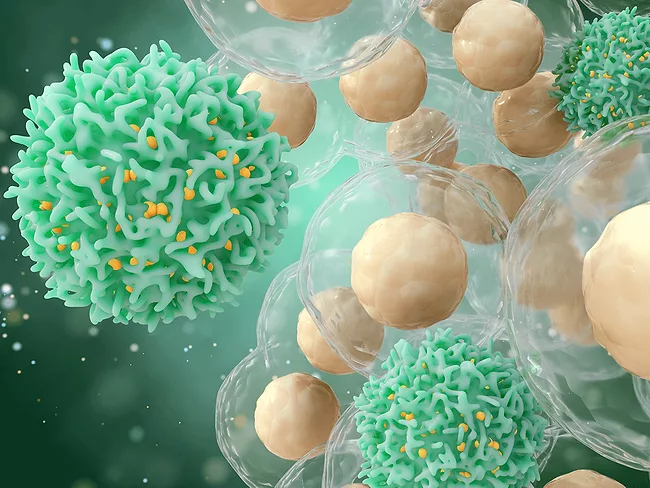
Next-generation T-cell engager (TCE) specialist Cytospire Therapeutics Ltd. has raised £61 million (US$82.7 million) in a series A round, equipping it to advance the lead program CYT-X300 to the clinic in the treatment of EGFR-positive solid tumors. The company’s pan gamma delta (γδ) TCEs are designed to overcome problems with cytokine release syndrome, on-target effects on healthy cells, and the excessive activation of CD3 that have occurred with earlier bispecific antibodies that bind to the CD3 receptor on T cells.
UCB SA agreed to pay $2 billion up front to acquire bispecific T-cell engager (TCE)-maker Candid Therapeutics Inc. and lead BCMA/CD3 TCE asset cizutamig (CND-106), continuing big pharma’s spree for China-made autoimmune assets in 2026.
As Celcuity Inc. awaits a U.S. FDA approval decision for gedatolisib in HER-positive, HER2-negative, PIK3CA wild-type advanced breast cancer, the company already is setting its sights on a supplemental NDA filing, based on a top-line readout of the multi-target PAM inhibitor in a PIK3CA-mutant breast cancer cohort.
A month ahead of its June 5 PDUFA date, Arvinas Inc.’s vepdegestrant gained U.S. FDA approval for use in a specific type of advanced or metastatic breast cancer, becoming the first proteolysis targeting chimera, or PROTAC, drug to reach the market.
Sonire Therapeutics Inc. initiated a U.S.-based Sunrise II study of Suizenji, its novel ultrasound-guided high-intensity focused ultrasound (HIFU) system designed to ablate pancreatic tumors, after closing an $18 million series A financing round April 15.
Wall Street pundits were divided about the likely fate of ivonescimab, Summit Therapeutics Inc.’s bispecific antibody partnered with Akeso Pharmaceuticals Inc., of Hong Kong, and undergoing phase III testing in first-line squamous non-small-cell lung cancer (NSCLC).
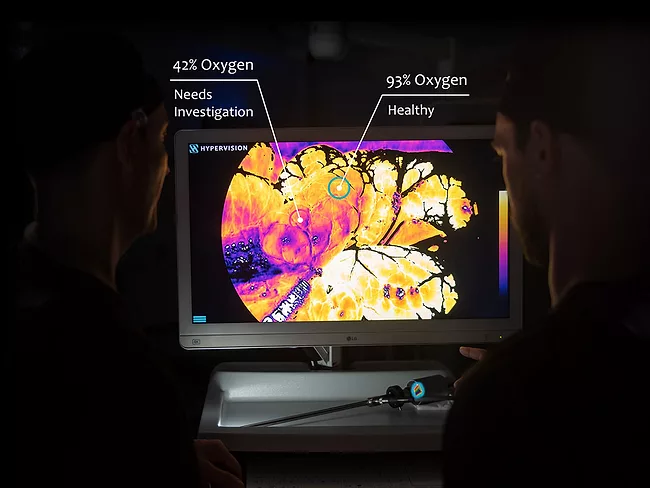
Hypervision Surgical Ltd. raised £17 million (US$23 million) in a series A financing round for its platform technology which combines spectral sensing with cloud-enabled AI analytics, to give surgeons real-time insights into tissue physiology during surgery that were previously impossible to see.
 RSS
RSS