Previous work showed that histone ‘readers’, which bind to post-translational modifications on histones, may be upregulated in melanoma and thereby upregulate oncogenes. Given that the histone reader ATAD2 is known to be overexpressed in several types of cancer, researchers at the University of Alabama at Birmingham asked whether the same is true in melanoma.
Long noncoding RNAs (lncRNAs) have emerged as potential markers of disease, since they associate with proteins that regulate gene expression, translation or stability, among others, and where hypoxia might play a role in this scenario. In recently published work, researchers analyzed clinical data from patients with lung adenocarcinoma to identify hypoxia-modulated lncRNAs in vivo and in vitro, and which could correlate with prognosis.
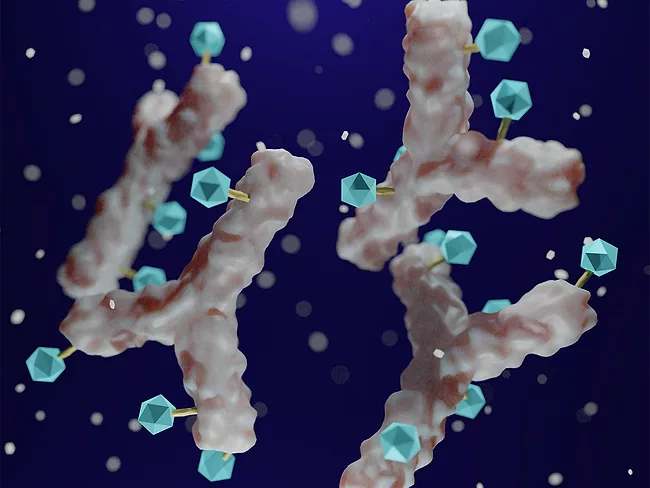
Over the course of the year, and continuing into the latest scientific meetings, an extraordinary breadth of new antibody-drug conjugate (ADC) designs was reported, with innovations spanning targets, linkers, payloads, conjugation chemistries and overall architectures. Once defined by a simple “one target, one payload” model, the field is lately expanding into a more versatile and diverse therapeutic space.
Hanx Biopharmaceuticals (Wuhan) Co., Ltd. raised HK$586 million (US$75.37 million) in its IPO on the Hong Kong Securities Exchange (HKEX:3378) on Dec. 23 to advance its clinical stage immuno-oncology pipeline.
China’s National Medical Products Administration approved Innovent Biologics Inc.’s NDA for Tabosun (ipilimumab N01, IBI-310) in combination with sintilimab as neoadjuvant treatment for stage IIB-III resectable microsatellite instability-high or mismatch repair deficient colon cancer.
U.S. policy, China’s strategic rise, blockbuster deals and AI dominated South Korea’s biotechnology industry this year, with U.S. tariffs and the Biosecure Act’s hitch onto 2026 legislation serving as major topics of speculation.
U.S. policy, China’s strategic rise, blockbuster deals and AI dominated South Korea’s biotechnology industry this year, with U.S. tariffs and the Biosecure Act’s hitch onto 2026 legislation serving as major topics of speculation.
China’s National Medical Products Administration approved Innovent Biologics Inc.’s NDA for Tabosun (ipilimumab N01, IBI-310) in combination with sintilimab as neoadjuvant treatment for stage IIB-III resectable microsatellite instability-high or mismatch repair deficient colon cancer.
Livsmed Inc. closed the year’s biggest Kosdaq IPO with a ₩135.85 billion (US$94 million) haul Dec. 24. Livsmed specializes in the development of hand-held multi-joint laparoscopic surgical instruments for minimally invasive procedures.
Hanx Biopharmaceuticals Inc. has identified antibody-drug conjugates (ADCs) consisting of an antibody targeting TRBV12 covalently linked to cytotoxic drugs through linkers reported to be useful for the treatment of T-cell leukemia and T-cell lymphoma.
 RSS
RSS