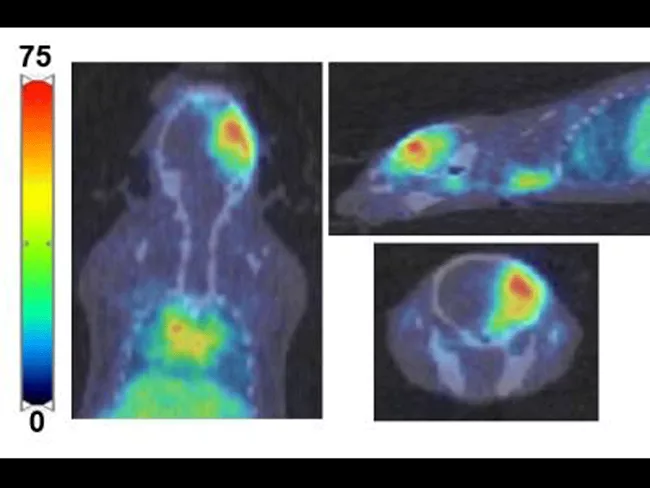
A study led by Chinese radiologists at Peking University in Beijing has shown that positron emission tomography imaging of intercellular adhesion molecule-1 (ICAM-1) expression is a predictor for the abscopal effect, whereby nonirradiated cancers respond to radiotherapy.
As part of a U.S. FDA evaluation of confirmatory trials for anti-PD-1/PD-L1 antibodies, the agency’s Oncologic Drugs Advisory Committee (ODAC) is being asked this week to consider whether three blockbuster biologics should continue to be available for certain cancer indications for which they received accelerated approval. At question is whether the data from the confirmatory trials for the Roche Group’s Tecentriq (atezolizumab), Merck & Co. Inc.’s Keytruda (pembrolizumab) and Bristol Myers Squibb Co.’s Opdivo (nivolumab) has proved sufficient benefit in particular indications and, if not, whether alternative or ongoing trials could do so.

 RSS
RSS