The BioWorld Cancer Index reversed its early year losses, rebounding from a 4.74% decline at the end of the first quarter (Q1) to finish Q2 up 12.78%. The Dow Jones Industrial Average followed a similar pattern, dropping to -4.41% by the end of April before recovering to a 3.64% gain by Q2’s end. Meanwhile, the Nasdaq Biotechnology Index, down 5.37% at the end of May, narrowed its losses to close June down just 1.92%.
Unnatural Products Inc. notched another collaboration by signing on with Argenx SE in a multitarget research collaboration. Unnatural Products, which is getting up-front, near-term payments and R&D funding, could end up with about $1.5 billion in milestones and options payments plus tiered royalties on net sales.
Euregen Biopharma Co. Ltd. has synthesized S-adenosylmethionine synthase isoform type-2 (Mat2A) inhibitors reported to be useful for the treatment of cancer.
In a study published recently in Cancer Immunology, Immunotherapy journal, researchers from Jiangsu Province Hospital and colleagues investigated the impact of targeting the TP53-induced glycolysis and apoptosis regulator (TIGAR) on T-cell function and antitumor immunity in acute myeloid leukemia.
Researchers at Caedo Oncology AS and collaborators have recently developed a new chimeric bifunctional anti-CD47 (IgG4) fusion protein, CO-001, and its optimized variant CO-005, a bivalent humanized single-chain fragment variable-fragment crystallizable fusion protein, which exhibited potent anti-cancer activity through a dual mechanism of action.
Innovent Biologics Inc. announced a HKD$4.3 billion (US$547 million) placement on the Hong Kong Stock Exchange to advance its R&D projects and to fund its global expansion.
China’s National Medical Products Administration (NMPA) has accepted for review Carsgen Therapeutics Holdings Ltd.’s NDA for satricabtagene autoleucel (satri-cel, CT-041), an autologous CAR T candidate targeting Claudin18.2 for treating Claudin18.2-positive advanced gastric/gastroesophageal junction adenocarcinoma (G/GEJA) in patients who have failed at least two prior lines of therapy. Just one day earlier, Carsgen announced that it had submitted the satri-cel NDA to the NMPA.
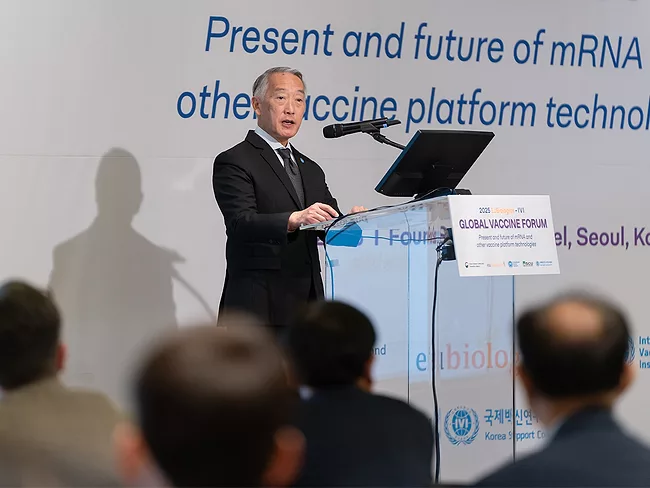
Experts in mRNA convened at the Global Vaccine Forum (GVF) 2025 to weigh the present and future of vaccine technology, including emerging innovations in self-amplifying mRNA (sa-mRNA) and drug delivery platforms.
 RSS
RSS



.webp?height=488&t=1670008838&width=650 "Acute myeloid leukemia")