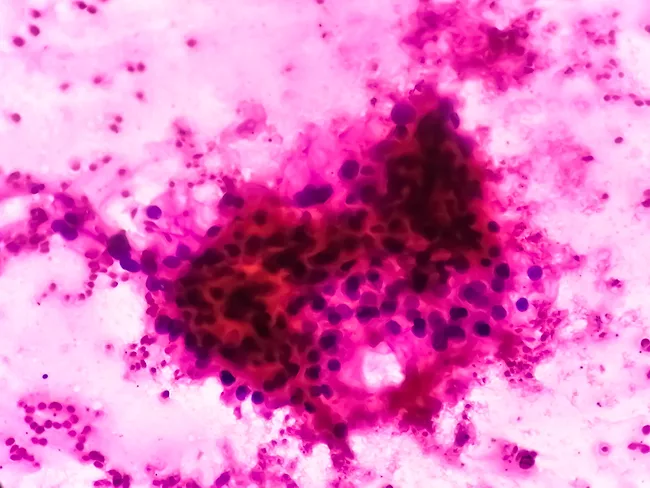
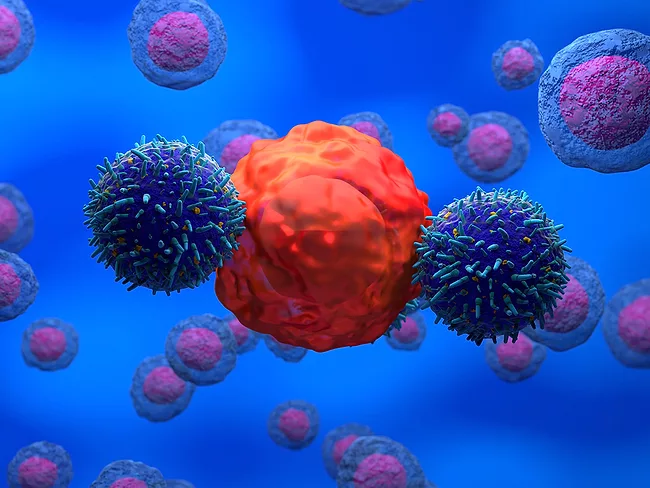
Researchers from University of California Los Angeles and affiliated organizations published data from a study that aimed to identify novel surface proteins that are highly and selectively expressed in tumors and could serve as targets for chimeric antigen receptor (CAR) T-cell therapies for the treatment of melanoma.
The first – and handsomely upsized – IPO of this year by CG Oncology Inc., along with the sizeable financing Feb. 14 by Engene Holdings Inc., proved Wall Street’s interest in non-muscle invasive bladder cancer, where a number of other players also are busy.
Amid intensifying competition in the PD-1/PD-L1 checkpoint space, Samsung Bioepis Co. Ltd. kicked off a phase I study of SB-27, a biosimilar of Merck & Co Inc.’s blockbuster immunotherapy, Keytruda (pembrolizumab), for lung cancer. Posted on clinicaltrials.gov on Feb. 20, the randomized, double-blind, three-arm, parallel group and multicenter phase I study will examine the pharmacokinetics, efficacy and safety of SB-27 against an EU-sourced and U.S.-sourced Keytruda in 135 patients with non-small-cell lung cancer.
Hun-taek Kim founded Tiumbio Co. Ltd. in 2016 after spending more than two decades at a major chemical and life science firm, SK Chemicals Co. Ltd. “The prospects for our three major assets are very bright, and the probability of failure is low,” CEO Kim told BioWorld. “We’re looking for a breakthrough in rare diseases – to develop new treatments for [niche] markets with large unmet demand.”
The aryl hydrocarbon receptor (AhR) is a transcription factor that modulates the activity of tumor and immune cells, hence targeting AhR may represent a feasible option for cancer immunotherapy. Researchers from the Institute of Materia Medica of Beijing and collaborators recently reported on the discovery and synthesis of a novel series of AhR antagonists derived from Salvia miltiorrhiza Bunge intended to be used in cancer immunotherapy.
Monopar Therapeutics Inc. has received human research ethics committee (HREC) clearance in Australia to commence a first-in-human phase I dosimetry trial of its novel radiopharmaceutical MNPR-101-Zr in patients with advanced cancers.
MYC oncogene is known to be amplified in 5% to 10% and overexpressed in 20% of clear cell renal cell carcinoma (ccRCC), conferring aggressiveness. Researchers have now found...
San Francisco-based Xyphos Biosciences Inc. is pooling technology platforms with Boston’s Kelonia Therapeutics Inc. in a novel immuno-oncology (I-O) drug discovery deal that could fetch more than $800 million. Xyphos and Kelonia will collaborate to develop a maximum of two in vivo CAR T-cell therapy programs, utilizing both Kelonia’s in vivo gene placement system called iGPS and Xyphos’ Accel technology platform.
Ono Pharmaceutical Co. Ltd. inked deals with Shattuck Labs Inc. and Numab Therapeutics AG aimed at bolstering its pipeline in oncology and autoimmune and inflammatory diseases. Ono struck a drug discovery collaboration and option agreement with Shattuck Labs to generate bifunctional fusion proteins for pathways involved in autoimmune and inflammatory diseases. It also signed a global research, development and commercialization deal with Numab for its NM-49, a multispecific antibody designed to activate tumor-associated macrophage phagocytosis for treating cancers.

 RSS
RSS
.webp?height=488&t=1708619318&width=650 "Co-culture that shows the CAR T-cell clusters attacking the tumor cells (in green)")