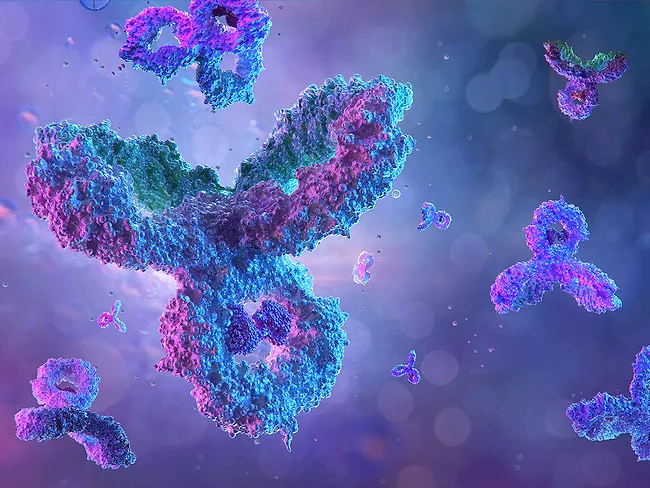
Crossbow Therapeutics Inc. closed a $77 million series B round to support an ongoing phase I Crosscheck-001 trial of lead program, CBX-250, and additional T-Bolt immunotherapies targeting a broad range of cancers.
Excalipoint Therapeutics Inc. launched with an oversubscribed $68.7 million seed financing round to advance a portfolio of T-cell engagers for solid tumors, marking one of the largest early stage financings in China biotech history.
Academia Sinica and National Cheng Kung University have divulged peptides and their lipid nanoparticles formed on encapsulation by 1,2-dioleoyl-sn-glycero-3-phosphocholine (DOPC), cholesterol and DSPE-PEG2K liposomes reported to be useful for the treatment of cancer.
Researchers from Sungkyunkwan University and Txinno Bioscience Inc. recently presented their work where they aimed to design, synthesize and evaluate ectonucleotide pyrophosphatase/phosphodiesterase 1 (ENPP1) inhibitors containing a benzotriazole core and a sulfonimidamide Zn binder.
Early clinical data from Simcere Pharmaceutical Group Ltd. suggest its PD-L1/IL-15 bispecific antibody, SIM-0237, could emerge as a next-generation contender in Bacillus Calmette-Guérin-unresponsive non-muscle-invasive bladder cancer.
Excalipoint Therapeutics Inc. launched with an oversubscribed $68.7 million seed financing round to advance a portfolio of T-cell engagers for solid tumors, marking one of the largest early stage financings in China biotech history.
Suzhou Bioreinno Biotechnology Ltd. Co. has identified antibody-drug conjugates comprising antibodies covalently linked to a cytotoxic drug through a linker. They are reported to be useful for diagnosis and treatment of cancer.
Shandong Xiansheng Maidejin Biological Pharmaceutical Co. Ltd. has prepared and tested cyclin-dependent kinase 4 (CDK4) inhibitors reported to be useful for the treatment of cancer.
Shanghai Henlius Biotech Inc. has presented preclinical data on HLX-403, its novel anti-CDH17 antibody-drug conjugate (ADC), highlighting its potential for gastrointestinal cancers. A first-in-human trial is expected to commence in the third quarter of this year.
 RSS
RSS