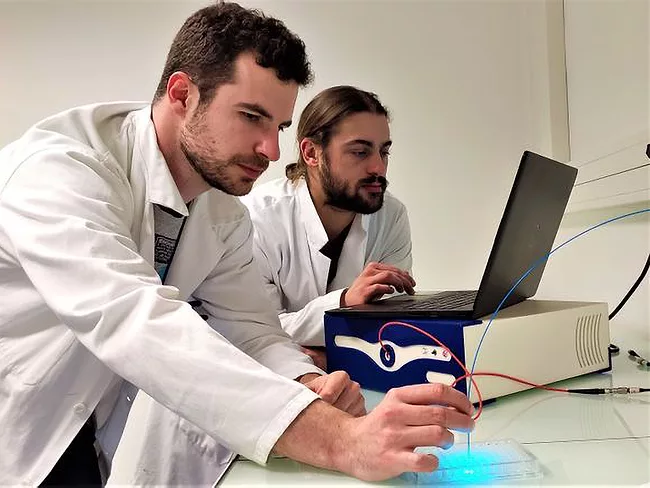
PARIS – Dyameo SAS has successfully raised $1.13 million in seed funding to develop its endoscopy probe used for the instantaneous detection of cancerous cells. This round was led by Medevice SAS and Aquiti Gestion SAS via its co-investment fund, NACO.
Anheart Therapeutics Co. Ltd. raised $61 million in a series B round to support the development of a slate of precision oncology pipeline in-licensed by the company from Daiichi Sankyo Co. Ltd. Toward that end, funds will support phase II testing of the Hangzhou, China-based firm’s lead asset, the ROS1 inhibitor taletrectinib, for the potential treatment of non-small-cell lung cancer.
DUBLIN – Anaveon AG raised CHF110 million (US$119.5 million) in a series B round to accelerate development of its interleukin-2 (IL-2) agonist ANV-419, which is currently undergoing a phase I/II trial. “We are putting our compound into multiple clinical trials and multiple indications in parallel,” CEO and co-founder Andreas Katopodis told BioWorld.

 RSS
RSS