While most human papillomavirus (HPV) infections are cleared by the host immune system, persistent infection with high-risk HPV genotypes, particularly HPV16 and HPV18, can promote cervical cancer development. Researchers from Huazhong University of Science and Technology reported the development and preclinical characterization of KDTV-001, an HPV vaccine comprising a nonreplicating adenovirus type 5 vector encoding a codon-optimized fusion protein of the early antigens E6 and E7 derived from HPV genotypes 16, 18 and 52.
Oricell Therapeutics Holdings Ltd closed a $110 million pre-IPO round to expand its global footprint and advance its lead candidate, a GPC3-targeted autologous CAR T therapy for liver cancer to registrational trials.
Regeneron Pharmaceuticals Inc. is entering the radiopharmaceutical space via a collaboration with Telix Pharmaceuticals Ltd. to jointly develop and commercialize next-generation radiopharmaceutical therapies.
Syneron Bio is emerging as one of the most heavily backed new entrants in the macrocyclic peptide space, raising more than $250 million in venture funding and securing a multibillion-dollar deal with Astrazeneca plc as it builds a platform spanning several of the most competitive frontiers in drug development.
More than four decades on from the approval of the first biologic drug, the industry has reached a tipping point, and biotech drugs now outnumber small molecules in the global R&D pipeline.
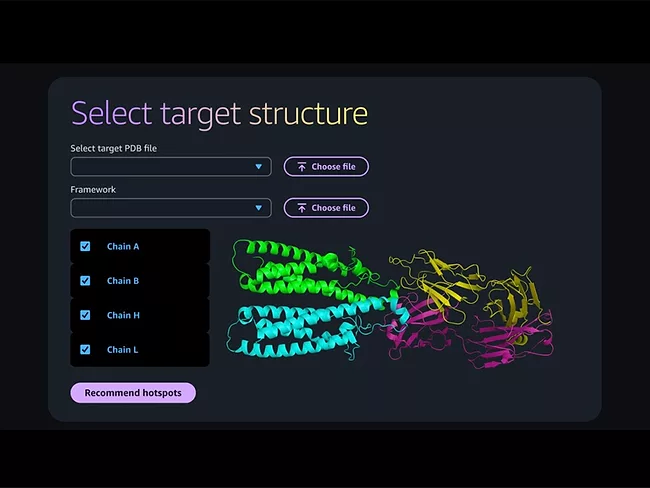
Amazon is extending the reach of its “everything store” into drug R&D with the launch of an artificial intelligence-powered Bio Discovery business. The company has compiled a catalogue of 40-plus foundation models that have been trained on extensive biology datasets and are able to generate and evaluate drug molecules in silico. For now, this covers antibodies only, but it is intended to move into other modalities.
Scientists from Adlai Nortye Biopharma Co. Ltd. and Adlai Nortye Pte Ltd. have discovered new GTPase KRAS and/or GTPase KRAS (mutant) inhibitors that are potentially useful for the treatment of cancer, autoimmune disorders and inflammation.
Researchers from Jiangsu Hengrui Pharmaceuticals Co. Ltd. and Shanghai Hengrui Pharmaceutical Co. Ltd. have synthesized new protein arginine N-methyltransferase 5 (PRMT5) inhibitors reported to be useful for the treatment of cancer.
KMT2A-rearranged acute myeloid leukemia (AML) is a highly aggressive leukemia subtype characterized by poor prognosis and high relapse rates. Because the menin-MLL interaction is essential for the stability and transcriptional activity of MLL fusion complexes, targeting this protein-protein interaction represents a promising therapeutic strategy for this aggressive form of AML. Researchers from Zhejiang University reported the discovery and preclinical characterization of [I], a novel menin inhibitor, designed for the treatment of AML.
Researchers from Fudan University (Shanghai, China) and collaborators tested the use of senescent tumor cell (STC)-derived nanovesicles to enable spatiotemporally confined immune responses for selective clearance of radiotherapy-induced STCs.

 RSS
RSS