Syncardia Systems LLC, of Tucson, Ariz., has petitioned the Centers for Medicare and Medicaid Services (CMS) to drop the coverage with evidence development (CED) mandate for artificial hearts, stating that multiple studies have demonstrated that artificial hearts meet the reasonable and necessary standard. Syncardia said its temporary Total Artificial Heart (TAH-t) should thus be available “unencumbered by the existing requirement for evidence development,” a change that could modestly bolster utilization and sales of these devices.
The U.S. FDA has given its nod for a new trial of Abbott Laboratories’ Amplatzer Amulet left atrial appendage (LAA) occluder for those with atrial fibrillation (AF) who are at risk of stroke. Known as the CATALYST trial, it is the first study comparing the effectiveness of a LAA closure device to non-vitamin K antagonist oral anticoagulant (NOAC) drugs, a newer class of blood thinners, the Abbott Park, Ill.-based company said.
Keeping you up to date on recent developments in cardiology, including: Long QT genes mostly short on evidence; Cerebrospinal fluid is early culprit in stroke edema; Regenerative HBOT protocols appear to improve cardiac function in healthy aging heart population; Blood test IDs risk of disease linked to stroke, dementia.
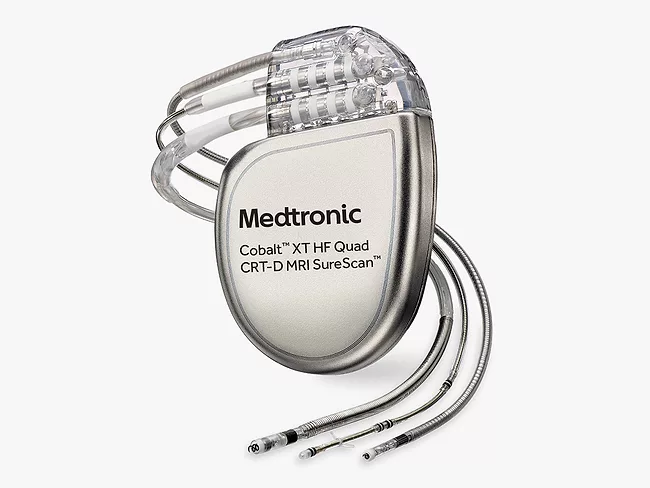
Medtronic plc has gained CE mark approval for its Cobalt and Crome portfolio, the company’s first implantable cardiac defibrillators (ICDs) and cardiac resynchronization therapy-defibrillators (CRT-Ds) to offer connected health via Bluesync technology. The portfolio will be rolled out on a country-by-country basis throughout Europe, with initial implants in select countries to begin soon.
Heartflow Inc., of Redwood City, Calif., is working on two Medicare administrative contractors (MACs) to cover its functional flow reserve algorithm for the coronary arteries, but Heartflow’s Heather Brown told BioWorld that said that the existing local coverage policies fall far short of the cost of the service, thus impeding beneficiary access.
Edwards Lifesciences Corp., of Irvine, Calif., reported positive quarterly results Jan. 30, and it was particularly bolstered by strength with transcatheter aortic valve replacement (TAVR). CEO Mike Mussallem called out the fourth quarter underlying sales growth of 19%, giving much credit to TAVR.
DUBLIN – The witty Twitter account @justsaysinmice, run by Northeastern University research scientist Jim Heathers, offers a very useful corrective to the misleading and unwarranted hype that often accompanies preclinical studies in mice. What looks good in murine models is all too often lost in translation, for a whole host of reasons, and never has any useful effect in patients. That’s not a concern for a group led by Thomas Thum, of the Institute of Molecular and Translational Therapeutic Strategies at Hannover Medical School in Germany, who just published in Nature Communications the outcome of what is probably the largest ever pig study in heart failure.
Abbott Laboratories has received CE mark approval for its Tendyne transcatheter mitral valve implantation (TMVI) system, the first such device approved for use in Europe and the world. The system is intended for patients with leaky mitral valves that are beyond repair and those at high risk for open heart surgery.

 RSS
RSS