Rednvia Co. Ltd. has disclosed alkaline phosphatase tissue-nonspecific isozyme (TNAP) inhibitors reported to be useful for the treatment of ectopic calcification.
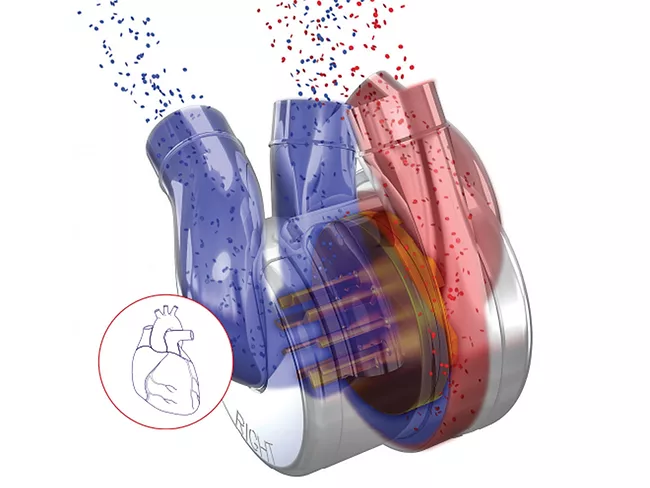
The U.S. FDA’s decision to grant breakthrough device designation for Bivacor Inc.’s titanium total artificial heart (TAH) sent real hearts aflutter at the Huntington, Calif.-based company’s headquarters. While the designation supports use of the TAH as a bridge to transplant for adults with biventricular or univentricular heart failure for whom current options are insufficient or unsuitable, Bivacor hopes its device will eventually serve as a long-term heart replacement.
Shanghai Circode Biomed Co. Ltd. has obtained IND clearance from the FDA for HM-2002 for ischemic heart disease. It previously received IND clearance in China in January this year.
Abbott Laboratories recently received FDA clearance for Tendyne, its transcatheter mitral valve replacement system. The news comes on the heels of Edwards Lifesciences Corp. securing a CE mark for its Sapien M3 system and is a boon for mitral valve therapies amid ongoing frustrations about the slow adoption of TMVR technologies.
Investors found in an 8-K filing by Intellia Therapeutics Inc. the news of one case of liver-enzyme elevation in the ongoing phase III Magnitude study with nexiguran ziclumeran (nex-z, NTLA-2001), and in reaction pushed shares of the firm (NASDAQ:NTLA) down to close May 29 at $7.45, a loss of $2.21, or 23%, after the stock traded as low as $6.90 during the day.
Developing a therapy for an ultra-rare condition has its challenges, including finding enough patients for clinical enrollment and convincing regulatory authorities that limited data prove the candidate is safe and effective. For that reason, Stealth Biotherapeutics Inc. has faced numerous roadblocks getting its mitochondria-targeting elamipretide across the finish line for Barth syndrome, a condition that affects about 230 to 250 males worldwide, including fewer than 150 in the U.S.
Atherosclerotic cardiovascular disease (ASCVD) remains a leading cause of mortality worldwide despite advances in managing classic risk factors and therapies lowering LDL-cholesterol. Inhibiting angiopoietin-like protein 4 (ANGPTL4), a key regulator of triglyceride metabolism, is emerging as a potential strategy to treat atherogenic dyslipidemia and lower ASCVD risk.
Boston Scientific Corp. reported the latest setback in its transcatheter aortic valve replacement (TAVR) aspirations with the news that it is officially discontinuing worldwide sales of its Acurate neo2 and Acurate Prime systems
Shockwave Medical Inc. is confident that its intravascular lithotripsy (IVL) system can continue to dominate the market for calcium modification even as other technologies emerge, chief medical officer Nick West told BioWorld.

 RSS
RSS