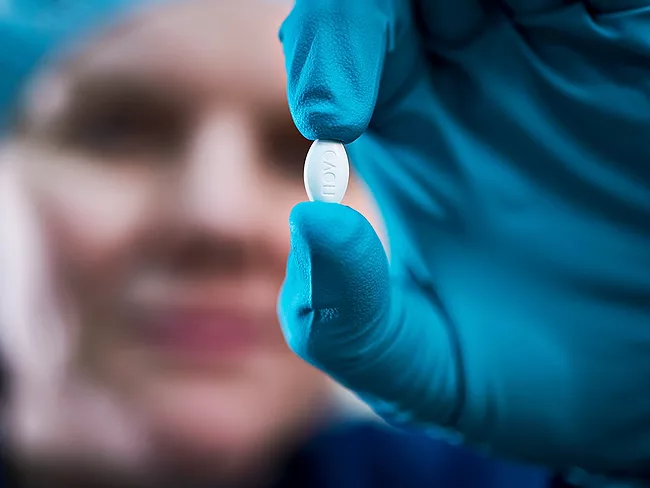
Novo Nordisk A/S’ wild card bet that its GLP-1 receptor agonist semaglutide could be used to treat Alzheimer’s disease has not paid off, with the company reporting two phase III trials have shown no effect on slowing disease progression.
It’s the biological resource that keeps on giving, and now UK Biobank has released the final tranche of data on the levels of 249 metabolites in the blood of its half a million participants.
Could GLP-1 receptor agonists (GLP-1RAs), already used in obesity and diabetes, be repurposed as drugs to slow aging? Hong Kong, one of the places in the world with the highest human longevity, is also home to a scientific study on the effects of GLP-1RAs. For the first time, scientists at the Chinese University of Hong Kong (CUHK) have assessed their pharmacological potential in later life using a multiomics preclinical approach.
Success in Japan may further bolster Protara Therapeutics Inc. in its push with TARA-002 in pediatric patients with macrocystic and mixed cystic lymphatic malformations (LMs), for which the New York-based firm disclosed interim results from an ongoing phase II trial.
South Korean researchers led by Lee In-suk of Yonsei University have reported the most complete oral microbiome catalog to date, with more than 72,000 genomes. Detailed in Cell Host & Microbe on Nov. 12, 2025, the database is expected to serve as a universal platform for academia and enable “precision microbiome medicine” for the industry, Lee told BioWorld.
Mitorx Therapeutics Ltd. has raised £5.5 million (US$7.2 million) in a pre-series A round to advance its lead mitochondrial-targeted program, Myo-004, through clinical candidate selection.
Pfizer Inc. has divulged gastric inhibitory polypeptide receptor (GIPR) antagonists reported to be useful for the treatment of type 2 diabetes and obesity.
Century Therapeutics Inc. has announced its first program for type 1 diabetes, CNTY-813. The program comprises induced pluripotent stem cell (iPSC)-derived β islets engineered with the company’s proprietary Allo-Evasion 5.0 technology, designed to protect from T-cell, NK-cell and humoral immune rejection, with the goal of durable glycemic control without the need for systemic immunosuppression.
Melanocortin-4-receptor MC4R is a crucial molecule involved in energy homeostasis, feeding behavior and metabolism, and loss-of-function mutations in this gene are the main monogenic cause of early-onset obesity. Congruence Therapeutics Inc. has developed a small molecule, CGX-926, that corrected MC4R deficiency and restored its cell-surface expression and function.
ABL Bio Inc. inked a license and research agreement with Eli Lilly and Co. worth up to $2.6 billion to develop multiple therapeutics using the Grabody-B platform. Under the terms announced Nov. 12, ABL will receive a $40 million up-front payment and up to $2.56 billion in development, regulatory and commercialization milestones, plus tiered royalties on net sales.
 RSS
RSS