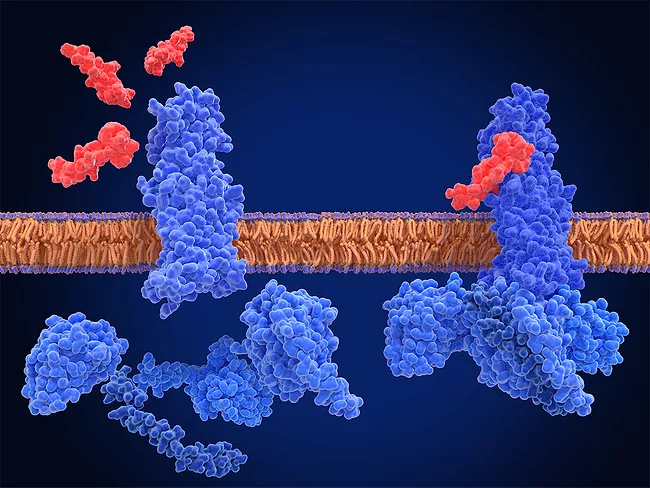
Gasherbrum Bio Inc. has discovered new glucagon-like peptide 1 receptor (GLP-1R) agonists. They are reported to be useful for the treatment of type 2 diabetes, dyslipidemia, hyperglycemia, hypertension, obesity and more.
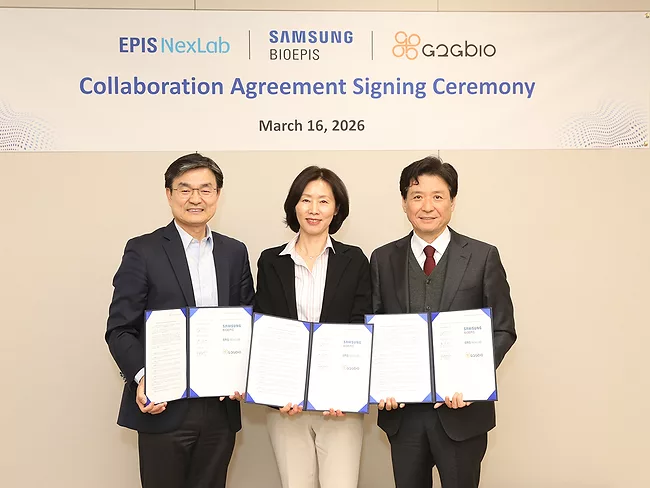
G2Gbio Inc. secured a ₩20 billion (US$13.35 million) investment from Samsung Epis Holdings Co. Ltd. and a joint research and license agreement for two assets, including a long-acting obesity treatment, with subsidiary Samsung Bioepis Co. Ltd. March 16.
G2Gbio Inc. secured a ₩20 billion (US$13.35 million) investment from Samsung Epis Holdings Co. Ltd. and a joint research and license agreement for two assets, including a long-acting obesity treatment, with subsidiary Samsung Bioepis Co. Ltd. March 16.
An F. Hoffmann-la Roche Ltd. and Hoffmann-la Roche Inc. patent describes prodrugs of serine/threonine-protein salt-inducible kinases (SIK) inhibitors. They are reported to be useful for the treatment of atherosclerosis, type 2 diabetes, giant cell arteritis, glomerulonephritis, inflammatory bowel disease, metabolic dysfunction-associated steatohepatitis (MASH; NASH), primary sclerosing cholangitis and rheumatoid arthritis.
Otsuka Pharmaceutical Co. Ltd. reaped positive results from an open-label phase II study of repinatrabit (JNT-517) in adolescents with phenylketonuria (PKU), a rare disease marked by the inability to break down the amino acid phenylalanine.
Drugs that mimic GLP-1 are widely used to treat diabetes and obesity, but it is not fully understood exactly how they produce many of their beneficial effects. Investigators from The Salk Institute for Biological Studies published a paper in Proceedings of the National Academy of Sciences shedding some light on the mechanisms. “Understanding this process more clearly could help researchers design the next generation of GLP-1-based treatments that are even more precise and effective,” first author Sam Van de Velde told BioWorld.
Work at Avioris Bio Inc. has led to the discovery of proprotein convertase subtilisin/kexin-type 9 (PCSK9) inhibitors reported to be useful for the treatment of hypercholesterolemia.
GM1 gangliosidosis is a lysosomal storage disease caused by mutations in the human GLB1 gene, encoding the ubiquitous lysosomal β-galactosidase. GM1 causes a rapidly progressing neurodegeneration, which can be lethal in the first 2 years of life in the most severe cases.
Researchers from Sab Biotherapeutics Inc. presented data generated in the development and validation of a pharmacokinetic (PK) assay for SAB-142 and the evaluation of its toxicology and immunologic effects in a juvenile cynomolgus monkey model.

 RSS
RSS