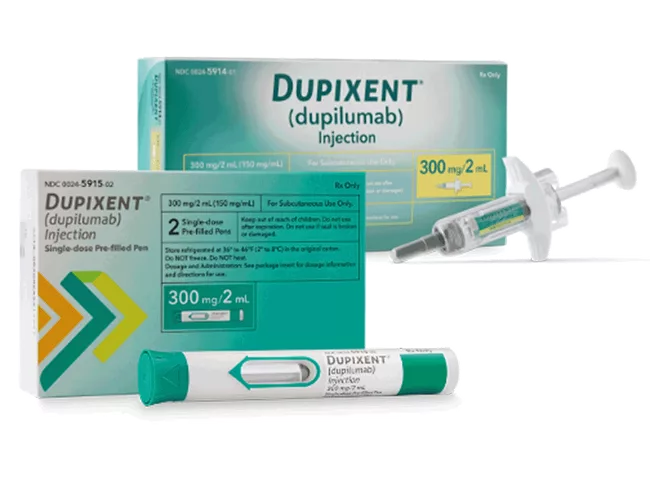
Becoming the first treatment for children ages 1 to 11 with eosinophilic esophagitis (EE), Sanofi SA and Regeneron Pharmaceuticals Inc.’s IL-4/IL-13 inhibitor Dupixent (dupilumab) was cleared by the U.S. FDA on Jan. 25.
Sagimet Biosciences Inc. stock (NASDAQ:SGMT) more than doubled Jan. 22 as shares closed 170% higher at $18.42 each as a phase IIb study of lead candidate denifanstat performed well against nonalcoholic steatohepatitis (NASH) compared to placebo. Top-line data from the 52-week, randomized, double-blind Fascinate-2 trial showed the oral fatty acid synthase inhibitor resulted in statistically significant improvements in biopsy-confirmed NASH patients with stage 2 or stage 3 fibrosis, which is moderate to severe disease, at week 52.
Boehringer Ingelheim GmbH’s start to the new year includes two fresh deals across two continents. BI struck one deal with Kunshan, China-based Suzhou Ribo Life Science Co. Ltd. and its Mölndal, Sweden-based subsidiary, Ribocure Pharmaceuticals AB, to develop small interfering RNA (siRNA) treatments for nonalcoholic or metabolic dysfunction-associated steatohepatitis. It struck a second deal with San Francisco-based 3T Biosciences Inc. to develop cancer immunotherapies, which builds on an earlier collaboration formed last year. Combined, the two deals are worth more than $2.5 billion.
Index Pharmaceuticals Holding AB CEO Jenny Sundqvist said liquidation of the company in the wake of phase III data with cobitolimod in moderate to severe ulcerative colitis (UC) is “one of the options that will be on the table.” Shares of the Stockholm-based firm (STO:INDEX) closed Nov. 22 at SEK0.24 (US2 cents), down SEK0.41, or 63%, on word that an independent data monitoring committee (DMC) has completed the planned dose-selection analysis, including safety review and assessment for futility, of induction Study 1 of the phase III program called Conclude, testing the Toll-like receptor 9 agonist cobitolimod. The DMC concluded that Index’s lead compound is unlikely to meet the primary endpoint, and the company said development will be stopped.
While executives of Durect Corp. plugged “compelling” reduction in mortality from a phase IIb study testing DNMT inhibitor larsucosterol in severe alcohol-associated hepatitis and looked ahead to a potential registrational trial, investors focused on the fact that the study, called Ahfirm, fell short of statistical significance on both primary and secondary endpoints, sending shares (NASDAQ:DRRX) down 79%.
Phathom Pharmaceuticals Inc. will begin marketing Voquezna (vonoprazan) in December, thanks to the Nov. 1 approval by U.S. regulators, who cleared the potassium-competitive acid blocker at 10-mg and 20-mg doses for all grades of erosive gastroesophageal reflux disease (GERD), maintenance of healing of all grades of the condition and relief of associated heartburn.
After a delay caused by the April complete response letter from the U.S. FDA for Eli Lilly and Co.’s Omvoh (mirikizumab-mrkz), regulators cleared the drug for moderately to severely active ulcerative colitis (UC) in adults. Given by infusion (300 mg/15 mL)/injection (100 mg/mL), Omvoh stands as the first and only interleukin (IL)-23p19 antagonist for the treatment of moderately to severely active UC in adults – as well as the pharma giant’s first drug approval in the space.
Biologics innovators typically take a lifecycle approach to developing new indications and formulations of their prescription drugs, especially when biosimilar competition is on the horizon.
For a whopping $7.1 billion up front, Roche AG is buying Telavant Holdings Inc., a firm that is owned by Roivant Sciences Ltd. and Pfizer Inc. The deal also includes $150 million on the back end, and Roche gains rights to develop, manufacture and commercialize a fully human monoclonal antibody targeting tumor necrosis factor-like ligand 1A, RVT-3101, for treating inflammatory bowel disease (IBD) and possibly other diseases in the U.S. and Japan. Pfizer retains the rights for the rest of the world.
Abivax SA’s debut on the U.S. market received a somewhat chilly reception Oct. 20, as the firm priced on the low end of its proposed range and ended the first day of trading in the red. But the company managed to pull in about $235.8 million in gross proceeds, the majority of which will support late-stage efforts for obefazimod, an oral candidate with a novel mechanism of action it hopes to advance in the lucrative inflammatory bowel disease space.
 RSS
RSS