Takeda Pharmaceutical Co. Ltd. is exiting all work in cell therapies and will seek an external partner to advance the company’s research and clinic-ready cell therapy programs, the company said, noting that it is not currently running any clinical trials using cell therapy technology.
When it won U.S. FDA accelerated approval more than eight years ago, Intercept Pharmaceuticals Inc.’s Ocaliva (obeticholic acid) was viewed as a breakthrough, becoming the first new treatment in 20 years for rare, progressive liver disease primary biliary cholangitis (PBC) and, for several years, the only second-line treatment for PBC patients failing to respond to ursodeoxycholic acid. More recently, however, Ocaliva has faced regulatory and safety stumbles, with Intercept now voluntarily pulling the farnesoid X receptor activator from the U.S. market.
The funding is in place for a phase IIb trial of its lead gut microbiome live biotherapeutic, after MRM Health NV closed a €55 million (US$64 million) series B round.
As Wave Life Sciences Ltd. released more results from its ongoing phase Ib/IIa study of small interfering RNA editing oligonucleotide WVE-006 for treating alpha-1 antitrypsin deficiency, the company’s stock (NASDAQ:WVE) dropped by 16.8% to close at $8 on Sept. 3.
The fibroblast growth factor 21 (FGF21) analogue space took another turn as Novo Nordisk A/S said during its second-quarter financial update that work with zalfermin (NNC0194-0499) will be discontinued. A phase II study testing the compound in combination with glucagon-like peptide-1 therapy failed to hit the primary endpoint related to liver fibrosis in metabolic dysfunction-associated steatohepatitis (MASH), without MASH worsening.
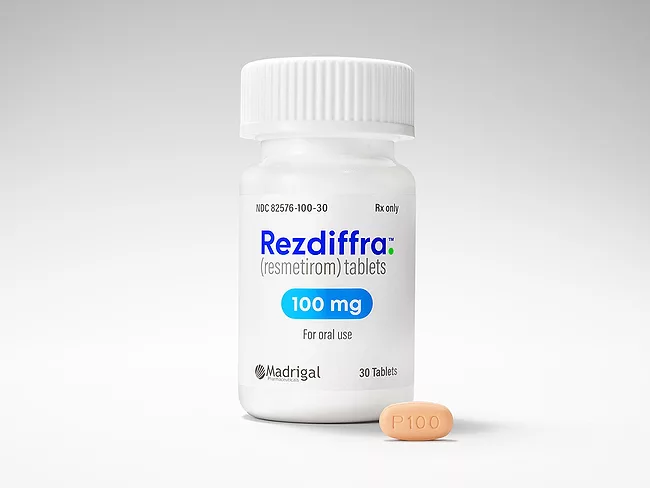
Madrigal Pharmaceuticals Inc.’s long-awaited business development pact became reality by way of an exclusive global license agreement that could be worth more than $2 billion with CSPC Pharmaceutical Group Ltd., of Shijiazhuang, China, for SYH-2086. The candidate is a preclinical oral, small-molecule glucagon-like peptide-1 (GLP-1) receptor agonist and orforglipron derivative.
Abivax SA is positioning to change the treatment landscape in ulcerative colitis after delivering positive results and a favorable safety profile in two phase III trials of its orally available miRNA-124 enhancer, obefazimod. Abivax stock rocketed in Europe and the U.S. on news of the data. Shares (Paris:ABVX) rose €45.40, or 510%, to close at €54.30 July 23. In the U.S., shares (NASDAQ:ABVX) leapt 586%, or $58.60, to close at $68.60.
As Wall Street awaits key phase III data from Abivax SA with microRNA-124 (miR-124)-targeting obefazimod in ulcerative colitis, due this quarter, the inflammatory bowel disease (IBD) space – which also takes in Crohn’s disease – continues to grow and shift with new findings across varied fronts.
Torrent Pharmaceutical Ltd. will buy J. B. Chemicals and Pharmaceuticals Ltd. (JB Pharma) from private equity firm KKR & Co. Inc. at an equity valuation of ₹256.89 billion (US$3 billion), which will then merge into one entity under Torrent Pharma.
Top-line results from Altimmune Inc.’s phase IIb Impact study of pemvidutide in treating metabolic dysfunction-associated steatohepatitis showed the peptide-based GLP-1/glucagon dual receptor agonist hit one primary endpoint while not hitting statistical significance in another.
 RSS
RSS