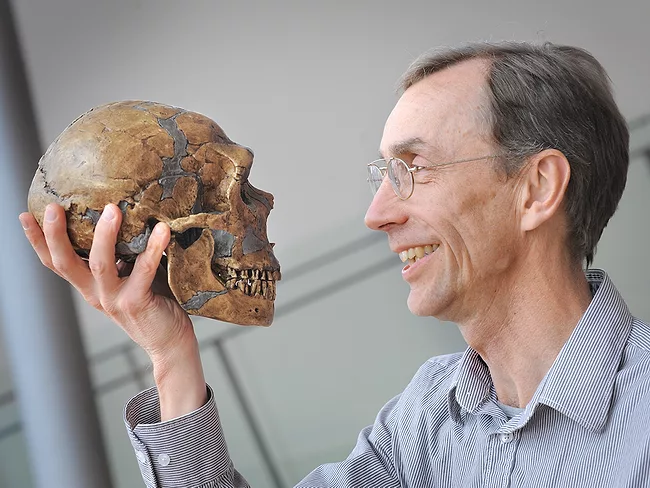
The Nobel Prize in Physiology or Medicine 2022 was awarded to Svante Pääbo today "for his discoveries concerning the genomes of extinct hominins and human evolution." Pääbo, who is currently the director of the Max Planck Institute for Evolutionary Anthropology in Leipzig, Germany, and his colleagues overcame extreme technical challenges to sequence the DNA of ancient hominids – because after tens of thousands of years, there is no such thing as aging well for DNA.
Simcere Pharmaceutical Group has out-licensed its autoimmune drug candidate SIM-0278 for all indications to Almirall SA in a deal worth up to $507 million. Simcere granted exclusive global rights to the candidate to Almirall for development and commercialization excluding mainland China, Hong Kong, Macau, and Taiwan. In return, Almirall will pay Simcere $15 million up front.
A research consortium comprised of XL-protein GmbH, Wacker Chemie AG and Ludwig-Maximilians-Universität München (LMU) will develop a novel long-acting immunosuppressive anti-CD40 antibody fragment for the selective suppression of organ rejection, in particular in the area of cardiac xenotransplantation.
Cancer-associated fibroblasts (CAF) expressing the LRRC15 protein (leucine-rich repeat-containing protein 15) could be responsible for the suppression of antitumor immunity, according to a study using mouse models of pancreatic cancer. Scientists from Roche Holding AG subsidiary Genentech Inc. demonstrated in vivo that TGF-β type 2 receptor signaling in healthy universal fibroblasts produces cancer-associated LRRC15+ myofibroblasts.
Almirall SA and Simcere Pharmaceutical Group Ltd. have entered into an exclusive licensing agreement for Simcere's IL-2 mutant fusion protein (IL-2 mu-Fc) autoimmune drug candidate, SIM-0278.
Immunovant Inc. has announced a next-generation anti-FcRn, IMVT-1402, for autoimmune diseases. In animal studies, IMVT-1402 has shown deep IgG lowering, similar to the company's lead asset batoclimab, with no or minimal impact on albumin and low-density lipoprotein (LDL).
In a study comparing the antibody repertoire of individuals with severe myalgic encephalopathy/ chronic fatigue syndrome (ME/CFS) to that of healthy controls, the majority of individuals with CFS showed antibody responses to specific microbiome proteins. Such responses were largely absent in healthy controls, implicating immune reactions to the microbiome in the development of ME/CFS.
Innocare Pharma Ltd. raised ¥2.92 billion (US$412 million) in a second listing on the Shanghai STAR Market. Its shares opened at ¥10.86 apiece, sliding 15.4% to close at ¥9.33 on the first trading day, Sept. 21. The company will use the proceeds to support cancer and autoimmune drug R&D, improve its drug development platform, build its sales network, and upgrade its information technology, said Chief Commercial Officer Jin Xiaodong.
Innocare Pharma Ltd. raised ¥2.92 billion (US$412 million) in a second listing on the Shanghai STAR Market. Its shares opened at ¥10.86 apiece, sliding 15.4% to close at ¥9.33 on the first trading day, Sept. 21. The company will use the proceeds to support cancer and autoimmune drug R&D, improve its drug development platform, build its sales network, and upgrade its information technology, said Chief Commercial Officer Jin Xiaodong.
DBV Technologies SA blindsided investors by disclosing that the U.S. FDA had placed a partial clinical hold on its phase III Vitesse trial of its Viaskin Peanut patch immunotherapy for peanut allergy, calling for several changes to the study protocol. Its demands came just two weeks after the company claimed to have finalized the protocol in consultation with the agency.
 RSS
RSS