Researchers at The Scripps Research Institute and the IAVI Neutralizing Antibody Center are developing a novel experimental vaccine targeting the germline to stimulate precursor B cells and produce broadly neutralizing antibodies (bnAbs) against the membrane-proximal external region (MPER) of the gp41 protein found in the HIV-1 envelope.
After a previous phase III failure, Savara Inc. kept at it and found success with molgramostim for the rare lung disease autoimmune pulmonary alveolar proteinosis. A second attempt, the pivotal phase III Impala-2 study of molgramostim, an inhaled form of recombinant granulocyte macrophage colony-stimulating factor for adults, hit its primary endpoint and left participants breathing easier. The results led Savara to say it would complete a BLA submission sometime in the first half of 2025, with filings in Europe and Japan to follow.
Fibrobiologics Inc. has announced the development of a novel artificial thymus organoid that can restore immune function in a severe combined immunodeficiency (SCID) mouse model.
CSPC Pharmaceutical Group Ltd. has obtained clearance from China’s National Medical Products Administration (NMPA) to conduct clinical trials in China with the first mRNA-lipid nanoparticles (LNP)-based CAR T-cell injection, SYS-6020.
Following a day of deals that collectively bring a potential $3.75 billion into three biopharma companies – namely Ascidian Therapeutics Inc., Belharra Therapeutics Inc. and Mabcare Therapeutics – researchers will be busy discovering new therapies for neurological and immunological diseases, and advancing globally a candidate for solid tumors.
Preliminary data show Biotron Ltd.’s lead compound BIT-225 met the primary objectives of the phase II BIT225-011 trial, a longitudinal, open-label trial designed to characterize the effect of the compound added to ongoing, suppressive antiretroviral therapy in HIV-1-infected, treatment-experienced patients who achieved only partial immune reconstitution.
Astrazeneca plc has added a novel target for systemic lupus erythematosus (SLE) to its discovery portfolio through its collaboration with Benevolentai Ltd. The novel target was discovered using Benevolentai’s artificial intelligence (AI) drug discovery platform and experimentally validated by Astrazeneca.
A recent paper has identified the enhancer ETS2, located in a so-called gene desert, as a contributor to five separate immune disorders. It also showed that one of ETS2’s target genes mediating this inflammation was the eminently druggable MEK, a kinase that is the target of the FDA-approved inhibitors Mekinist (trametinib, GSK plc), Mektovi (binimetinib, Array Biopharma Inc.), Cotellic (cobimetinib, Roche Holding AG) and Koselugo (selumetinib, Astrazeneca plc/Merck & Co. Inc.).
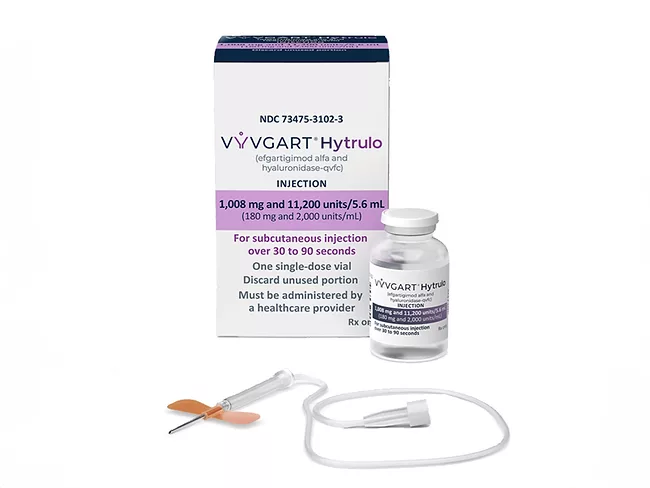
Argenx SE gained U.S. FDA approval of subcutaneously given Vyvgart Hytrulo (efgartigimod alfa and hyaluronidase-qvfc) for adult patients with chronic inflammatory demyelinating polyneuropathy (CIDP). The company’s stock (NASDAQ:ARGX) was up 11.7% to $440.59 at the close of trading June 24. About 24,000 people in the U.S. are being treated for CIDP, and patients are generally diagnosed between 40 and 60 years of age.
Alivexis Inc. and Melodia Therapeutics AG have entered into an exclusive license agreement for the worldwide development, manufacturing and commercialization of Alivexis’ MDI-0151, a novel cathepsin C inhibitor identified in Alivexis’ MOD-A discovery program.
 RSS
RSS