About two months after Astrazeneca plc said its application for sipavibart (AZD-3152) had been accepted by the EMA for pre-exposure prophylaxis (PrEP) against COVID-19 in immunocompromised people, Invivyd Inc. unveiled positive 180-day exploratory efficacy data from the company’s ongoing Canopy phase III trial with Pemgarda (pemivibart) in the same indication – and made known less happy news from regulators on the other side of the pond.
The BioWorld Infectious Disease Index (BIDI) has rebounded significantly from its lowest point this year, improving from a 25.12% drop in late April to a 7.66% decline by the end of July. Despite the recovery, BIDI still lagged behind the Nasdaq Biotechnology Index, which rose 10.82% by July’s close, and the Dow Jones Industrial Average, which gained 8.25% year to date.
“There are hundreds of strains of bird flu, and most of them don’t infect humans, or even mammals,” Stephen Cusack told BioWorld. “There are two main reasons for that.” To be able to cause an infection, a virus “has to be able to get into the cell, and for that it needs a receptor,” Cusack said. For influenza viruses, those receptors are hemagglutinin receptors, and they differ in subtle but important ways between birds and mammals.
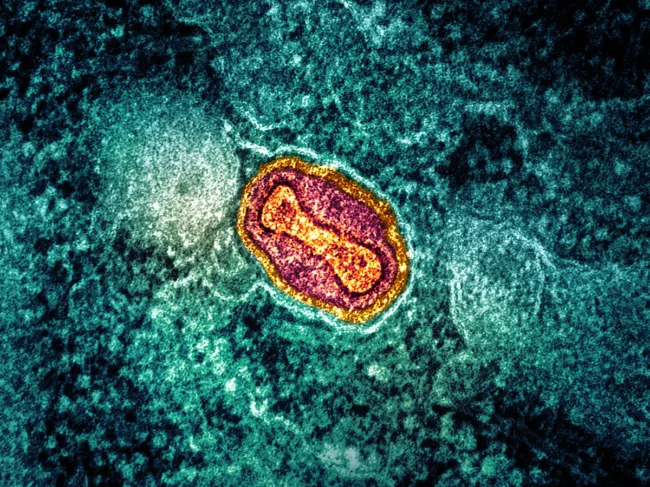
Following the World Health Organization’s escalation of mpox to a public health emergency of international concern on Aug. 14 and the emergence of what appears to be a more severe strain of the orthopoxvirus, the spotlight has focused on a handful of companies working on vaccines and antivirals. Shares of Geovax Labs Inc., Emergent Biosolutions Inc. and Tonix Pharmaceuticals Inc. were all trading up Aug. 19.
As mpox has now been found in the EU, the race for an effective vaccine has accelerated, with a study failure but increased vaccine production from Europe. The U.S. NIH just released top-line results from a preliminary analysis of a placebo-controlled study of Siga Technologies Inc.’s antiviral, tecovirimat, showing it missed the primary endpoint of statistically significant improvement within 28 days post-randomization in time to lesion resolution for patients in the Democratic Republic of the Congo.
A strategy inspired by deficient HIV replication could be used as a treatment to reduce viral load in patients living with HIV and help control the pandemic of the retrovirus. Scientists from the University of California San Francisco want to use HIV against itself by using a parasitic version of the pathogen.
Concerns of lower-than-expected efficacy, which prompted AN2 Therapeutics Inc. to pause enrollment in the phase III portion of the phase II/III trial earlier this year, turned out to be well-founded, as top-line data proved disappointing for epetraborole in treatment-refractory Mycobacterium avium complex (MAC) lung disease. As a result, the company is dropping the program and restructuring.
Infection or cure? Scientists from Tel Aviv University and the University of Glasgow genetically modified the Toxoplasma gondii to bring a protein inside neurons. The novelty of using a protozoan that can travel from the gut to parasitize the CNS contrasts with the possibility of causing a disease. The scientists are already working on how to avoid it.
Armed with $55 million in series A funds and a U.S. government contract, Cambridge, Mass.-based Red Queen Therapeutics Inc. launched operations this week, with plans to advance its novel stapled lipopeptide platform, which creates new antiviral therapies that do not rely on the immune system to work.
Vir Biotechnology Inc.’s focus will look a little different for the latter half of 2024, as the San Francisco-based firm disclosed a restructuring that will cut about a fourth of its workforce and phase out programs targeting influenza and COVID-19 as well as vaccines developed using its T-cell-based viral vector platform.
 RSS
RSS