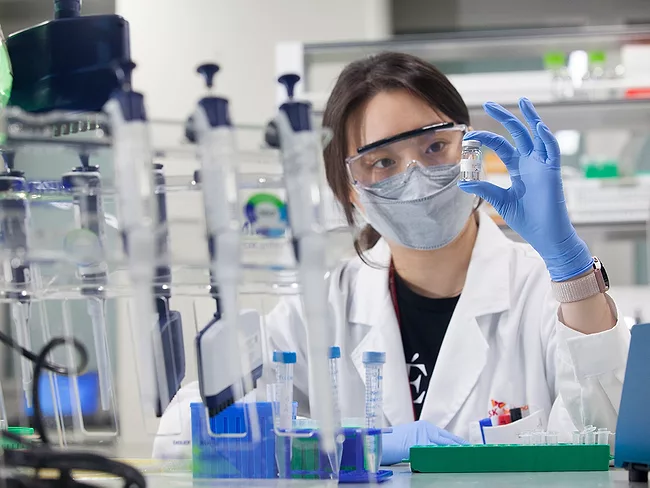
SK Bioscience Co. Ltd. gained approval from the Human Research Ethics Committee in Australia to start phase I/II trials of GBP-560, its mRNA-based vaccine candidate for mosquito-borne Japanese encephalitis virus, with funding from Coalition for Epidemic Preparedness Innovations.
Nearly three years after being terminated as president and CEO of Cytodyn Inc., Nader Pourhassan was convicted June 9 by a U.S. federal jury for his role in a securities fraud scheme to deceive investors about the Vancouver, Wash.-based company’s development of leronlimab. The jury also convicted Kazem Kazempour, the CEO of Amarex Clinical Research LLC, a contract research organization hired by Cytodyn, for his part in the scheme.
Enanta Pharmaceuticals Inc. hit the mark that Wall Street hoped for, and details rolled out in top-line results from the first-in-pediatrics phase II study evaluating once-daily, oral zelicapavir in hospitalized and non-hospitalized children aged 28 days to 36 months with respiratory syncytial virus (RSV).
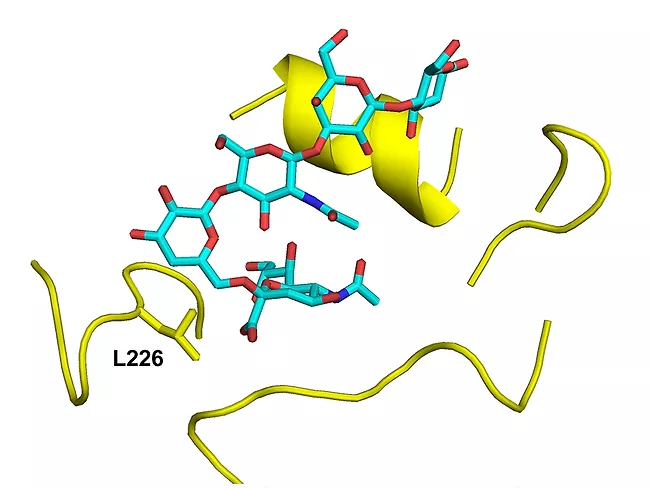
Although it does not generally infect humans, a single mutation of the H5N1 virus in the highly pathogenic avian and bovine clade 2.3.4.4b could overcome this barrier and possibly trigger a pandemic. Scientists at The Scripps Research Institute have warned of this possibility after studying the three-dimensional structure of the viral hemagglutinin and seeing how a change in one amino acid would make it more suitable for the human cell receptor. The researchers stress the need to monitor new mutations of this virus in order to act quickly in case the global jump to our species occurs.
The U.S. District Court for the Northern District of California ordered Lorik Papyan, who pleaded guilty three years ago to one count of unlicensed wholesale distribution of prescription drugs, to pay Gilead Sciences Inc. nearly $32 million in restitution to cover lost profits due to a counterfeit HIV drug scheme he was involved in.
The BioWorld Infectious Disease Index has struggled to gain ground in 2024 but has held relatively steady in recent months. After ending July down 7.66%, it closed October down 12.07% and sat at an 8.86% decline for the year as of Nov. 22.
Zai Lab and Pfizer Inc. are teaming up in China to fight the deadly carbapenem-resistant Acinetobacter baumannii (CRAB) infection with novel antibacterial drug Xacduro (sulbactam-durlobactam). Through the collaboration, Zai Lab will leverage Pfizer’s commercial infrastructure in the anti-infective space to widen access to Xacduro in mainland China. Terms of the deal were not released.
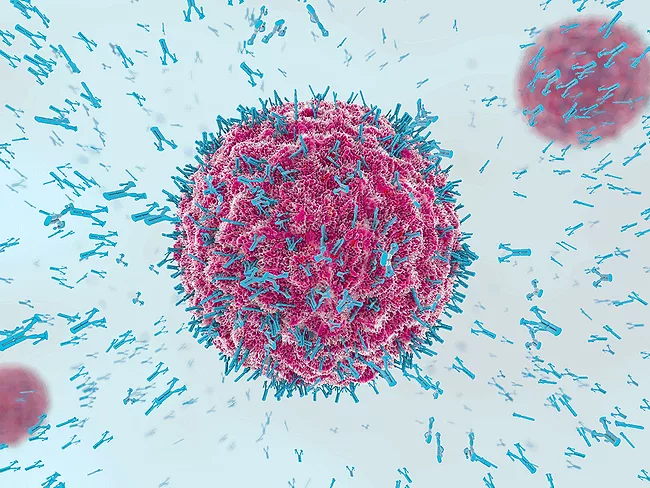
Patients infected with hepatitis C have had the ability to rid their livers of the virus for some time, while patients with chronic hepatitis B virus infection have been required to take medications for the rest of their lives in the hopes of just dampening damage to the liver caused by the virus. But, at The Liver Meeting 2024, Arbutus presented data from the phase IIa Im-prove study suggesting a cure might be on its way with its DNAi drug, which binds to the viral mRNA promoting its cutting, leading to loss of translation of the viral proteins.
The EMA has changed its mind about an earlier decision that the risks of Leqembi (lecanemab) outweigh the benefits and is now recommending the Alzheimer’s disease drug is approved for a subgroup of patients. That follows an appeal by Eisai Co. Ltd. and a re-examination of the data, after details relating to 274 patients with two copies of the ApoE4 gene were removed from the file.
Phase III Scorpio-PEP study results showed Shionogi & Co. Ltd.’s oral antiviral ensitrelvir fumaric acid (Xocova) reduced risk of symptomatic COVID-19 infection in subjects who were exposed to the virus by infected household members.
 RSS
RSS