Concerns voiced during January’s U.S. FDA advisory committee meeting failed to deter Cidara Therapeutics Inc. from winning approval by the agency March 22 for once-weekly Rezzayo (rezafungin for injection) to treat a pair of indications – candidemia as well as invasive candidiasis (IC) – in adults with limited or no alternatives.
Another step forward in the quest for an Epstein-Barr virus (EBV) vaccine took the form of Merck & Co. Inc.’s deal with Modex Therapeutics Inc., owned by Opko Health Inc., to advance MDX-2201 worldwide, an arrangement that brings $50 million up front for Opko plus as much as $872.5 million in milestone payments along with royalties.
Immorna Biotechnology Co. Ltd. raised nearly $100 million in series A+ and A++ financing rounds to speed up the clinical development and commercialization of its RNA-based therapeutics. Founded in 2019, Immorna develops therapeutics and vaccines based on its RNA platforms, including conventional, self-replicating and circular RNA.
Inovio Pharmaceuticals Inc. has “more work to do” in understanding mixed results with the DNA-based immunotherapy VGX-3100 as a treatment for cervical high-grade squamous intraepithelial lesions associated with human papillomavirus (HPV)-16 or HPV-18, said Michael Sumner, chief medical officer for the company. “We only got the data in our hands about a week ago.”
Although the U.S. FDA’s Vaccines and Related Biological Products Advisory Committee (VRBPAC) voted unanimously, 12-0, March 1 that the data GSK plc presented was adequate to support the safety of its respiratory syncytial virus vaccine, several panelists cautioned the FDA against viewing the vote as a recommendation to license the vaccine before more data are available.
Safety likely will be top of mind when the U.S. FDA’s Vaccines and Related Biologic Products Advisory Committee meets Feb. 28 and March 1 to advise the agency on two respiratory syncytial virus (RSV) vaccines proposed for use in adults who are at least 60 years old.
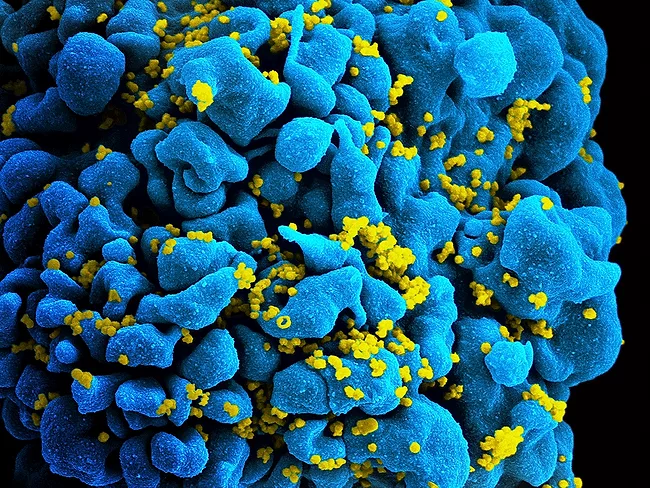
HIV research is a winding road where one obstacle leads to another, slowing down success. The first barrier to getting the cure starts before one can even talk about it. “Cure may be too powerful and promising a term. Remission is probably better,” said John Mellors, whose work led to the universal use of plasma HIV-1 RNA and CD4+ T-cell counts in HIV-1 infection.
“Cure means maintaining an undetectable viral load off antiretroviral treatment. That means you cannot transmit it to people. Within that definition, there are people that have complete eradication of every single virus. And then, you have people that have a low level of virus that are able to keep under control without drugs,” Sharon Lewin told BioWorld. “Remission is maintaining a viral load less than 50 copies per milliliter in the absence of any retroviral. But there is still virus detectable,” she explained. Lewin is the director of The Peter Doherty Institute for Infection and Immunity in Melbourne, and the president of the International AIDS Society (IAS).
In the larger picture, the fight against HIV has been a triumph of modern medicine. A patient diagnosed with HIV in the 1980s had a remaining life expectancy of 1 to 2 years. In 2023, they can expect to live another half century. But so far, an HIV vaccine has remained elusive. In the newest phase III failure, Janssen Pharmaceutical Cos. of Johnson & Johnson closed down its Mosaico trial more than a year ahead of schedule, following a data and safety monitoring board’s (DSMB) report saying the study was not expected to hit its primary endpoint.
An international team of researchers has created two bat stem cell lines that reveal an unusual number of viral sequences in bat cells compared with those of other mammals. Writing in an article posted online Feb. 21, 2023, in Cell, the scientists suggested that the unusual amount of viral genetic material found in the bat stem cells could explain why these mammals are largely unaffected by most viral infections, despite being able to transmit them.
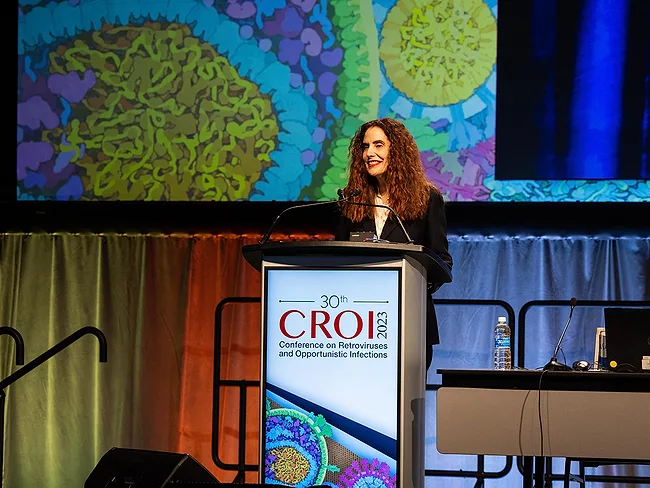
Anthony Fauci has retired from his position as director of the National Institute of Allergy and Infectious Diseases (NIAID) and as chief medical advisor to the U.S. president. But Fauci, who has advised every president since Ronald Reagan, continues to share his encyclopedic knowledge with the HIV research community, as he has since the beginning of the HIV pandemic. Fauci co-founded the first National Conference on Human Retroviruses and related infections in 1993. At the Opening Session of the 30th edition of the Conference on Retroviruses and Opportunistic Infections (CROI), he highlighted the advances that have collectively extended the life expectancy of newly diagnosed patients by decades.
 RSS
RSS