GC Biopharma Corp. will buy plasma collector Abo Holdings Inc. in a ₩138 billion (US$96.28 million) cash acquisition as the vaccine and plasma-derived medicinal products developer works to accelerate entry of Alyglo (IVIG-SN 10%) in the U.S., where it was approved last year.
Antiretroviral therapy effectively suppresses HIV viral loads to undetectable levels but cannot eliminate the integration of viral DNA into the host cell genome.
SK Bioscience has received approval from the Human Research Ethics Committee in Australia for a phase I/II trial of its mRNA-based Japanese encephalitis vaccine candidate, GBP-560.
SK Bioscience Co. Ltd. gained approval from the Human Research Ethics Committee in Australia to start phase I/II trials of GBP-560, its mRNA-based vaccine candidate for mosquito-borne Japanese encephalitis virus, with funding from Coalition for Epidemic Preparedness Innovations.
Korean Research Institute of Bioscience and Biotechnology has synthesized compounds reported to be useful for the treatment of non-tuberculous mycobacterial infections.
Researchers from Inovio Pharmaceuticals Inc. described the protective effect exerted by INO-4500, a DNA vaccine produced using the Syncon technology, against lethal Lassa virus in nonhuman primates.
Nearly three years after being terminated as president and CEO of Cytodyn Inc., Nader Pourhassan was convicted June 9 by a U.S. federal jury for his role in a securities fraud scheme to deceive investors about the Vancouver, Wash.-based company’s development of leronlimab. The jury also convicted Kazem Kazempour, the CEO of Amarex Clinical Research LLC, a contract research organization hired by Cytodyn, for his part in the scheme.
Orthogon Therapeutics LLC has closed an oversubscribed financing round, with funding to be used to accelerate the development of its first-in-class treatments for managing BK virus reactivation in transplant patients.
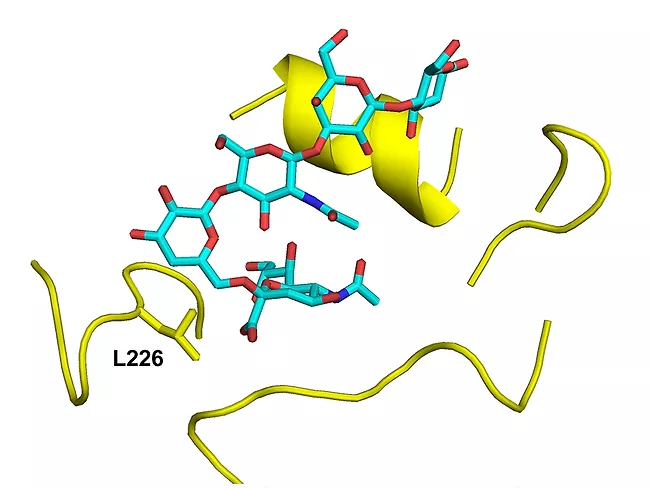
Although it does not generally infect humans, a single mutation of the H5N1 virus in the highly pathogenic avian and bovine clade 2.3.4.4b could overcome this barrier and possibly trigger a pandemic.

 RSS
RSS