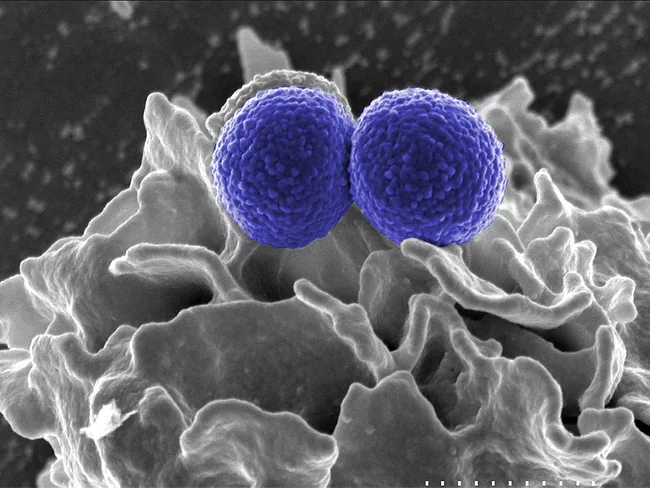
Concerns of lower-than-expected efficacy, which prompted AN2 Therapeutics Inc. to pause enrollment in the phase III portion of the phase II/III trial earlier this year, turned out to be well-founded, as top-line data proved disappointing for epetraborole in treatment-refractory Mycobacterium avium complex (MAC) lung disease. As a result, the company is dropping the program and restructuring.
Chengdu Chipscreen Pharmaceutical Ltd. has divulged aminothiophene compounds acting as viral replication inhibitors reported to be useful for the treatment of hepatitis B (HBV) virus infection.
Researchers at Leiden University have synthesized semisynthetic guanidino lipoglycopeptides with in vitro and in vivo activity gram-positive bacteria, including methicillin-resistant and vancomycin-resistant Staphylococcusaureus.
Infection or cure? Scientists from Tel Aviv University and the University of Glasgow genetically modified the Toxoplasma gondii to bring a protein inside neurons. The novelty of using a protozoan that can travel from the gut to parasitize the CNS contrasts with the possibility of causing a disease. The scientists are already working on how to avoid it.
Ondine Biomedical Inc.’s Steriwave light-activated antimicrobial technology will be used in a pilot program at Leeds Teaching Hospitals NHS Trust in the U.K. to help fight infections in patients undergoing skull base sinus surgery. The Steriwave technology offers a quick nasal decolonization treatment that reduces the need for antibiotics and the risk of postoperative infections.
Merck Sharp & Dohme LLC has disclosed 3C-like proteinase (3CLpro; Mpro; nsp5) (SARS-CoV-2; COVID-19 virus) inhibitors reported to be useful for the treatment of SARS-CoV-2 infection (COVID-19).
Arcturus Therapeutics Holdings Inc. has announced its pandemic influenza vaccine is on track to enter a phase I clinical trial in Q4 of 2024. The vaccine, ARCT-2304, utilizes Arcturus’ STARR self-amplifying mRNA and LUNAR delivery platform technologies to deliver antigens designed to elicit a protective response against the H5N1 strain of avian influenza.
Armed with $55 million in series A funds and a U.S. government contract, Cambridge, Mass.-based Red Queen Therapeutics Inc. launched operations this week, with plans to advance its novel stapled lipopeptide platform, which creates new antiviral therapies that do not rely on the immune system to work.
Anivive Lifesciences Inc., a One Health technology company, reported the NIH’S National Institute of Allergy and Infectious Diseases (NIAID) has awarded grant funding worth up to $33 million to the company to support the development of a vaccine against the fungus Coccidioides, which causes Valley Fever.

 RSS
RSS