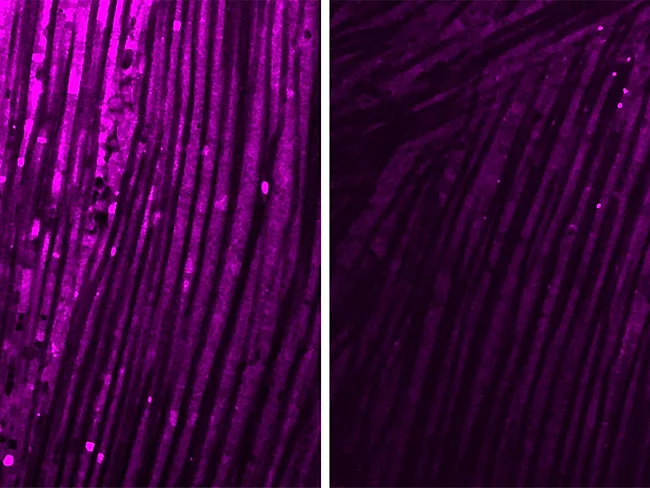
Muscle fatigue associated with brain inflammation could be prevented by modulating certain cytokines. Researchers at Washington University in St. Louis (WUSTL) have studied inflammation in the CNS in infection models of Escherichia coli, SARS-CoV-2 and amyloid-β toxicity, unveiling its impact on motor function, the role of IL-6 in this process and how to mitigate it in chronic disease.
Rheumatoid arthritis (RA) is an autoimmune disease characterized by bone and cartilage destruction, where immune cells such as macrophages, among others, play a crucial role in RA pathogenesis.
Researchers from the Chinese Academy of Sciences evaluated the highly potent and selective inhibitor of the second bromodomain (BD2) of the bromodomain and extra-terminal (BET) family of proteins, ABBV-744, with the aim of assessing its preclinical efficacy and exploring the pathways by which the compound regulates microglia-mediated neuroinflammation.
The use of artificial intelligence (AI) in drug discovery has shown promise in recent years with a growing number of new compounds moving forward in the pipeline.
Researchers from Southern Medical University and affiliated organizations assessed the molecular mechanisms behind TGF-β-induced fibrosis in ovarian endometrioma.
A new methodology based on the regulation of genetic enhancers has made it possible to develop a cellular map that reveals new types of helper T cells related to immunological disorders that could be explored for the development of new therapies. “I am very interested in the function of rare T cells, and I am trying to analyze their function by eliminating certain rare T cells with antibodies with ADCC [antibody-dependent cell-mediated cytotoxicity] activity or by disrupting genes that characterize rare T cells in animal models,” senior author Yasuhiro Murakawa told BioWorld.
UCB SA has identified imidazotriazine derivatives acting as interleukin-17 (IL-17) modulators reported to be useful for the treatment of inflammation and autoimmune diseases.
Immvention Therapeutix Inc. has disclosed benzimidazole-containing compounds acting as inflammasome inhibitors reported to be useful for the treatment of inflammatory disorders.
Senescence is a hallmark of aging, and senescent cells have a reputation to match. They are ‘zombie cells,’ sort of dead themselves but alive enough to poison their surroundings through senescence-associated secretory phenotype (SASP). The reality, though, is more complex.
 RSS
RSS